

QIYADA Returns With A Growing Platform For Muslim Youth To Explore Faith, Identity And Leadership


Doha, Qatar: For young Muslims navigating a rapidly changing world, QIYADA asks a simple question: how do you move forward without losing who you are?
From artificial intelligence and technology to mental wellbeing, identity, purpose and belonging, young people today are confronting a growing number of questions, often all at once.
QIYADA, a Qatar Foundation youth initiative, is seeking to create a space where Muslim youth can explore those questions through faith, dialogue, leadership and community.
Returning for its second edition on September 25 and 26 at the Student Centre in Education City, the initiative is aimed particularly at young people aged 17 to 24, offering discussions, workshops, networking activities and opportunities to engage with speakers from diverse backgrounds.
“This year, we want to share with them the road map and they do the driving,” said Wellness and Spiritual Life Lead at the Office of Wellness and Spiritual Life at QIYADA, Sulaiman T. Bah. Last year's edition focused on encouraging young people to seek knowledge and strengthen their Muslim identity so they could“get in the driver's seat”.
This year, QIYADA is building on that idea by giving participants what organisers describe as a roadmap to navigate the challenges ahead.
Bah said QIYADA is not simply a conference, but“a journey” designed to help young Muslims understand that they are not alone in dealing with the pressures and uncertainties of today's world.
“We will have honest discussions about the many global challenges facing the youth, from AI to mental wellbeing,” he said.“We will let them know they're not alone and that we hear them.”
The initiative's approach is built around awareness, identity, practical tools, faith, inspiration, resilience and action. For Bah, the starting point is recognising the complexity of the world young people are entering.
“They're looking for answers to the complex issues that they're dealing with,” he said, pointing to economic and financial pressures, AI and technology, mental and psychological wellbeing, and religious and spiritual questions.“Everything that's happening right now is happening at the same time, and it's just too much.”
Yet the response to the first edition suggested that young people were actively looking for a space to have these conversations.
When QIYADA was launched last year, organisers hoped to attract around 400 to 500 participants. Instead, the inaugural edition drew about 1,400.“That really told us that this is something that is in demand, that they need,” Bah said.
The strong response has encouraged organisers to expand the platform while keeping the focus on meaningful engagement rather than simply increasing the scale of the event. One change this year came directly from participant feedback. Some prominent speakers at the first edition had only around 20 minutes on stage, and attendees told organisers they wanted more time to hear from them.
As a result, some speakers this year will be given 30 to 35 minutes.“But again, not too much time,” Bah said.“We want them to want more.”
The speaker line-up has also been broadened, with new speakers selected around the issues and sub-themes that matter to young people. Sessions will address mental and psychological wellbeing, economic and financial issues, political and geopolitical developments, AI and technology, digital issues, and religious and spiritual questions.
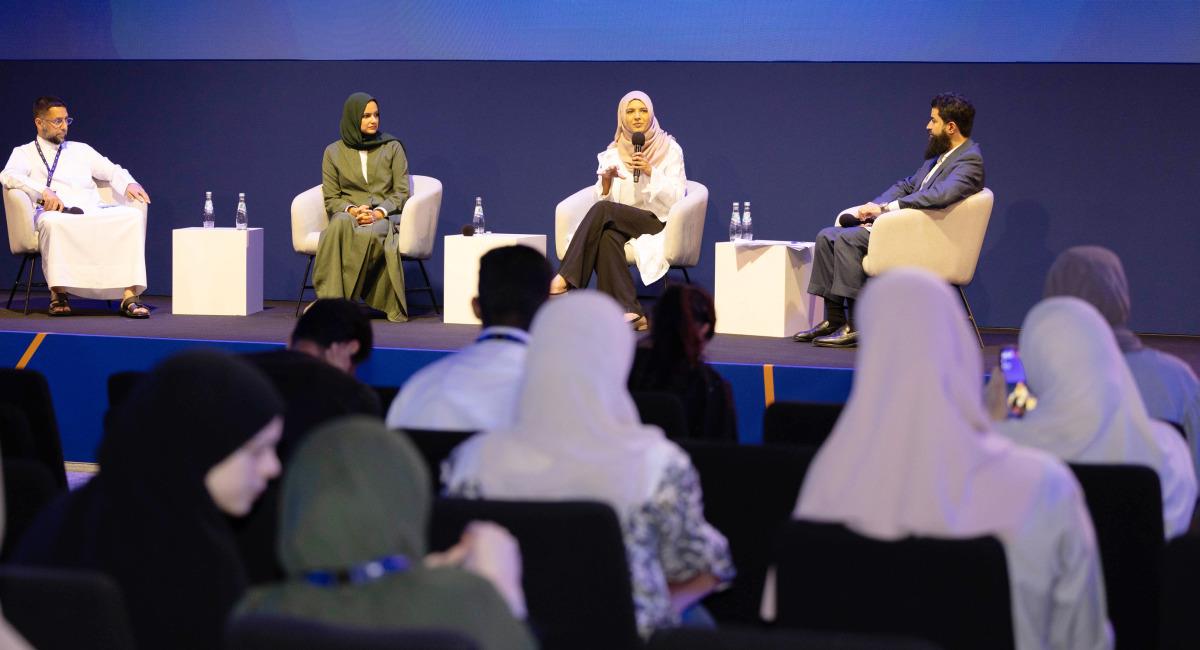
Participants at the first edition of QIYADA.
Speakers will come from Qatar, the wider GCC and beyond, with sessions taking place in both Arabic and English.
Bah said the organisers were looking for people who could address these issues“in a very youth way” and, importantly, speak the language of young people.
The programme will combine talks with workshops, fireside chats, hands-on activities and exhibitions, creating opportunities for participants to move beyond simply listening to speakers. For QIYADA, leadership is central to that approach. Bah said young people between 17 and 24 are at a particularly important stage of life, entering university, already studying at university or beginning their lives after graduation.
At that point, many are looking for mentorship, support systems, community and a sense of belonging, while also beginning to consider how they can contribute.
Leadership, he said, can begin within a person's immediate sphere of influence with family and siblings, among friends and peers, and eventually at national or international levels.
QIYADA therefore seeks to equip participants with practical tools, frameworks and examples of leadership while encouraging them to look beyond conventional ideas of success.
Instead it wants young people to look to their own traditions, faith and history for examples of leadership, including men and women whose lives demonstrate service and ethical responsibility.
“The first examples will be prophetic examples, of course,” he said, noting that the Quran contains numerous stories that can provide examples of leadership.
This year's programme will also give young people an opportunity to tell their own stories. A new youth short-film competition has attracted submissions exploring how young people deal with challenges and how faith helps them navigate those experiences.
Bah said the initiative was deliberately designed to hear directly from youth rather than simply talk about them. The competition is expected to develop into a film festival next year.
A session at the first edition of QIYADA.
Another new feature is“Day Zero”, a film screening on the Thursday evening before the main conference begins.
A filmmaker from New Zealand's Christchurch community will present a documentary made as a tribute to the 51 people killed in the Christchurch mosque attacks.
The film explores how tragedy can be transformed into something hopeful and enduring, a sadaqah jariah, or ongoing charity, for those who lost their lives. Bah described the screening as“almost like an appetiser leading into the weekend”.
The wider programme will bring together youth speakers, scholars, filmmakers, photographers and artists, with the venue at Multaqa transformed into what organisers describe as a youth-focused space.
For Bah, one of the most important aspects of QIYADA is the opportunity for young people to engage directly with scholars and speakers they may already know from social media.
“There are not too many events like this that bring scholars really into close proximity, in workshop settings, in fireside chats,” he said.
Rather than speaking from prepared scripts, speakers will be encouraged to address the challenges young people are actually facing, while participants will have opportunities to ask questions, take part in workshops and learn practical frameworks that can be applied in their lives.
The response this year has already been strong, according to Bah, with the conference overbooked and partnerships involving the Ministry of Education and Higher Education, Ministry of Culture and Ministry of Sports and Youth.
For the organisers, the interest reinforces the need to continue developing QIYADA as a platform for Muslim youth. Its broader vision is for Qatar to become a hub for Muslim youth, reviving faith and identity as a living, modern strength, equipping young people with leadership tools and confidence, building a lasting global network and highlighting local scholars and resources.
But at its heart, Bah said, QIYADA is about helping young people find purpose and recognise their ability to contribute. By meeting peers who are facing many of the same questions, participants can begin to understand that they are not alone.
“When they identify with their peers, network with their peers and realise that they're all facing the same challenges, but from different angles and perspectives, then we can have the discussion about identity, community, sense of belonging, sense of purpose, and also a sense of contribution,” he said.
For QIYADA, that contribution is the foundation of leadership.“Prophetic leadership is about serving,” Bah said.“We want young Muslims to see a challenge and think: 'What can I do? Not someday, but today?'” And ultimately, the message is simple:“Leaders serve. Leaders contribute.”

Legal Disclaimer:
MENAFN provides the
information “as is” without warranty of any kind. We do not accept any
responsibility or liability for the accuracy, content, images, videos,
licenses, completeness, legality, or reliability of the information
contained in this article. If you have any complaints or copyright issues
related to this article, kindly contact the provider above.
Comments
No comment