

New Jihadist Coalition Pushes Pakistan-Afghanistan To Crisis Point


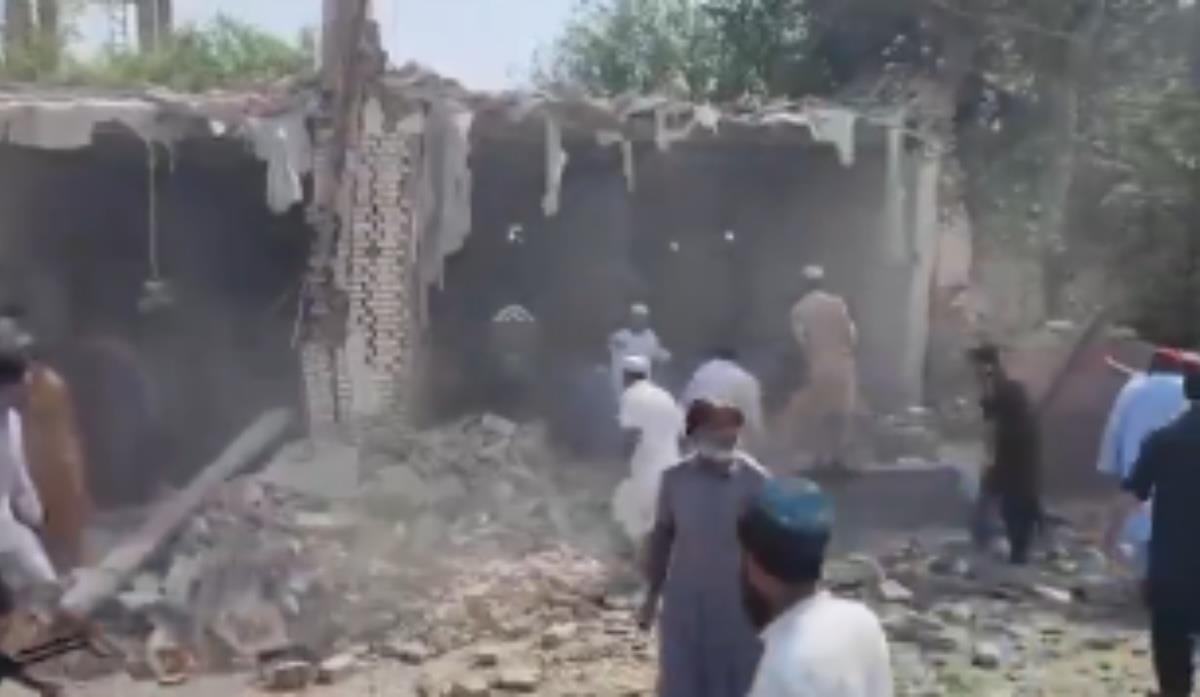
The assault took place as worshipers gathered for Friday prayers in the city of Kohat, in Khyber Puktunkhwa province, northwest Pakistan. A suicide bomber rammed an explosives-laden car through the wall of a police complex in the city of Kohat, targeting the mosque inside.
Gunmen then exchanged fire with law enforcement officials during a 20-hour standoff. In all, 31 people were killed, including 16 police officers, while over 100 people were reported injured.
Supporters of the militant group Ittehad- Mujahideen Pakistan, or IMP, claimed responsibility on encrypted apps like Telegram. But other seemingly aligned groups distanced themselves from the attack. Pakistan responded by conducting airstrikes in Afghanistan, home to at least one of the gunmen.
Over the past two years, we have conducted fieldwork in this region and closely monitored the operational and propaganda activity of violent extremist groups, including the IMP. The attack and its fallout reveal much about the state of collaboration and friction among the various militant entities that have fueled violence.
Who is Ittehad- Mujahideen Pakistan?
The IMP is a jihadist coalition formed in April 2025 from three smaller militant factions: Lashkar-e-Islam, the Hafiz Gul Bahadur Group and Inqilab-e-Islami Pakistan. By late 2025, it had become the most active jihadist group in Pakistan after the Tehrik-i-Taliban Pakistan, also referred to as the Pakistani Taliban.
The IMP's main objectives appear to be weakening the Pakistani state through attacks on police and security forces and advancing Islamist rule. Its operations are largely concentrated in northwest Pakistan in areas along the Afghan border, where the group has used tactics including deadly suicide bombings, vehicle-borne improvised explosives and rockets.
Prior to the Kohat attack, IMP members were responsible for a May 2026 checkpost assault that killed 15 police and a July vehicle bomb attack at a police station in the city of Bannu.
The IMP styles itself as a unified front that brings various jihadist factions operating in Pakistan together under one command. Its recent propaganda, for example, includes a video by a religious cleric urging unity among jihadists.

Legal Disclaimer:
MENAFN provides the
information “as is” without warranty of any kind. We do not accept any
responsibility or liability for the accuracy, content, images, videos,
licenses, completeness, legality, or reliability of the information
contained in this article. If you have any complaints or copyright issues
related to this article, kindly contact the provider above.
Comments
No comment