


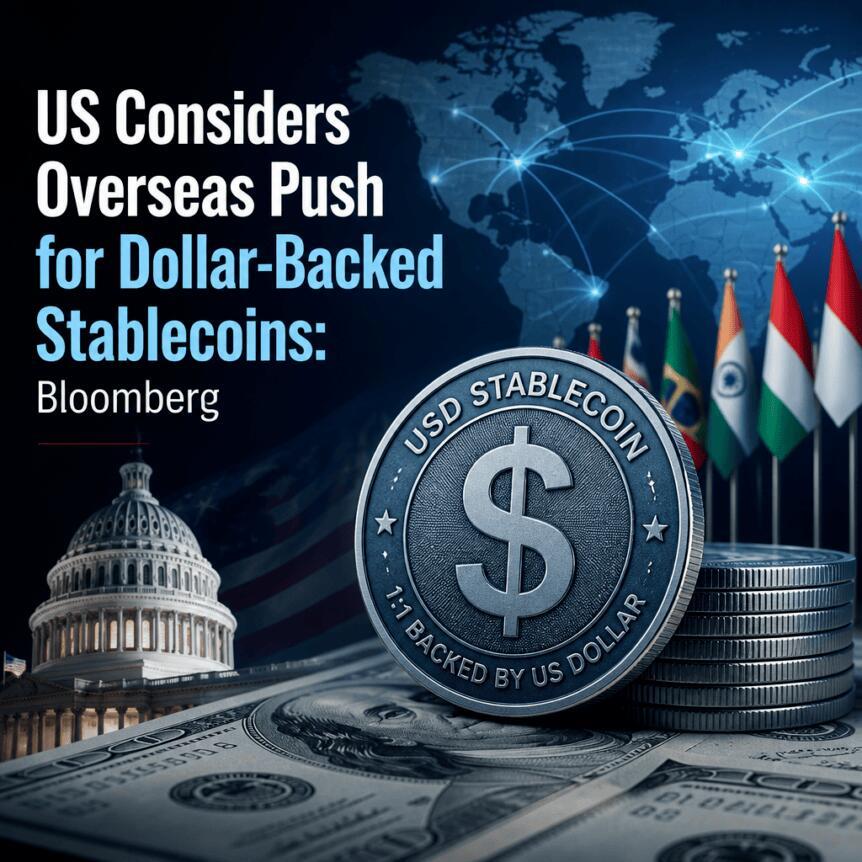
US Considers Overseas Push For Dollar-Backed Stablecoins: Bloomberg


Bloomberg reports that officials are considering partnerships that would encourage the growth of dollar-denominated stablecoins internationally. If successful, such an approach could also increase demand for US Treasuries-an asset commonly used to back or support dollar-based stablecoins.
Key takeaways- Bloomberg reports the US is considering overseas promotion of dollar-backed stablecoins through joint ventures with private firms. The proposed initiative may involve several agencies, including the Treasury Department, the State Department, and the US International Development Finance Corporation (DFC). A central rationale is to expand international usage of dollar stablecoins and, in turn, potentially boost demand for US Treasuries. The move comes as other regions develop their own cross-border digital payment systems and CBDC pilots. US officials have previously linked stablecoin growth to maintaining dollar dominance and supporting the US government debt market.
Bloomberg, citing people familiar with the plans, reports that the US government may support stablecoin projects abroad by creating joint ventures with private-sector companies. While the report does not outline a formal timeline or specific program details, it describes the concept as an effort to expand the international footprint of dollar-denominated stablecoins.
The potential institutional scope is also notable. Bloomberg names the Treasury Department, the State Department, and the US International Development Finance Corporation (DFC) as agencies that could participate in the effort.
The logic described in the report is closely tied to how dollar-backed stablecoins are structured. Since many such tokens are designed to maintain their value relative to the dollar, and because their reserves are often linked to Treasuries and other dollar-denominated instruments, expanding usage overseas could translate into more demand for reserve assets associated with the token ecosystem.
Why dollar dominance is the policy driverThis stablecoin proposal fits into a broader theme reflected in earlier remarks by senior US officials: that stablecoin adoption can reinforce the dollar's international standing and strengthen US financial market demand.
In February 2025, venture capitalist David Sacks-who at the time served as White House crypto and AI czar-said stablecoins could“extend the dollar's dominance internationally,” adding that the sector might generate“trillions of dollars” in additional demand for US government debt. While such figures are projections rather than confirmed outcomes, they illustrate the administration's stated perspective on stablecoins as a component of dollar-centered economic influence.
Later, in July 2025, US Treasury Secretary Scott Bessent connected stablecoin regulation to reserve-currency goals. He said the GENIUS Act-legislation that created a federal framework for payment stablecoins-could strengthen the dollar's status as the world's reserve currency, widen access to the“dollar economy,” and increase demand for US Treasuries.
Subsequently, the Treasury continued its implementation work. On Aug. 17, it issued a notice of proposed rulemaking seeking public comment on provisions covering the issuance, offering, and sale of payment stablecoins. Bessent described the rules as part of an effort to“cement” the dollar's reserve-currency position.
Taken together, the overseas initiative described by Bloomberg appears to extend the administration's domestic regulatory approach into an external growth strategy-an attempt to align stablecoin expansion with US strategic interests.
Global competition: CBDCs and cross-border digital railsThe timing of the reported stablecoin push also reflects a wider geopolitical and infrastructure trend: countries and regional institutions are building their own digital payment frameworks and experimenting with central bank digital currencies.
Cointelegraph previously reported that China's digital yuan is used in Project mBridge, a platform designed for cross-border CBDC transactions. In Europe, the European Central Bank is preparing a 12-month digital euro pilot, expected to begin in the second half of 2027, according to Cointelegraph coverage.
While stablecoins and CBDCs are different instruments, both aim to facilitate digital value transfer across borders. In that context, an overseas effort centered on dollar-backed stablecoins can be seen as competing for the role of settlement and liquidity infrastructure in international payment flows.
What to watch nextCointelegraph reports that it reached out to the US Treasury, the DFC, and several US-based stablecoin companies for comment but did not receive responses before publication. That leaves key questions unanswered, including whether the initiative is purely exploratory, what jurisdictions might be targeted first, and how any government involvement would be structured in practice.
Investors and builders should watch for concrete details-such as which agencies take the lead, what types of partnerships are contemplated, and whether the administration's overseas goals come with measurable policy commitments tied to stablecoin reserve practices and cross-border compliance requirements.
Risk & affiliate notice: Crypto assets are volatile and capital is at risk. This article may contain affiliate links.
Legal Disclaimer:
MENAFN provides the
information “as is” without warranty of any kind. We do not accept
any responsibility or liability for the accuracy, content, images,
videos, licenses, completeness, legality, or reliability of the information
contained in this article. If you have any complaints or copyright
issues related to this article, kindly contact the provider above.


Comments
No comment