

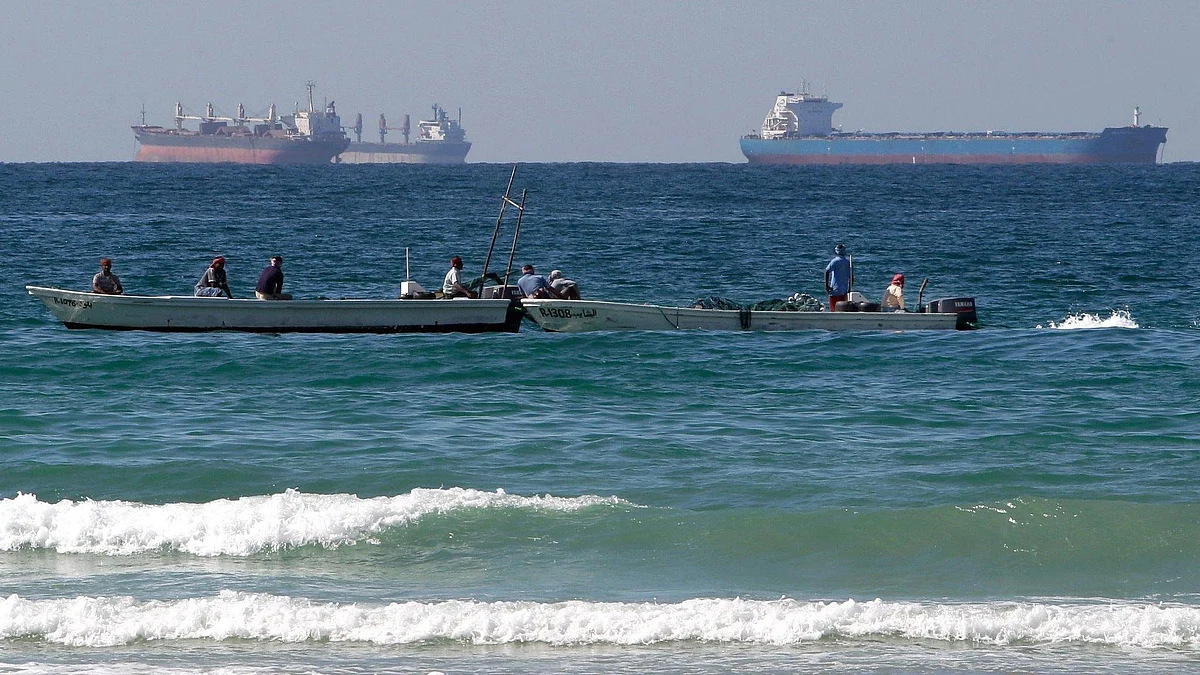
Fishing Through Conflict: How Life Has Changed For Fishermen Along Strait Of Hormuz


Months of conflict and heightened security around one of the world's most important waterways have changed what it means to make a living from the sea, with fishermen facing risks at sea, higher operating costs and restrictions on where they can fish.
Recommended For YouYet there is an unexpected side to the story. Despite the disruption, Iran says fishing has not stopped. Preliminary figures from the country's fisheries authorities indicate that catches in 2026 are running higher than during the same period last year.
Stay up to date with the latest news. Follow KT on WhatsApp Channels. Centre of fishing industry
Hormozgan, the Iranian province that includes Bandar Abbas and islands in and around the Strait of Hormuz, is the centre of the country's fishing industry.
The province recorded a catch of around 386,600 tonnes of seafood in the previous fishing year, accounting for roughly half of the total catch across southern Iran, according to figures from Hormozgan's fisheries authority.
That makes what happens in these waters important far beyond the fishing communities themselves.
Iran's fisheries authorities said earlier this month that preliminary data for the first months of the current year showed catches increasing compared with the same period a year earlier.
Part of that increase came from fishing vessels from Hormozgan and Sistan and Baluchestan operating in more distant parts of the Indian Ocean during the monsoon season. The final figures are still being collected.
But life at sea has become harderThose national numbers do not mean individual fishermen have escaped the effects of the conflict.
In Bandar Abbas, fishermen and fish-market workers have described security concerns, difficulties obtaining enough fuel and sharply higher costs for nets and other equipment.
Some fishermen have been reluctant to go to sea because of the risks, contributing to smaller local catches and higher prices in markets, according to reporting from the city in August.
The risks have become more serious in recent weeks. On September 15, a Hormozgan provincial official said two Iranian fishing boats had been struck in waters near the port of Kargan, leaving fishermen missing. The circumstances of the incident remain contested amid the wider conflict.
Navigation has also become a problem. Earlier this year, dozens of Iranian fishermen were detained after their boats entered UAE waters. Iranian authorities said disruptions to GPS and vessel-tracking systems during the conflict had caused fishing boats to lose their bearings.
The impact has crossed the StraitThe disruption has not been limited to Iran. In April, fishermen in Sharjah said restrictions on how far they could travel offshore had reduced their catches.
Some fishermen who previously spent several days in deep waters were limited to much shorter trips closer to shore, leaving traps and fishing grounds farther out inaccessible.
Smaller catches also pushed up prices for some species at local markets at the time.
At Souq Al Jubail, one seller said rabbitfish that previously sold for around Dh35 to Dh40 per kilogram had risen to about Dh55, while medium-sized hammour increased from around Dh40 to Dh59.
Those figures were reported in April and do not represent current market prices, but they showed how quickly restrictions at sea could reach consumers on land.
Fishing continuesDespite the disruption, Iranian officials say the fishing fleet in Hormozgan remains active. The head of the province's fisheries authority said at the end of August that fishing and seafood supplies were continuing across its ports despite what he described as sensitive conditions.
Iran has also been investing in expanding the sector. Fisheries officials announced new fishing vessels and projects in Hormozgan in August, while acknowledging that boats, ports and supporting infrastructure had been damaged during the conflict.
For communities around Hormuz, the figures tell only part of the story. Fish may still be reaching markets and boats may still be leaving ports. But in waters better known to the world as a route for oil tankers, fishermen are having to navigate a very different sea.
ALSO READ- DP World says Strait of Hormuz 'will reopen', stays flexible as it keeps cargo moving Commentary: From Oman to Iran, Strait of Hormuz remains central to Gulf security Oman says Hormuz talks with Iran, Gulf states postponed to facilitate 'constructive dialogue'

Legal Disclaimer:
MENAFN provides the
information “as is” without warranty of any kind. We do not accept any
responsibility or liability for the accuracy, content, images, videos,
licenses, completeness, legality, or reliability of the information
contained in this article. If you have any complaints or copyright issues
related to this article, kindly contact the provider above.
Comments
No comment