

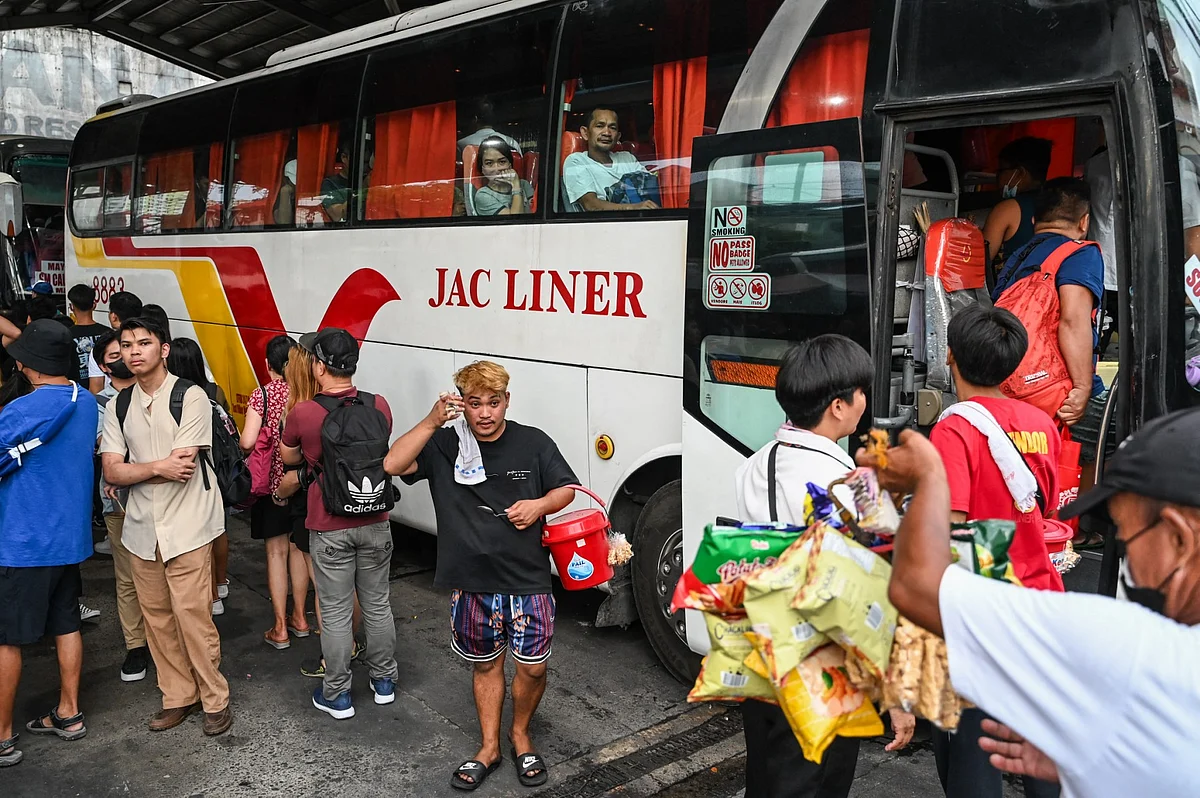
Transport Crisis: Up To 80% Of Philippine Provincial Buses Stop Running As Fuel Prices Soar


After three consecutive weeks of major oil price hikes caused by continuing violence in major global oil supply routes in the Middle East, approximately 5,600 provincial buses have become immobile in terminals and depots.
Recommended For YouThe Provincial Bus Operators Association of the Philippines (PBOAP) said only 20 to 30 per cent of provincial buses are currently operational to prevent losses in operating costs.
Stay up to date with the latest news. Follow KT on WhatsApp Channels. Why have buses stopped running?
Transport operators complain that soaring fuel expenses make up about 60 per cent of their total operating expenses. Diesel prices in the import-dependent country increased by P18.31 (Dh 1.15) per litre following three major weekly price hikes this month.
Current diesel pump prices are as high as P99 (Dh5.82) per litre, considered extremely high for a poor economy like the Philippines.
PBOAP executive director Alex Yague called on Philippine President Ferdinand Marcos Jr. to lift the fare hike prohibition he imposed in March at the start of the US/Israel-Iran war.“We need fare increases in order for provincial buses to continue their service to the public,” Yague said.
Philippine Department of Transportation secretary Giovanni Lopez, however, warned that increases in transportation fares are inflationary.“I think the imposition of fare hikes must be the last resort,” Lopez said.
Victory Liner, one of the Philippines' biggest transport companies, sharply disagreed with the government position, saying the industry could no longer continue absorbing rising fuel costs while operating under regulated fares that have failed to keep pace with expenses.
“No industry can survive when its regulated revenue is lower than the actual cost of delivering service,” the company said.
Who are most affected?The first to be affected are the livelihoods of around 26,000 to 28,000 transport workers who have become jobless.
To avert total loss of income, bus companies have implemented rotation strategies for remaining drivers and conductors. But reduced trip frequencies have severely impacted personal incomes as they are partly paid per trip and fare percentages.
The second victims are the commuters who have to endure packed buses and longer travel times.
Passenger Janet Ramos said she hopes the regular number of buses would soon be back on Philippine highways as reduced trips make it difficult for her to predict travel time.“I now have to prepare an hour earlier to ensure I would report to work on time,” the Cavite resident complained.
What commuting is actually like?Khaleej Times recently took a provincial trip to investigate commuting conditions in the Philippines. Despite being in a first class bus from Metro Manila, the bus left the terminal half an hour late to fill up all seats before leaving.
The outbound bus also made stops along the way to take in new passengers as soon as some had disembarked. Before fuel price increases caused by the Middle East war, first and royal class buses only stopped along the way to let off passengers. Premium buses only allowed a single meal stopover in a 12-hour trip.
The return trip even took longer as a regular bus stopped at all municipal bus stops to take in passengers until it was full.
Ambulant vendors who sell snacks and drinks at stops also complain of reduced sales because of fewer bus trips.“I have switched to selling boiled eggs that last longer before spoiling. There seems to be fewer passengers and buses these days,” vendor Antonia said.
Transport agencies have reported a 21.9 per cent decrease in domestic travel among Filipinos since the Middle East conflict erupted.
ALSO READ- Philippine vegetable prices surge as farmers struggle with transport and storage costs Philippine peso hits all-time low vs US dollar amid Middle East war, oil price hike Philippines' Marcos govt handouts free rice, economists say not enough to help poor Filipinos

Legal Disclaimer:
MENAFN provides the
information “as is” without warranty of any kind. We do not accept any
responsibility or liability for the accuracy, content, images, videos,
licenses, completeness, legality, or reliability of the information
contained in this article. If you have any complaints or copyright issues
related to this article, kindly contact the provider above.
Comments
No comment