

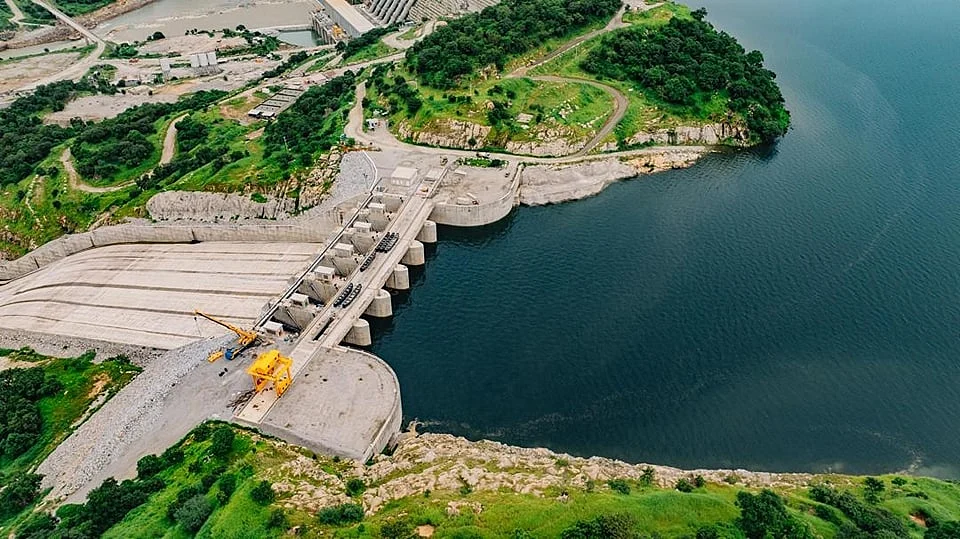
Egypt-Ethiopia Nile Dam Dispute Not Over Cairo Raising New Water Security Concerns


Cairo is now putting new focus on what happens after construction, arguing that the way Ethiopia operates the massive dam on the Blue Nile could have serious consequences for countries downstream.
Recommended For YouEgypt's concern is that more than 98 per cent of its renewable water resources come from outside its borders.
Egypt's Minister of Water Resources and Irrigation Hani Sewilam said the country's renewable water supply stands at about 56.8 billion cubic metres a year, while its needs are estimated at around 123 billion cubic metres.
That leaves Egypt heavily dependent on the Nile and particularly sensitive to changes in how water flows downstream.
Stay up to date with the latest news. Follow KT on WhatsApp Channels. Why is Egypt raising the issue now?
For years, much of the dispute focused on the construction and filling of the GERD. Now that the dam is complete, attention is increasingly turning to how it will be operated over the long term.
Egypt has repeatedly called for a legally binding agreement governing the dam's operation, while Ethiopia maintains that the project is central to its development and right to use its natural resources.
Speaking at a recent briefing for foreign media in Cairo, Sewilam said the completion of the dam and the passage of time did not mean Egypt had accepted the situation.
He also warned that operating the dam without co-ordination with downstream countries could cause sudden changes in the amount of water released.
Egypt describes a sharp increase in releases as an“artificial flood”, while a significant reduction could create what Sewilam called an“artificial drought”.
Cairo says either situation could make it more difficult for Egypt and Sudan to manage their own dams and water infrastructure.
How dependent is Egypt on the Nile?Egypt is one of the world's most water-scarce countries. According to figures presented by Sewilam, the amount of renewable water available per person has fallen to around 472 cubic metres a year.
That puts the country below the 500-cubic-metre level commonly used to define absolute water scarcity.
The gap between supply and demand has pushed Egypt to reuse around 23.2 billion cubic metres of water annually, while also expanding desalination, groundwater use and water-treatment projects.
But Cairo argues that these measures cannot replace the Nile. This is why Egypt says decisions made upstream carry such high stakes for a country where most renewable water comes from beyond its borders.
What does Ethiopia say?Ethiopia has long rejected Egypt's objections to the GERD. Addis Ababa says the dam is a sovereign development project designed primarily to generate electricity and support economic growth.
It has also argued that Nile waters should be shared according to the principle of equitable and reasonable use, and has rejected arrangements it believes would restrict its right to use its natural resources.
The dam, which Ethiopia began building in 2011, has been presented by Addis Ababa as a major source of electricity not only for Ethiopia but potentially for the wider region.
Egypt, meanwhile, says it does not oppose development or dams in other Nile Basin countries, but argues that projects on a shared river should involve consultation, information sharing and assessments of their possible impact on other countries.
What happens next?After years of negotiations, the two countries remain divided over the rules governing the dam.
Egypt says it still wants a binding agreement and has maintained that it retains the measures available to it under international law to protect its water security. The latest statements show that completing the GERD has not ended the dispute.
Instead, the question has changed. For Egypt, it is no longer only about how much water is held behind the dam. It is about who decides when that water moves downstream - and what happens when it does.
ALSO READ- Egypt expects drone-damaged Damietta gas vessel to resume operations in Q4 Trump offers Egypt to mediate on Ethiopia dam to resolve 'The Nile Water Sharing' India plans to build mega-dam to counter China water fears

Legal Disclaimer:
MENAFN provides the
information “as is” without warranty of any kind. We do not accept any
responsibility or liability for the accuracy, content, images, videos,
licenses, completeness, legality, or reliability of the information
contained in this article. If you have any complaints or copyright issues
related to this article, kindly contact the provider above.
Comments
No comment