

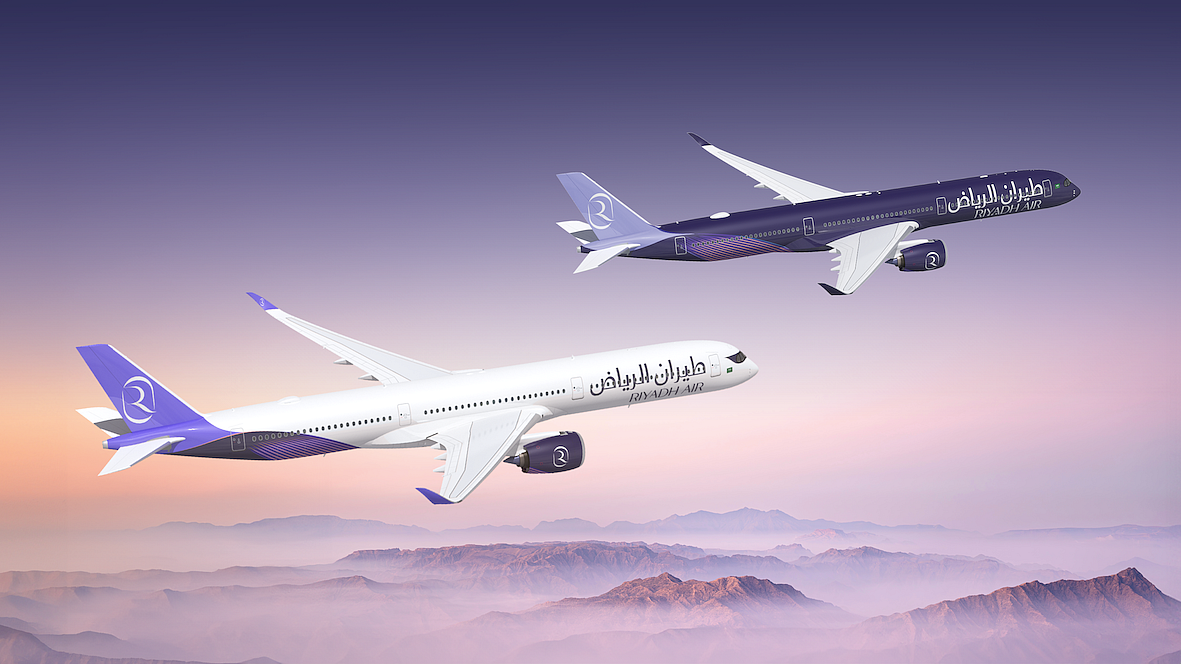
Middle East Will Need Nearly 3,900 New Aircraft Over Next 20 Years, Says Airbus


The European planemaker expects the region's single-aisle fleet to grow from about 900 aircraft to more than 2,000 within 20 years, generating demand for roughly 2,000 new single-aisle jets, of which 45 per cent is already covered by existing order backlogs.
Recommended For YouThe widebody fleet, currently around 700 aircraft, is expected to grow to nearly 1,700, with total demand of about 1,600 widebody aircraft – half of which are already on order.
Stay up to date with the latest news. Follow KT on WhatsApp Channels.
Gabriel Semelas, president for Africa and the Middle East at Airbus, said the region's aviation sector was demonstrating operational resilience despite geopolitical volatility.
“Driven by demographic expansion, rising prosperity and major infrastructure investment, airlines are expanding and modernising their fleet while guiding the transition towards more efficient and sustainable air transport,” he said.
Airbus said rising disposable income and urbanisation – expected to reach 55 per cent of the region's population – would help add 240 million people to the middle class, taking the total to 620 million.
Crucially, the manufacturer expects 97 per cent of Middle East airlines' fleets to comprise new-generation aircraft by 2035, up from 45 per cent in 2025, making it one of the fastest fleet modernisation rates in the world.
Recovery despite regional conflictSemelas said regional carriers had shown remarkable resilience following recent conflict in the region, with Emirates recovering 96 per cent of its network by May. Air Arabia, he added, posted load factors of 86 per cent in its first-half results.
He noted that Airbus deliveries reflect long-term planning by airlines rather than short-term reactions, with orders currently being placed for aircraft due beyond 2033-34.
“We firmly believe what's happening geopolitically in the region is a short spell. It will not affect the overall market forecast,” Semelas said, pointing to continued airport infrastructure investment, including the ongoing development of Al Maktoum International Airport (DWC).
Widebody demandAntonio Da Costa, vice-president for market analysis and forecast at Airbus, said the Middle East stood out globally for its widebody demand, with such aircraft accounting for about 44 per cent of forecast orders – more than double the worldwide average of around 20 per cent.
He attributed this to the region's role as a global connecting hub, noting that the Middle East is home to several of the world's busiest routes, including Dubai-Riyadh, Riyadh-Jeddah and Cairo-Jeddah.
Da Costa said global passenger traffic, measured in revenue passenger kilometres, had historically rebounded strongly after crises including the Gulf War, the 2008 financial crisis, Sars and Covid-19. Global traffic is projected to grow around 2 per cent this year – below earlier expectations of 4-5 per cent – but the industry;s underlying resilience remained intact.
Middle class growthAviation growth is closely tied to disposable income and GDP growth, Da Costa said. The global middle class has expanded by nearly two billion people over the past 20 years and is expected to grow by a further 1.7 billion by 2045, much of it in Asia, bringing the global population able to afford air travel to around six billion.
Da Costa highlighted a broader industry shift towards longer-range flying, citing Qantas' forthcoming non-stop Sydney-London route on the Airbus A350 and Etihad's use of the same aircraft on ultra-long-haul missions to Atlanta. Singapore Airlines currently operates the world's longest non-stop commercial flight, between Singapore and New York.
Over the past 20 years, the number of long single-aisle missions exceeding five hours has trebled, while ultra-long widebody missions have quadrupled, he said.
ALSO READ- UAE residents' air travel trips set to double in 20 years, says Airbus UAE, India, Saudi drive global airline growth with aircraft orders, passenger demand Middle East carriers outperform global peers as airline industry tops $1 trillion revenue

Legal Disclaimer:
MENAFN provides the
information “as is” without warranty of any kind. We do not accept any
responsibility or liability for the accuracy, content, images, videos,
licenses, completeness, legality, or reliability of the information
contained in this article. If you have any complaints or copyright issues
related to this article, kindly contact the provider above.
Comments
No comment