

403
Sorry!!
Error! We're sorry, but the page you were looking for doesn't exist.
Citi Wealth's 2026 Global Family Office Report Reveals Clients Are Shifting Their Focus Towards Public Equities While Becoming More Deliberate And Resilient Amid Uncertainty


(MENAFN- Mid-East Info)
-
Public equities have re-emerged as the primary destination for incremental capital
Private markets remain a strategic pillar of family office portfolio
Artificial intelligence is moving from experimentation toward implementation
Cross-border complexity is rising as families become increasingly international
Leadership succession and next-generation preparedness are now immediate priorities rather than distant considerations
Your digital companion for smarter everyday choices. Built for how you live, earn, and grow. Move money at your pace with AI-powered finance, all in one tap.
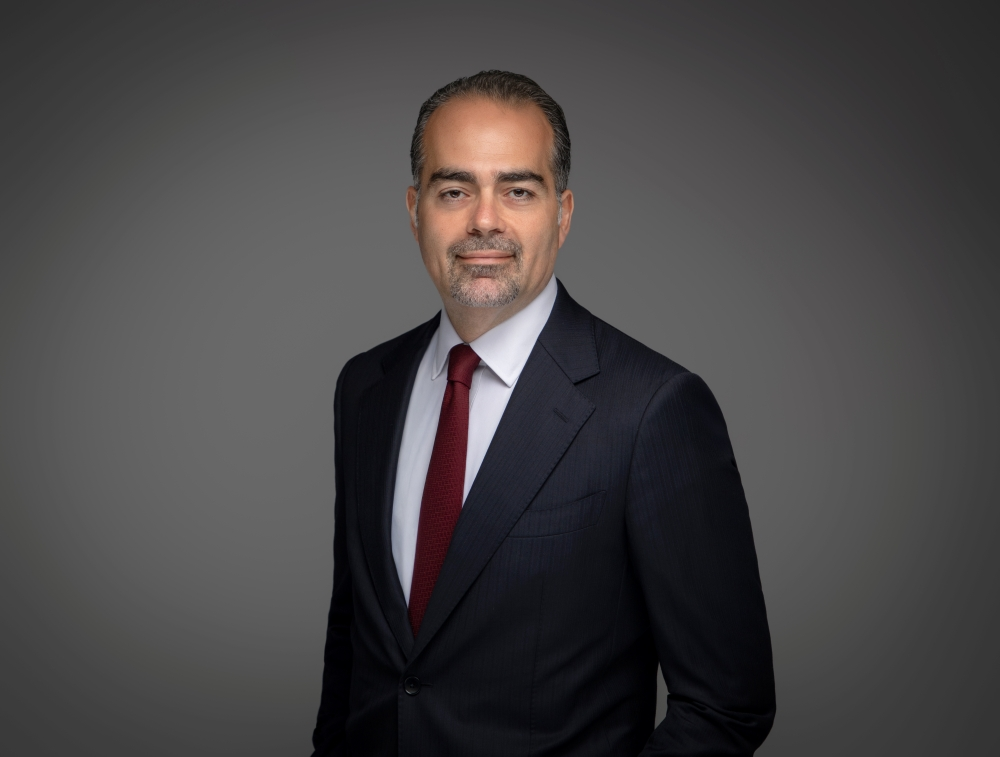
Join the waiting list. Earn Today's leading family offices are building long-term strategies underpinned by three key themes: capital, capability and continuity. They are investing with confidence - becoming more institutional in how they invest, more sophisticated in how they manage risk, and more intentional in how they prepare for the future. Families also are prioritizing leadership succession and generational transition with new urgency. “The Middle East is home to some of the world's most entrepreneurial and globally connected families. What we see in this year's report is a region that remains focused on growth while becoming increasingly deliberate about governance, succession and long-term resilience. As family wealth becomes more international and more complex, families are seeking trusted partners that can connect them to global opportunities, provide institutional-quality advice and help them build enduring legacies across generations. At Citi Wealth, we are uniquely positioned to support that journey through our global network, cross-border expertise and deep understanding of family office needs.” Comments Mohannad Sleiman, Market Executive, Citi Private Bank Key takeaways include:-
Strong Performance in the Face of Rising Uncertainty: Despite shifting macroeconomic indicators and geopolitical concerns, nearly 90% of respondents reported positive portfolio performance year-to-date, while 41% continue to target annual returns of 7% to 10%. Clients are optimistic but not complacent as moderate expectations for returns coexist with concerns around inflation, interest rates and financial stability. Long-term discipline remains a crucial competitive advantage.
-
Managing Risk Without Abandoning Opportunity: Recent geopolitical developments tested portfolios but did not trigger widespread retrenchment. Family offices avoided wholesale portfolio repositioning, opting instead for active management, hedging strategies and targeted adjustments. More than 40% of respondents made no major changes, while others remained laser-focused on improving portfolio resilience without compromising their strategic objectives. With a growing sophistication in risk management, family offices are embracing an active capability that allows them to stay invested during periods of uncertainty.
-
Inflation Flagged as a Concern: In 2026, inflation became a leading concern among family offices, followed by interest rate developments, financial system stability and market volatility. Trade disputes and tariffs, which were top of mind among 2025 survey respondents, declined significantly as sources of concern. Family offices are prioritizing the structural drivers of wealth preservation. Short-duration income assets, quality exposures and inflation-sensitive diversifiers will play a more important role in preserving real wealth in the years ahead.
-
Public Equities Return to Leadership: Public markets have regained momentum as investors seek a combination of growth, liquidity and flexibility. Nearly half of respondents increased their public equity exposure during the year, making it the top destination for new capital. Global developed equities ranked as the most favored asset class for future net allocations. Portfolio allocations overall remained well diversified, with many family offices maintaining positions in private equity, fixed income, and cash. In an environment where returns are increasingly driven by fundamentals rather than valuation expansion, quality matters more than ever.
-
Private Markets Remain Central to Growth: Private markets remain a strategic pillar of family office portfolios with private equity attracting significant capital, direct investing continuing to increase and growth-stage opportunities generating strong interest. However, family offices are becoming more selective with a greater emphasis on sourcing, expertise and differentiated access. Connectivity has emerged as a competitive advantage.
-
Professionalization Moves Beyond Investing: With organizational and operational effectiveness becoming as important as investment excellence, respondents are applying institutional disciplines across broader family office functions. Leaders are committing resources to operational planning, succession, risk management and organizational development, with the goal of boosting resilience and continuity.
-
AI Shifts from Experimentation to Implementation: Family offices are deploying AI across investment analysis, information management, reporting, workflow automation and decision support processes. With an emphasis on productivity rather than alpha generation, they report benefits such as faster information processing, improved efficiency and enhanced due diligence capabilities. Family offices are prioritizing productivity before using AI to drive investment returns, and ensuring final decisions are still made by experienced humans.
-
Rising Globalization Brings Heightened Complexity: Family wealth is increasingly international, with 38% of respondents expecting family globalization to rise in the next five years. With many respondents reporting assets, businesses and family members located across multiple jurisdictions, tax coordination, asset structuring, regulatory compliance and cross-border planning are becoming larger responsibilities for family offices. Building cross-border expertise will be essential as rising global complexity becomes a foundational aspect of family wealth.
-
Succession Emerges as an Immediate Priority: Approximately one-third of respondents anticipate leadership transitions in their family, family office, or family business within the next five years. Yet respondents cite unclear succession plans, insufficient readiness among future leaders and lack of alignment around future vision as significant challenges. Succession planning needs to extend beyond identifying future leaders to ensure continuity of family values, unity and governance across generations. Next generation development is a priority as educational programs, governance participation, advisor engagement and hands-on learning opportunities are being utilized to prepare future generations.

Legal Disclaimer:
MENAFN provides the
information “as is” without warranty of any kind. We do not accept any
responsibility or liability for the accuracy, content, images, videos,
licenses, completeness, legality, or reliability of the information
contained in this article. If you have any complaints or copyright issues
related to this article, kindly contact the provider above.
Comments
No comment