

How Poring Over Old Journals Gives Insight Into Right-Wing Extremism Today


-
Deutsch
de
Warum das Erforschen alter Magazine wichtig für das Verstehen des heutigen Rechtsextremismus ist
Original
Read more: Warum das Erforschen alter Magazine wichtig für das Verstehen des heutigen Rechtsextremismu
Français
fr
Pourquoi étudier les anciennes revues est essentiel pour comprendre l'extrême droite contemporaine
Read more: Pourquoi étudier les anciennes revues est essentiel pour comprendre l'extrême droite contempo
When representatives of the political far-right from Europe and the United States gathered at a summit on the Portuguese coastExternal link to talk about“aesthetics” and“the avant-garde”,“memes” and“vibes”,“media work” and“terminology”, this had more to do with the pre-internet era than might seem at first glance.
This so-called Remigration Summit was, in large part, organised from Switzerland, a Swiss far-right activist told the magazine Republik during the event.
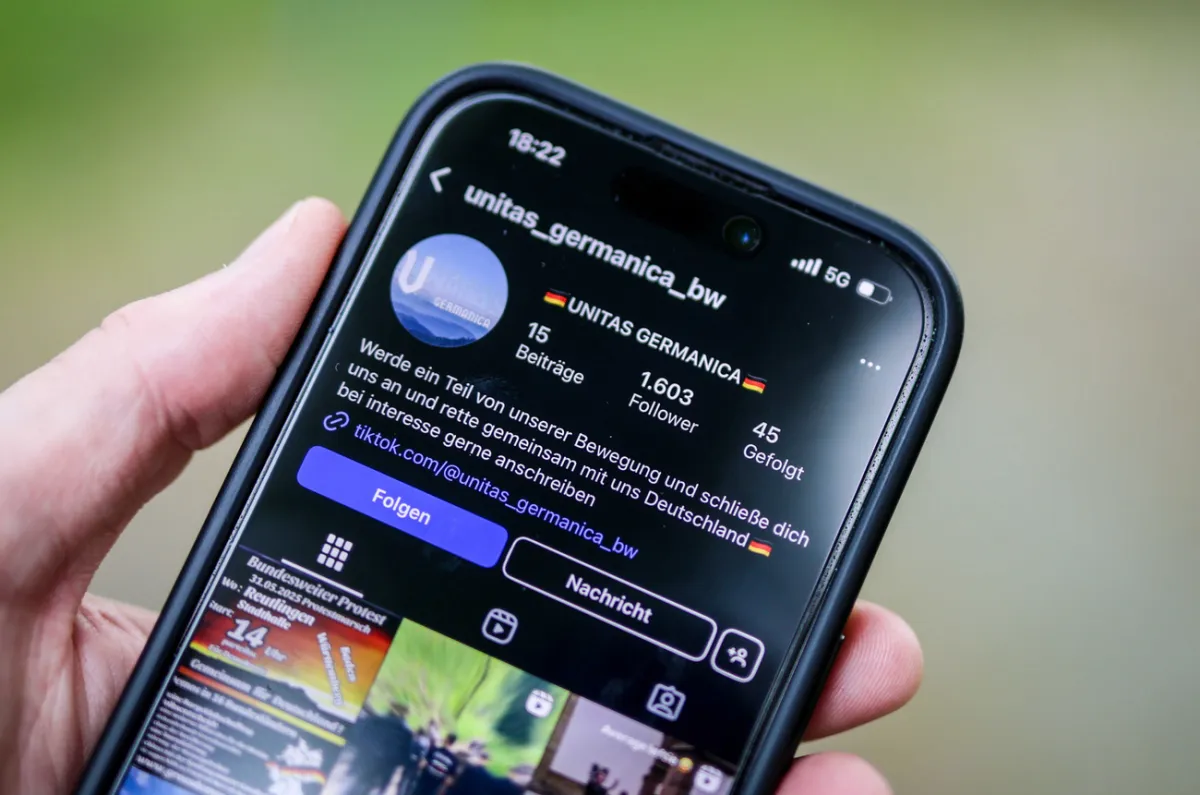
Digital platforms and social media are key communication and mobilisation tools for extremist groups. Through disinformation in particular – which is increasingly AI-generated – they create a kind of counter-public sphere.
Switzerland has long played a role in European far-right networks.
In order to understand how fascist and far-right ideologies have been able to spread, build networks and reorganise themselves since the Second World War, academics are increasingly turning their attention to so-called counter media.
The term counter media encompasses publications that define themselves as being in opposition to a media landscape portrayed as mainstream, hegemonic or elitist.
The first counter-media outlets to describe themselves as such often had a subversive and progressive character and gave a voice to marginalised issues and groups. They included, for instance, feminist magazines of the 1970s and 1980s, such as the West Berlin-based Courage.
Researchers, meanwhile, also use the term to refer to anti-democratic, conspiracy-theory-driven and far-right publications and platforms. In the 21st century, these often call themselves“alternative media”.
Magazines as a handy mediumIn the mid-20th century,“magazines were the most exciting medium for political discourse”, says historian Franca Schaad. She's taking part in a Swiss research projectExternal link, run by the University of Fribourg and the Bern Academy of the Arts, looking at the historical precursors of today's counter media.
Schaad is writing her dissertation on representations of masculinity in periodicals of the New Right, many of which were founded in Germany and Switzerland from the 1960s onwards. Compared to books, magazines were quicker and cheaper to print. As Schaad explains,“this meant that even small groups and individuals could afford to spread their messages”.
1968 protesters: an enemy and a modelThis development coincided with a“structural transformation of the public sphere”, as the philosopher Jürgen Habermas wrote in 1962. The Nazi dictatorship had destroyed press freedom in Germany from 1933 onwards and left a vacuum in the media market after 1945. A few large media companies came to dominate this space.“The '68 movement took issue with this,” says Schaad.
The left-wing student movement pushed for social and political change in Germany, Switzerland and other countries. The right-wing milieu viewed the '68ers with some ambivalence. On the one hand, the leftists were their enemy; on the other hand, their publishing activities were a model.
Many right-wing magazines copied the do-it-yourself style of the left-wing periodicals of the time, with their extensive use of collages and stencil cut-outs.“The aesthetic arose from what was in vogue and technically possible,” says Schaad.
Read our article on how political movements across Europe formed networks after the Second World War:
More More History How the far right became a Europe-wide movementThis content was published on Nov 19, 2025 New research shows how extremists rebuilt cross-border networks in Europe and the part Switzerland played.
Read more: How the far right became a Europe-wide mov
Legal Disclaimer:
MENAFN provides the
information “as is” without warranty of any kind. We do not accept any
responsibility or liability for the accuracy, content, images, videos,
licenses, completeness, legality, or reliability of the information
contained in this article. If you have any complaints or copyright issues
related to this article, kindly contact the provider above.
Comments
No comment