

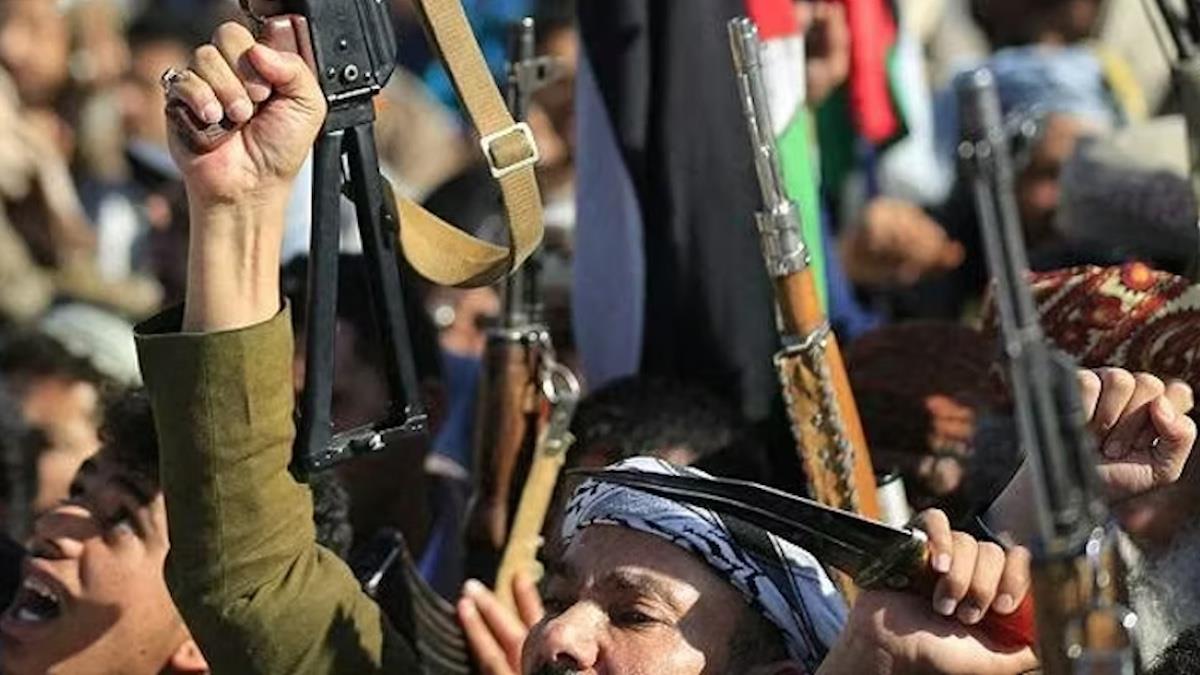
Time To Recognize The Houthis As Yemen's Real Government


According to a September 20 New York Times report, US commanders had approved their targets, American troops were loading bombs onto warplanes, and an attack on Yemen's Ansar Allah forces was about to begin when President Donald Trump abruptly reversed course.
For two weeks, Saudi Crown Prince Mohammed bin Salman had been pleading with Trump to intervene as Ansar Allah (Houthi) forces swept through Saudi-backed forces' positions along Yemen's Red Sea coast.
Trump initially resisted, but after another urgent call from the Saudi crown prince, he instructed the Pentagon to prepare for airstrikes. By Sunday, he had changed his mind again, at least temporarily.
The New York Times reported that many of Trump's closest advisers opposed joining the Saudi war. US military officials also questioned whether renewed bombing would accomplish anything, given that Ansar Allah had withstood more than 1,000 US strikes during a seven-week campaign in 2025. That operation consumed roughly $1 billion in munitions and other military resources in its first month alone.
Meanwhile, Ansar Allah has assured Washington that it does not intend to attack American ships. US officials recently met Ansar Allah representatives in Oman in an effort to preserve that agreement. A new American bombing campaign could undo those diplomatic gains and threaten shipping through the Bab al-Mandab Strait just as the Strait of Hormuz remains severely disrupted.
The crisis spawned by the US war on Iran spread to this dangerous new front on July 13, when the 2022 ceasefire between Saudi Arabia and the de facto Ansar Allah government in Yemen was shattered by a Saudi missile strike on the airport in Sana'a, Yemen's capital.
The Saudi attack was designed to prevent the landing of an Iranian Mahan Air civilian plane carrying passengers returning from the funeral of Iran's assassinated Supreme Leader Ali Khamenei in Tehran. The flight was forced to divert to Hodeidah, 140 miles away on the Red Sea coast.
Yemen's Ansar Allah forces retaliated by attacking the Saudi airport at Abha, near the Yemeni border, with missiles and drones. Since then, hostilities have escalated dramatically.
Ansar Allah forces have captured the strategic port city of Mocha and the remainder of the Red Sea coast from Saudi-backed forces. They are still fighting to consolidate control of the Kahbub mountains that overlook the approaches to the Bab el-Mandeb Strait between the Red Sea and the Gulf of Aden, but they are already preventing Saudi ships from sailing through the Red Sea.
The Saudis have responded with hundreds of air strikes on Yemen. Ansar Allah, in turn, has attacked Saudi airbases and oil infrastructure with missiles and drones. Either the Yemenis or their allies in Iraq struck pumping stations on Saudi Arabia's East-West Pipeline, which was the Saudis' best alternative to the Strait of Hormuz as a route for their oil exports, shutting down the pumping stations, and full operation of the pipeline, for at least a month.
The United States has dispatched an estimated 200 additional troops to Saudi Arabia to provide intelligence and targeting expertise for Saudi airstrikes, using programs like Palantir's Maven AI system, which the US and Israel also use in Gaza, and which US officials now admit was used in the massacre at the Minab girls' school in Iran in February.

Legal Disclaimer:
MENAFN provides the
information “as is” without warranty of any kind. We do not accept any
responsibility or liability for the accuracy, content, images, videos,
licenses, completeness, legality, or reliability of the information
contained in this article. If you have any complaints or copyright issues
related to this article, kindly contact the provider above.
Comments
No comment