

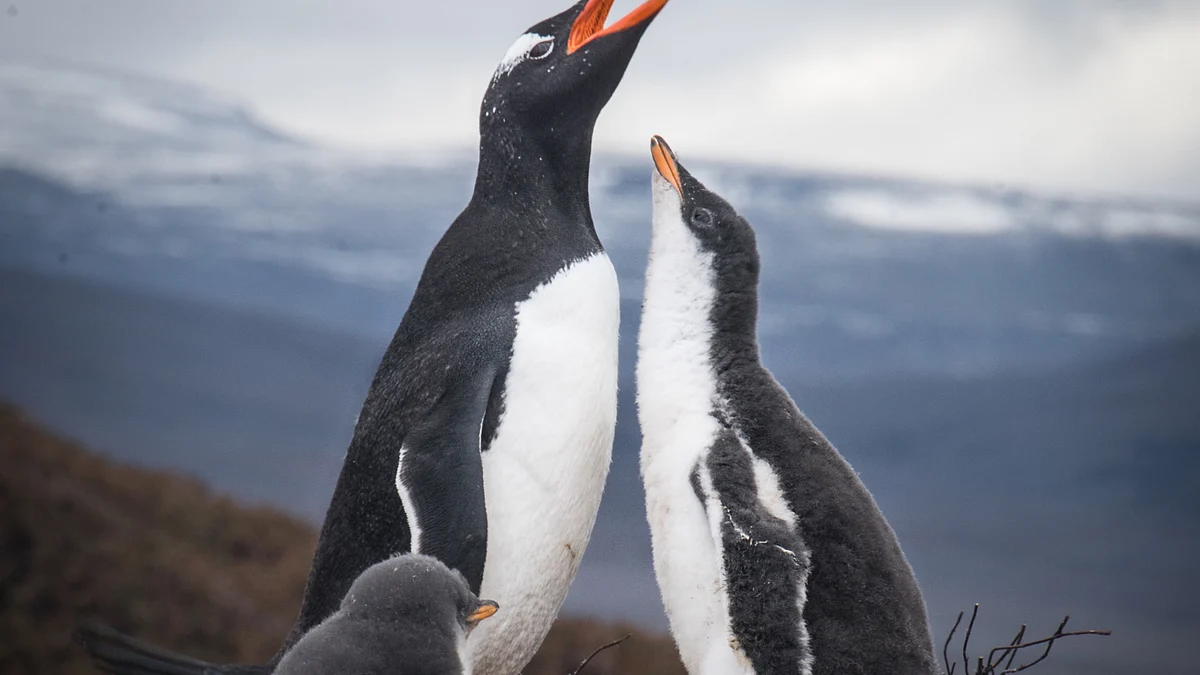
New Penguin Species Discovered After More Than 100 Years - How Did It Stay Hidden?


Researchers have found that what was long considered one widespread species of gentoo penguin is actually four separate species - including one new to science.
Recommended For YouThe newly described species, Pygoscelis kerguelensis, lives on the remote Kerguelen Islands, also known as the Desolation Islands, located in the southern Indian Ocean.
Stay up to date with the latest news. Follow KT on WhatsApp Channels.
Researchers say it is the first new penguin species to be named in more than 100 years.
They looked almost identicalSo, how did an entire species stay hidden for so long? The answer is surprisingly simple: the birds did not look different enough.
Apart from small differences in their size and calls, the newly recognised penguins look very similar to other gentoos.
Scientists describe this as a“cryptic species” - one that looks extremely similar to its relatives but is genetically different.
Their remote locations also made the penguins difficult to study.
To get a clearer picture, researchers analysed whole-genome data from 64 penguins across 10 breeding colonies, covering almost the entire geographical range of gentoo penguins.
The results revealed four distinct evolutionary groups rather than one species.
“For over 100 years it's been controversial as to how many species or how many subspecies there are,” Rauri Bowie, a professor of integrative biology at the University of California, Berkeley and one of the study's senior authors, said when the research was announced.
The study, published in Communications Biology, combined genetic evidence with differences in the penguins' physical characteristics, behaviour and environments.
How did they become different species?Part of the answer may lie in the way gentoo penguins live.
Gentoos can eat a range of food, including fish, krill, squid and cuttlefish. Because they can feed on what is available around them, populations can remain close to their breeding colonies rather than travelling long distances in search of a particular food source.
Over hundreds of thousands of years, isolated populations adapted to their own environments and gradually became genetically different.
Researchers estimate the four groups separated over roughly the past 300,000 to 500,000 years.
The Antarctic Polar Front, an ocean boundary where water conditions change sharply, also helped separate some populations.
The discovery also comes with a warningFinding another species adds to what scientists know about penguin diversity, but the research also raises concerns about their future.
Climate projections used in the study indicate severe losses of suitable habitat for three of the four gentoo groups, while the southern species found around Antarctica could expand its range.
That matters because treating all gentoo penguins as one widespread species could hide problems affecting smaller populations.
Penguins may be doing well in one part of the Southern Ocean while a genetically different population thousands of kilometres away faces very different pressures.
Researchers say recognising the four groups as separate species could allow the conservation needs of each to be assessed individually.
For more than a century, the differences between these penguins were difficult to see.
Now, their DNA has revealed them - at a time when changes to their environment could make understanding those differences increasingly important.
KT FACT BOX | Four penguins, not one-
Pygoscelis papua:
Northern gentoo
Pygoscelis ellsworthi: Southern gentoo
Pygoscelis taeniata: Eastern gentooPygoscelis kerguelensis: Newly described southeastern gentoo from the Kerguelen Islands
How scientists found them: Whole-genome data from 64 penguins across 10 breeding colonies helped reveal four distinct evolutionary groups
Why it matters: Climate projections indicate major habitat losses for three groups, supporting calls for their conservation needs to be assessed separately
ALSO READ- Brazil fossil lost for 20 years helps identify new reptile species from 240 million years ago New cat species identified for first time in over a century in Bolivia Viral penguin visits Global Village, looks for parking zone code in Dubai

Legal Disclaimer:
MENAFN provides the
information “as is” without warranty of any kind. We do not accept any
responsibility or liability for the accuracy, content, images, videos,
licenses, completeness, legality, or reliability of the information
contained in this article. If you have any complaints or copyright issues
related to this article, kindly contact the provider above.
Comments
No comment