

Inside Dubai Police's K9 Unit: Meet UAE Women Training Dogs For High-Stakes Missions


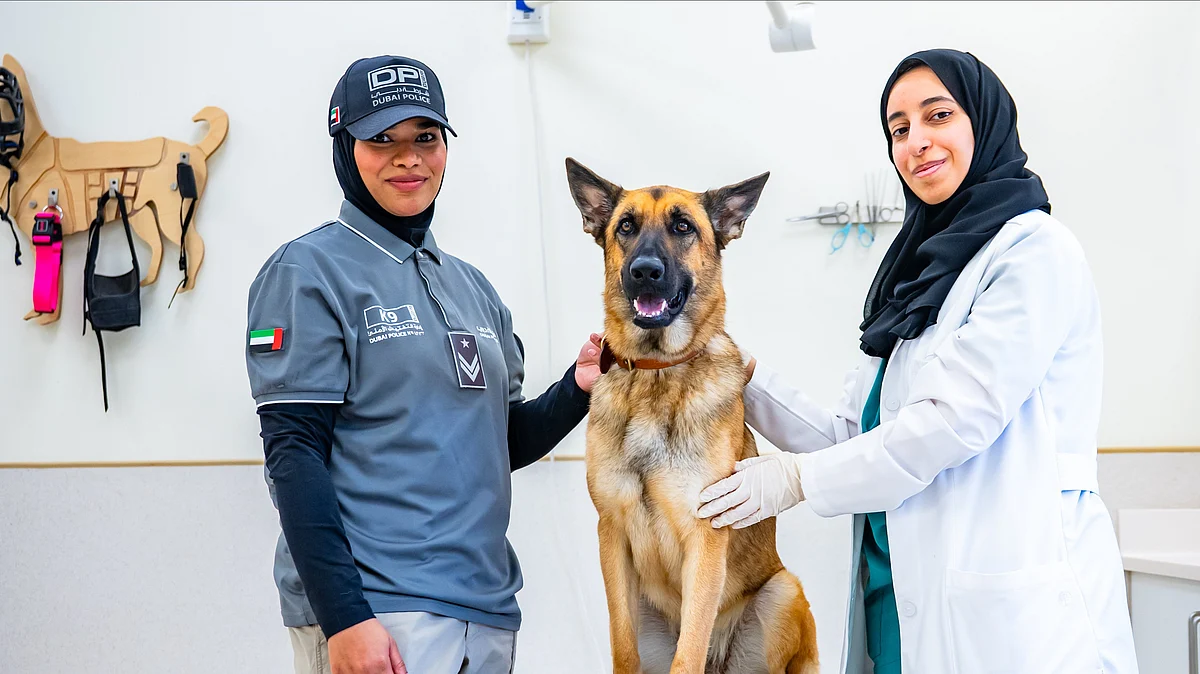
At Dubai Police's K9 Unit, Emirati women are playing specialized roles ranging from training and handling police dogs to supporting major security operations and ensuring the animals remain healthy and mission-ready.
Recommended For YouFor Corporal First Class Rawdah Abdullah Salem Obaid, Assistant Trainer at the Security Inspection Department's K9 Unit, some of her most memorable experiences have come through assignments involving major events.
Stay up to date with the latest news. Follow KT on WhatsApp Channels.
She helped secure COP19, the 19th Conference of the Parties to the United Nations Framework Convention on Climate Change, where the K9 team provided security support at one of the major international conferences hosted in the UAE.
“We secured the event by maintaining a security presence and helping ensure the safety of the event and those attending,” she told Khaleej Times.
The work has also extended beyond the UAE for female members of the K9 team. While Obaid herself has not participated in an overseas assignment, she said female colleagues have represented the UAE in missions in France and Morocco.
In France, the team helped secure major events, including securing venues and supporting crowd safety. In Morocco, female K9 personnel participated in missions involving searches for missing people.
Obaid said Dubai Police dogs have also contributed directly to successful security operations across different specializations, helping officers obtain positive results in cases and investigations.
Preparing for different environmentsBut preparing a K9 for such demanding work requires more than routine training.
Search-and-rescue dogs undergo intensive training in different environments to prepare them for a wide range of conditions and missions. Training may take place on flat terrain, in desert environments, forests, and other locations.
For dogs based in the UAE, exposure to different climates is particularly important.“The environment can be different. We may have hot weather here, while the dogs could be required to work in colder countries,” Obaid said. Training them in varied environments helps the dogs adapt and continue working effectively despite changes in climate and surroundings.
For Obaid, the opportunity to take part in missions itself is an achievement particularly when those missions produce positive results.“Participating in missions itself is an achievement, whether inside the UAE or abroad, especially when the missions result in positive outcomes,” she said.
A role where women make a difference
Working in a specialized, field-based security role has not stopped Obaid from embracing the job's challenges. She said the support given to Emirati women has helped build confidence among women working in fields that were once seen as traditionally male-dominated.
“The support from our country, government and leadership empowers women in different fields,” she said.“That support has given me confidence, which has reflected positively on my professional performance and helped develop my skills and security awareness.”
Female K9 personnel also play an important role during searches and inspections involving women, she said, particularly in cases where the presence of female officers is necessary because of the UAE's social and cultural environment.
One dog, one trainer
Behind every working K9 is also a close relationship with its handler. Obaid explained that each dog is assigned to a specific trainer, allowing the handler to understand the animal's behavior, abilities and working style.
People entering the specialized field often already have an interest in dogs, while others develop their skills through specialist and refresher training.
The unit itself has a range of K9 specializations, including searches for missing people, explosives detection, narcotics detection and tracking. The dogs also come in different breeds, including Cocker Spaniels, Labradors, Belgian Malinois and German Shepherds.
Their roles, however, are not determined by breed alone.“Each dog's specialization depends on its assessment, its build, size, intelligence and speed,” Obaid explained.
Some smaller dogs, for example, can enter spaces where larger dogs may not, making them particularly useful for certain search operations.
Caring for the force's four-legged officers
While trainers prepare the dogs for demanding assignments, another team works behind the scenes to make sure they are physically ready.
First Lieutenant Dr Maryam Abdullah Al Jafla, a veterinarian at the K9 Unit, oversees the veterinary care of the police dogs.
The unit currently has 76 police dogs, all of which must undergo regular veterinary checks.
The veterinary clinic includes an examination room, treatment room and dental-cleaning room, with routine checks forming part of the unit's preventive healthcare program.
Every dog is weighed and undergoes a physical examination to ensure there are no illnesses, infections or other health problems. The dogs are checked throughout the working week, with all 76 required to pass through the clinic as part of their regular care.
“We have a preventive approach. We need to maintain the dogs' weight and monitor their health through regular examinations,” Al Jafla said.
Their care also includes regular parasite prevention, vaccinations and blood tests. The dogs receive annual vaccinations, while blood and biochemical tests are carried out in the laboratory to check their internal health not just their physical appearance.
Dental care is another important part of the programme. Plaque and tartar can build up on dogs' teeth, particularly in smaller breeds, so regular dental cleanings are an important part of their healthcare. The veterinary team performs dental cleanings as needed, with some dogs needing the procedure once or twice a year.
Making the vet clinic a safe place
Just as important as the medical care is ensuring the dogs do not associate the veterinary clinic with fear. The team uses positive reinforcement to help the K9s become comfortable with the clinic, examination room and weighing scales.
“They have been trained that the veterinary area is not something to be afraid of,” Al Jafla said.
The approach has made a visible difference, with the dogs becoming familiar with the routine and even approaching the weighing scale when they enter the clinic.
For these women, their work is about more than handling highly trained police dogs. It is about preparing them, caring for them, and working alongside them in the service of the community.
And for Al Jafla, the message she wants to share with Emirati women is simple:“An Emirati woman is strong, with firm foundations, and always strives to be the best.”
ALSO READ- From Hatta to Nepal: How Dubai Police's 16-member rescue team supports mountain operations Dubai Customs unveils K9 vehicles with thermal sensors to stop drug smugglers Found live puppies in bin: UAE rescuer recalls moment that sparked 19-year mission

Legal Disclaimer:
MENAFN provides the
information “as is” without warranty of any kind. We do not accept any
responsibility or liability for the accuracy, content, images, videos,
licenses, completeness, legality, or reliability of the information
contained in this article. If you have any complaints or copyright issues
related to this article, kindly contact the provider above.
Comments
No comment