

403
Sorry!!
Error! We're sorry, but the page you were looking for doesn't exist.
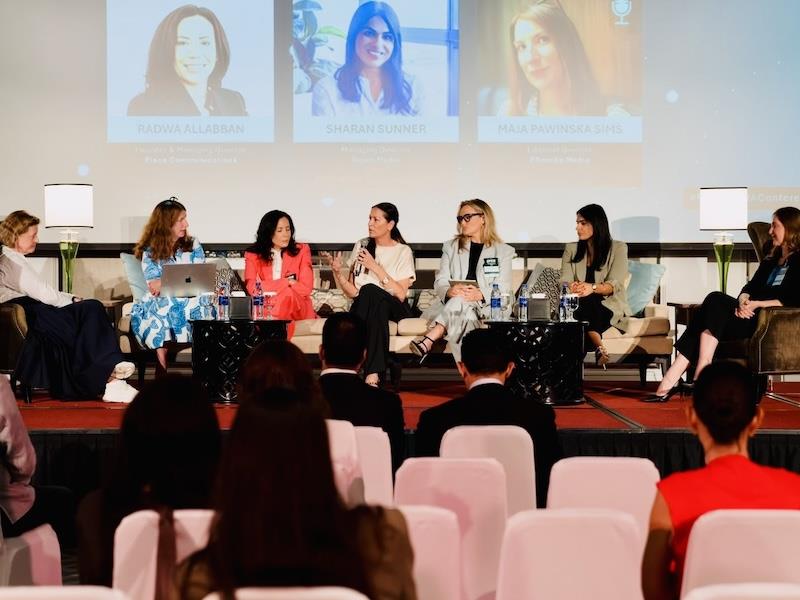
PRCA MENA: Soft Skills Should Be Rebranded As Power Skills


(MENAFN- PRovoke)
DUBAI - Communications leaders at the PRCA MENA conference have urged organisations to treat trust, relationships and emotional intelligence as serious sources of influence, rather than“soft” skills or secondary considerations.
The discussion, chaired by PRovoke Media editorial director Maja Pawinska Sims, brought together five senior women leaders in the region: Loretta Ahmed, founder and CEO of Houbara Communications; Louise Jacobson, managing partner of Brazen MENA; Mariaan Valero, head of content and marketing at Weber Shandwick MENAT; Nickie Aiken, head of communications at the British Embassy UAE; Radwa Allabban, founder and managing director of Place Communications; and Sharan Sunner, managing director of Seven Media.
Opening the session, entitled 'Power: Soft is Might', Pawinska Sims said that in complex stakeholder environments,“trust, relationships, judgement and credibility are often the things that make progress possible and move things forward.”
The panellists agreed that formal authority and profile do not necessarily equate to influence. Jacobson said titles carried power, but that real influence came from trust, and could reside with the more junior person in a room who understood the work, media landscape or client challenge most closely.
Ahmed drew a distinction between authority and influence:“Authority is more about compliance, whereas I think influence is more about commitment.” She said credibility was built through delivering consistently over time, being prepared to give difficult advice, and investing in relationships before entering the room.
That could mean adapting the format of communication for different stakeholders, Ahmed said – whether through a phone call, email, coffee or separate meeting – in order to build genuine understanding and coalition.
For Jacobson, alignment should not be confused with unanimous agreement.“It's not about everyone agreeing; it's about everyone agreeing on principles that make you move forward,” she said. Listening, empathy and identifying common ground were central to building the trust required to navigate difficult conversations.
Aiken, who joined the British Embassy UAE last year, said effective soft power depended on actions matching words.“Governments can promise as much as they want to promise, but it's what we see in reality,” she said, warning that trust would be lost if commitments were not backed up.
She cited a recent example of the British Embassy's communications approach: the Welsh Guards Band playing the UAE national anthem outside Wellington Barracks in London, marking the 50th anniversary of the UAE's unification of its armed forces. The gesture was deliberately respectful and understated, she said, but was picked up by UAE media outlets and demonstrated the value of acknowledging a partner on its own terms.
Allabban reflected on the importance of cultural awareness in difficult conversations. Having lived and worked in both Egypt and the UK before moving to the UAE, she said that“it's not so much the message you're carrying, but how you relay it”, adding that communicators needed to be cognisant of the culture in which they operated.
The conversation also explored whether women's experience of navigating power without always being handed formal authority offered lessons for organisations. Pawinska Sims cautioned against reducing leadership to gender stereotypes, but asked whether women's approaches to coalition-building, negotiation and influence deserved greater recognition.
Jacobson argued that qualities frequently categorised as“soft skills” – collaboration, listening, empathy and relationship-building – should instead be understood as“power skills”, particularly in an AI-driven environment where human judgement and connection will become more valuable.
She cited Global Women in PR research which found that 74% of respondents believed women in the boardroom improved creativity, 73% said they improved productivity and 67% said they improved profitability. Yet, while women make up around two-thirds of the communications industry, only 51% hold board positions, she said.
Valero suggested that the language itself needed reconsidering.“Soft skills is a terminology that not many women love,” she said.“Maybe we should rebrand it as relationship skills, because many of those things are tied to building good relationships – and our business is built on relationships.”
The panellists also stressed the commercial and reputational consequences of weak relationships. Sunner pointed to recent high-profile crises as reminders that even well-resourced brands and public figures could lose followers, supporters and trust when situations were mishandled.
She urged organisations to listen more closely to those around them.“You don't have to be the loudest person in the room to influence people,” Sunner said.“You need to listen – to your team, your client and what people are saying on social media.”
In closing, the group called for organisations to act with integrity when things go wrong, support women in middle management, and put credibility ahead of empty visibility.
Ahmed's final challenge to the industry was particularly direct:“Can we please all stop obsessing about visibility and focus on credibility?” She added that commentary and thought leadership needed real depth and originality if it was to“shift the reputational needle.”
The discussion, chaired by PRovoke Media editorial director Maja Pawinska Sims, brought together five senior women leaders in the region: Loretta Ahmed, founder and CEO of Houbara Communications; Louise Jacobson, managing partner of Brazen MENA; Mariaan Valero, head of content and marketing at Weber Shandwick MENAT; Nickie Aiken, head of communications at the British Embassy UAE; Radwa Allabban, founder and managing director of Place Communications; and Sharan Sunner, managing director of Seven Media.
Opening the session, entitled 'Power: Soft is Might', Pawinska Sims said that in complex stakeholder environments,“trust, relationships, judgement and credibility are often the things that make progress possible and move things forward.”
The panellists agreed that formal authority and profile do not necessarily equate to influence. Jacobson said titles carried power, but that real influence came from trust, and could reside with the more junior person in a room who understood the work, media landscape or client challenge most closely.
Ahmed drew a distinction between authority and influence:“Authority is more about compliance, whereas I think influence is more about commitment.” She said credibility was built through delivering consistently over time, being prepared to give difficult advice, and investing in relationships before entering the room.
That could mean adapting the format of communication for different stakeholders, Ahmed said – whether through a phone call, email, coffee or separate meeting – in order to build genuine understanding and coalition.
For Jacobson, alignment should not be confused with unanimous agreement.“It's not about everyone agreeing; it's about everyone agreeing on principles that make you move forward,” she said. Listening, empathy and identifying common ground were central to building the trust required to navigate difficult conversations.
Aiken, who joined the British Embassy UAE last year, said effective soft power depended on actions matching words.“Governments can promise as much as they want to promise, but it's what we see in reality,” she said, warning that trust would be lost if commitments were not backed up.
She cited a recent example of the British Embassy's communications approach: the Welsh Guards Band playing the UAE national anthem outside Wellington Barracks in London, marking the 50th anniversary of the UAE's unification of its armed forces. The gesture was deliberately respectful and understated, she said, but was picked up by UAE media outlets and demonstrated the value of acknowledging a partner on its own terms.
Allabban reflected on the importance of cultural awareness in difficult conversations. Having lived and worked in both Egypt and the UK before moving to the UAE, she said that“it's not so much the message you're carrying, but how you relay it”, adding that communicators needed to be cognisant of the culture in which they operated.
The conversation also explored whether women's experience of navigating power without always being handed formal authority offered lessons for organisations. Pawinska Sims cautioned against reducing leadership to gender stereotypes, but asked whether women's approaches to coalition-building, negotiation and influence deserved greater recognition.
Jacobson argued that qualities frequently categorised as“soft skills” – collaboration, listening, empathy and relationship-building – should instead be understood as“power skills”, particularly in an AI-driven environment where human judgement and connection will become more valuable.
She cited Global Women in PR research which found that 74% of respondents believed women in the boardroom improved creativity, 73% said they improved productivity and 67% said they improved profitability. Yet, while women make up around two-thirds of the communications industry, only 51% hold board positions, she said.
Valero suggested that the language itself needed reconsidering.“Soft skills is a terminology that not many women love,” she said.“Maybe we should rebrand it as relationship skills, because many of those things are tied to building good relationships – and our business is built on relationships.”
The panellists also stressed the commercial and reputational consequences of weak relationships. Sunner pointed to recent high-profile crises as reminders that even well-resourced brands and public figures could lose followers, supporters and trust when situations were mishandled.
She urged organisations to listen more closely to those around them.“You don't have to be the loudest person in the room to influence people,” Sunner said.“You need to listen – to your team, your client and what people are saying on social media.”
In closing, the group called for organisations to act with integrity when things go wrong, support women in middle management, and put credibility ahead of empty visibility.
Ahmed's final challenge to the industry was particularly direct:“Can we please all stop obsessing about visibility and focus on credibility?” She added that commentary and thought leadership needed real depth and originality if it was to“shift the reputational needle.”

Legal Disclaimer:
MENAFN provides the
information “as is” without warranty of any kind. We do not accept any
responsibility or liability for the accuracy, content, images, videos,
licenses, completeness, legality, or reliability of the information
contained in this article. If you have any complaints or copyright issues
related to this article, kindly contact the provider above.
Comments
No comment