

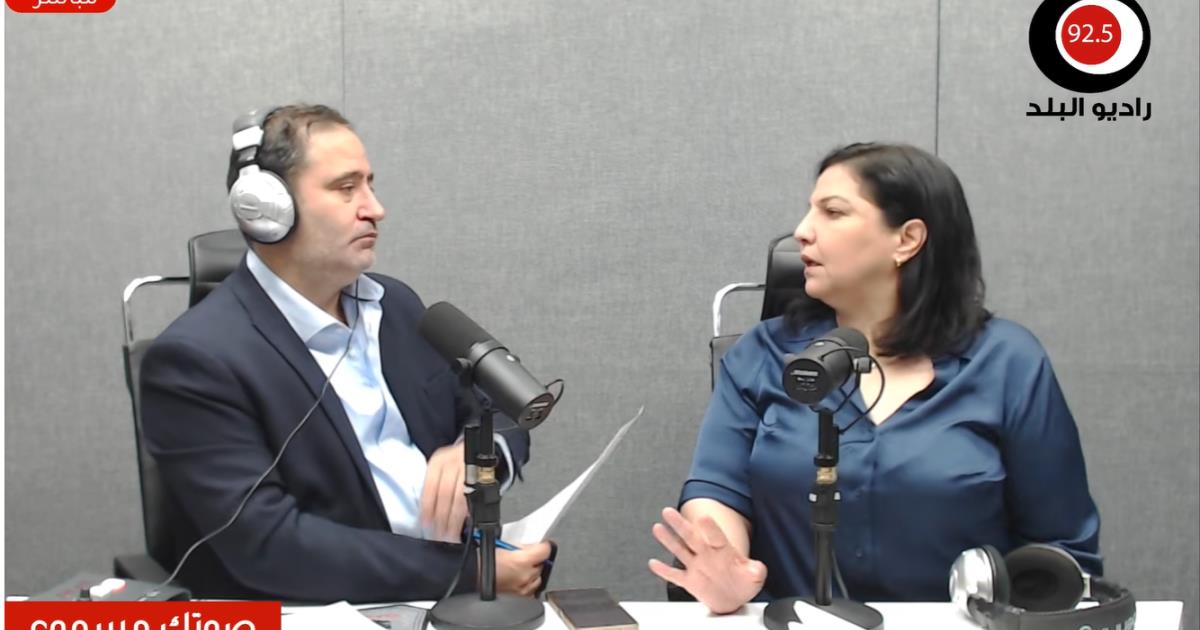
Legal Expert: Linking Work Permits To Residency Creates Legal Dependency And Exposes Migrant Workers To Detention And Deportation


Abdel Aziz's warnings came following the publication of a policy paper by the Phoenix Center for Economic and Informatics Studies, in cooperation with the Justice Center for Legal Aid, examining the impact of linking work permits and residency permits for migrant workers in Jordan. The paper argues that this relationship places workers in a position of legal dependency on employers, limits their ability to change jobs or seek justice when their rights are violated, and exposes them to administrative detention, fines and deportation in cases where they may not be responsible for the violation.
According to the policy paper, titled “The Impact of Work Permits and Residency Permits on the Legal Status of Migrant Workers,” migrant workers form an essential part of Jordan's labor market, particularly in agriculture, domestic work and construction. Their legal status is governed primarily by two legislative frameworks, the Labor Law and the Residency and Foreigners Affairs Law.
The paper notes that when a work permit issued in the name of a specific employer is linked to a residency permit, the loss of one effectively leads to the loss of the other. This gives employers considerable influence over a worker's legal status and limits the worker's ability to move to another job or seek justice when subjected to exploitation.
According to the center, the relationship between employment and residency has helped entrench a system resembling the kafala, or sponsorship system, through the way recruitment, work permit renewal and residency are linked to the employer or to official procedures. The paper describes this as a structural gap in the legal protection of migrant workers.
Speaking on the“Your Voice Is Heard” program on Radio Al-Balad 92.5, Abdel Aziz said the Justice Center for Legal Aid and the Phoenix Center for Economic and Informatics Studies had been working for some time to improve labor rights and the frameworks governing labor markets. She explained that the policy paper prepared by the two organizations examined the impact of work and residency permits on the legal status of migrant workers.
She said one of the reasons for preparing the paper was the findings of an international report on“modern slavery,” which assesses countries according to several criteria, including the nature of the relationship between workers and employers and workers' ability to leave an employment relationship without facing detention or unexpected penalties.
Abdel Aziz said the concept of a“kafala system” does not require the existence of a law formally bearing that name. Rather, it concerns the nature of the relationship between employer and worker and whether the worker can leave the employment relationship without affecting their legal status or exposing themselves to detention or other penalties.
She said Jordan ranked 100th in the index cited during the interview, adding that this indicates that there are people in Jordan who fall, at least partially, within one of the forms described as modern slavery.
She described the situation as“unacceptable for us as Jordanians,” noting that a review of the report showed that other Arab countries had made progress on the index as a result of policies and measures they adopted, even though some had previously ranked behind Jordan on certain indicators.
Abdel Aziz said the issue in Jordan is not necessarily that practices are worse than those in other countries, but also concerns documentation and the way certain policies are handled. She argued that taking“a few steps” could help Jordan improve its position on the index, describing this as“a national demand.”
Separating Residency from Work PermitsAbdel Aziz identified several changes that she believes could make a significant difference to the situation of migrant workers. Chief among them is separating residency from work permits, allowing recruitment without tying workers to a specific employer, and enabling workers to change employers without affecting their legal status.
She also raised the issue of detention, questioning the extent to which detention should be used in cases that are essentially related to an employment relationship.
She stressed that regulating the labor market does not mean weakening the state's ability to regulate it.“Regulating the labor market must not begin with, or be based on, depriving workers of their rights,” she said, whether those workers are migrants or Jordanians.
She cited other countries where it is normal for residency and employment to be subject to certain conditions and an employment contract. But, she said, if a worker enters into a dispute with an employer and decides to leave the job, that should not result in imprisonment or detention, nor should the employer have the power to determine whether the worker can remain in the country.
What is needed, she said, is a separation between two systems. The first concerns employment, work permits and labor-market regulation, while the second concerns residency. A relationship between the two systems does not necessarily mean giving employers the power or advantage to act arbitrarily against workers.
Employer Violations Can End Up Punishing WorkersAbdel Aziz explained that Jordan's Labor Law does not distinguish between Jordanian and non-Jordanian workers when it comes to labor rights. The law does not strip undocumented workers, whether they are residing illegally or do not have a work permit, of their labor rights.
She said the law imposes violations on employers and that the employer, rather than the worker, is responsible for the presence of a non-Jordanian worker without a valid work permit.
However, she pointed to a gap between the law and its implementation. The loss of a work permit may lead to the loss of residency and subsequently trigger procedures under the Residency and Foreigners Affairs Law.
She explained that the Labor Law sets out circumstances in which a worker may be deported and that a deportation decision must be justified and issued by the Minister of Labor. In practice, however, when a worker loses both a work permit and residency, authorities may rely on the Residency and Foreigners Affairs Law to remove the worker rather than applying the Labor Law's deportation provisions.
The distinction between deportation and removal is important, she said, because a removal decision does not require justification in the same manner, while a person who has been removed is not permitted to return for five years, according to her explanation during the interview.
She added that while waiting for the legal procedure to be implemented, a worker may be subjected to administrative detention, creating what she described as a“permanent climate of fear” among migrant workers.
This fear, she said, discourages workers from asserting their rights, particularly when they know in advance that leaving an employment relationship could result in deportation, removal or detention.
Detention Can Push Workers into Irregular EmploymentAbdel Aziz linked restrictions on workers to the expansion of irregular employment, saying there is a significant connection between the two.
A worker who enters into a dispute with an employer, leaves the job and is unable to recover their rights may still need to earn a living in Jordan, pushing them into irregular work, she said.
Some workers may go for months without receiving wages or may be subjected to abuse at the workplace. When they attempt to leave, they may be reported as having absconded, she added.
An absconding notification, which is the procedure through which an employer reports that a worker has left employment without the employer's consent, can in a number of cases expose the worker to detention.
Abdel Aziz said some countries have addressed the problem by separating work permits from individual employers, allowing workers recruited for a particular sector greater freedom to move within the labor market after leaving an employer. Any dispute between the worker and employer can then be dealt with under labor law, which determines responsibility.
She stressed that the Labor Law regulates circumstances in which either the worker or employer may terminate an employment contract. These include cases in which a worker has been subjected to abuse, has not been paid on time or has been denied other labor rights.
Three-Month Period to Move to a New EmployerAbdel Aziz said the Ministry of Labor had amended its regulations to give workers a three-month period after the expiry of an employment contract during which they can move to another employer.
However, she noted that the same principle does not apply in the same way to workers who leave an employer because of abuse by the employer or when an employment contract ends as a result of an employer's violation.
A worker does not automatically lose residency simply by leaving a job, she said. However, the loss or cancellation of a work permit can create a problem when residency is renewed because a valid work permit is linked to residency renewal.
Working in a Sector Different from the One Stated on the PermitAbdel Aziz also discussed the problem of workers being employed in sectors different from those specified on their work permits.
She said the center had received complaints from workers holding permits for cleaning or agricultural work while actually working as guards in buildings.
She also referred to cases in which workers were found at locations different from those specified on their work permits and said some had faced deportation or fines that, depending on the case, amounted to significant sums.
The problem requires a regulatory solution, she said, allowing workers to move between sectors where the Jordanian economy needs labor instead of immediately resorting to fines, deportation and detention.
She proposed considering the establishment of a body or authority responsible for regulating migrant workers, or developing a clear mechanism defining the circumstances in which workers are allowed to change employers or sectors.
The Ministry of Labor itself has allowed workers, after the expiry of their contracts, a period during which they can change employers, she said, adding that the approach could be expanded to other circumstances where there is a genuine need for labor in different sectors.
“Permit Trading” and Shifting Recruitment Costs onto WorkersAbdel Aziz also addressed what she described as the problem of“permit trading,” saying that some forms of labor regulation had created a market in which workers, particularly Egyptian workers, pay money to obtain work permits.
The principle, she said, should be that recruitment does not become a financial burden on workers. Employers should bear recruitment costs, and arrangements governing work permits should not create opportunities for any party to profit from the process.
She explained that some employers had previously obtained large numbers of permits, using some of them while leaving others available in exchange for payments made by workers to the employer.
Such practices expose workers to exploitation by employers and can also leave them vulnerable to becoming undocumented at any moment, thereby exposing them to serious legal consequences.
Flexible Work Requires Review and SafeguardsRegarding the flexible work system, or flexible work permits, Abdel Aziz said initiatives aimed at introducing greater flexibility into the labor market are positive in principle. However, she pointed to concerns about the experience, including the loss of certain rights and difficulties in determining who the employer is.
She noted that Bahrain initially introduced a flexible work-permit system before changing the framework. Jordan, she said, needs to reconsider its flexible work system while maintaining the principle of flexibility and providing clearer safeguards for labor rights.
The 90-Day Status Regularization PeriodAbdel Aziz praised the 90-day period launched by the Ministry of Labor to regularize workers' status, describing it as a positive step that allowed exemptions from fines and enabled workers to correct their legal status.
She said the Ministry of Labor is aware that problems exist within the system and is attempting to amend policies and address shortcomings. However, she argued that the required response goes beyond temporary measures and calls for a broader review of the entire system.
The central problem, she added, concerns workers who want to regularize their status but cannot do so independently because the employer is responsible for renewing the work permit.
The problem becomes particularly clear when the employer is the party at fault while the worker ultimately bears the greater burden of the violation, she said.
Domestic Workers and“Absconding” ReportsAbdel Aziz highlighted cases involving domestic workers, saying some of the cases handled by the Justice Center involved women who had gone four or nine months without receiving their wages.
A domestic worker who leaves her workplace because of violations may find herself subject to an absconding report, followed by detention and removal, even though the Labor Law gives workers the right to leave the workplace under certain circumstances when violations have been committed against them.
She stressed that the law should apply to workers as workers regardless of nationality, and that a violation by an employer should not become a reason for punishing the worker.
Concerns Over the Application of Procedures to Egyptian WorkersResponding to a listener who raised concerns about practices that may place greater pressure on Egyptian workers, Abdel Aziz said she did not believe there was targeting or discrimination against a particular nationality in the law itself.
She explained that the law does not distinguish between nationalities, but noted that the nature of Egyptian workers' presence in Jordan means they are more heavily represented in certain sectors, including agriculture and construction.
Egyptians also enter Jordan without visas, she said, which creates specific arrangements related to work permits.
She said measures had been taken to limit the trading of work permits, including setting a ceiling on the number of permits a single farm can obtain. Previously, an employer could obtain large numbers of permits, use some of them and leave others unused.
Such practices, she stressed, expose workers to exploitation and legal risks.
Jordan has taken some steps to improve the situation, including abolishing certain practices associated with the kafala system, she added. What is needed now is to document those improvements, build on them and develop them further.
Administrative Detention: Why Is It Necessary?Abdel Aziz devoted part of the interview to the issue of administrative detention, arguing that the basic principle should be that no person's liberty is restricted except within the narrowest and most necessary limits.
She noted that even within the criminal justice system there is growing reliance on alternative and non-custodial penalties, questioning why a person who has not committed a crime should be detained.
There are alternatives, she said, including giving workers an opportunity to regularize their status or requiring them to have a specific and known place of residence, alongside other options.
Administrative detention not only imposes costs on the state, she argued, but also constitutes a deprivation of liberty and may negatively affect Jordan's standing in indicators related to the rule of law.
She cited France as an example, saying that administrative detention also exists there, but a person subject to a detention order can challenge it on the same day. The competent judicial authority reviews the case within two working days, and a state-appointed lawyer can be provided in cases where legal assistance is required.
Challenging Administrative Detention Is Costly and SlowAbdel Aziz contrasted this with the procedures for challenging administrative detention in Jordan. She said the decision is issued by an executive authority and that challenging it requires recourse to the Administrative Court.
She added that the cost of filing a challenge ranges between JD100 and JD300, with additional requirements related to legal representation. Cases, she said, take an average of around six months.
These procedures make challenging an administrative detention order impractical for migrant workers with limited financial means, she said.
Most migrant workers cannot afford to hire a lawyer and pay the associated fees, nor do they necessarily have families in Jordan who can assist them financially.
She stressed the importance of providing legal aid to migrant workers, both in administrative detention cases and in pursuing labor claims, including unpaid wages, overtime and compensation for damages.
A Labor Dispute Should Not End with a Worker's DetentionAbdel Aziz said one of the problems complicating workers' situations arises when a worker leaves employment and files a complaint against the employer.
Once the employer is notified of the complaint, the employer may in turn report the worker as having absconded, particularly if the worker has filed a labor complaint. Other reports may also be filed against the worker, she said.
In some cases, the result is that the worker is detained and then removed before being given an opportunity to pursue the complaint and obtain justice.
She described such practices as one form of undermining the rule of law.
When a labor complaint or dispute exists between a worker and an employer, the worker should be given an opportunity to pursue the complaint, she stressed.
The executive authorities have the right to regulate the entry and residency of non-Jordanians, she said, but determining whether a worker left employment lawfully or unlawfully should be a matter for the courts.
The courts should determine the rights of the parties and may, in certain cases, rule that a worker is entitled to compensation if the employment contract was for a fixed term.
Legal Aid Is a Right for EveryoneConcluding her remarks, Abdel Aziz explained the role of the Justice Center for Legal Aid, stressing that the center was established to ensure access to justice regardless of nationality or legal status.
The center does not distinguish between Jordanians and migrant workers, Arabs and foreigners, or refugees and non-refugees. It provides consultations across a wide range of legal issues.
Court representation is provided exclusively to people who meet the center's financial eligibility criteria, she explained, to ensure that its resources are directed toward those who cannot afford legal services and to avoid competing with lawyers who are able to provide services for a fee.
The center also provides non-discriminatory assistance to people who are detained and to victims of violence in emergency situations.
She urged people who cannot afford legal services and who have legal cases to contact the center, stressing that emergency cases are followed up immediately, while non-emergency cases are handled through the regular procedures.
She emphasized the importance of workers and employers understanding their legal rights and obligations, noting that lack of knowledge of the law can cause serious harm to all parties in an employment relationship.
Regarding administrative detention, Abdel Aziz also linked the issue to overcrowding in correctional and rehabilitation centers. She noted that the number of people held administratively has declined compared with previous years, but said administrative detention continues to affect various groups, including migrant workers detained for the purpose of removal.
According to her experience dealing with such cases, most of these workers want to regularize their legal status and do not pose a threat to Jordanian society. She therefore questioned the justification for detaining them.
She concluded by calling for a review of policies governing employment and residency, stressing that the labor market can be regulated while protecting workers' rights. Her central message during the interview was: “Regulating employment must not come at the expense of migrant workers.”
Recommendations to Separate Residency from EmploymentThe Phoenix Center, for its part, called in the policy paper for legislative and administrative reforms that would more clearly separate work permits from residency permits and give workers sufficient time to regularize their status without immediately losing their residency.
The legislative recommendations included harmonizing provisions governing employment and residency to prevent overlapping penalties, protecting workers from detention or removal while they are regularizing their status, and linking deportation decisions to the worker's personal responsibility. Workers should be exempt from liability when a violation results from an employer's actions or negligence.
The center also recommended facilitating challenges against deportation and removal decisions, exempting such cases from court fees and treating them as urgent matters, while ensuring that workers have access to legal aid, advice and representation before the relevant authorities.
It called for Article 15 of the Migrant Workers' Instructions to be amended to allow workers themselves to request the cancellation of deportation decisions and to hold non-compliant employers financially responsible.
At the administrative level, the center recommended establishing a comprehensive national system to monitor data on work permits, residency permits, deportation cases and violations, strengthening coordination between the Ministries of Labor and Interior, and providing legal assistance and interpretation services to migrant workers.
It also called for an end to automatic administrative detention and for the adoption of alternatives that allow workers to regularize their legal status, provide adequate periods for doing so, strengthen legal awareness among workers and employers, and develop the capacities of relevant personnel in the Ministries of Labor and Interior.

Legal Disclaimer:
MENAFN provides the
information “as is” without warranty of any kind. We do not accept any
responsibility or liability for the accuracy, content, images, videos,
licenses, completeness, legality, or reliability of the information
contained in this article. If you have any complaints or copyright issues
related to this article, kindly contact the provider above.
Comments
No comment