

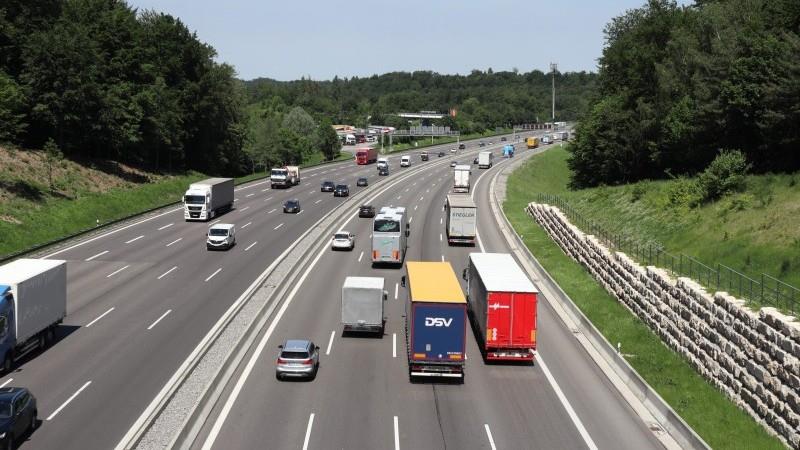
Dutch Road Transport Gains Momentum Despite Truck Charge


The modest recovery in road freight transport is set to continue in 2026. Through August, transport movements were up roughly 1.5% from a year earlier, offering an encouraging signal of underlying business activity.
However, following the 2023 market correction and two years of uneven growth, the recovery remains patchy across the sector. While 2026 began cautiously, momentum could build toward 2027 if Germany continues to emerge from its prolonged economic stagnation.
The European Purchasing Managers' Index suggests improving conditions among industrial customers. This is also reflected in the relatively strong increase in European road freight contract rates.
On average, we expect road freight volumes to grow by around 1% in 2026 and 1.5% in 2027. Market conditions are likely to remain volatile due to ongoing supply chain adjustments and geopolitical disruptions. Nevertheless, weak freight demand is becoming less of a headwind than in recent years.
Diesel prices surge in 2026 due to the Iran warAverage diesel prices in the Netherlands (€ per litre per day, incl. VAT)
Source: CBS, UC, ING Research"> Wage costs continue to rise, while diesel prices surge
Labour costs remain the largest expense item for many road transport companies, accounting for roughly half of total operating costs.
Collective labour agreement wages for drivers increased by 4% at the start of 2026. At the same time, higher pay scales, workforce ageing and elevated sickness absence continue to push personnel costs upward.
Fuel costs have also risen sharply. The conflict involving Iran pushed diesel prices around 30% higher than in 2025 levels through early September. Europe is heavily dependent on diesel imports, while refining capacity remains tight. As long as these conditions persist, diesel prices are likely to stay elevated.
Although fuel surcharges are typically passed on contractually, the speed of the increase has created a temporary lag that has affected profitability.
Total costs set to rise by double digits amid diesel chargesIncrease in total operating costs of a young Euro VI diesel tractor unit (100,000 km/year)
Source: ING Research based on various sources"> Truck charging arrives amid already rapid cost inflationIn addition to wages and fuel, the introduction of the Dutch truck charging scheme in July 2026 has further increased operating costs.
Because charges are linked to vehicle usage and emissions, total transport costs are estimated to rise by roughly 7% to 8%. A temporary discount applies during 2026, but this will expire in 2027, after which indexation will also take effect.
On the positive side, revenues from the scheme are being recycled into sustainability investments within the sector. Higher diesel operating costs improve the business case for electric trucks, helping to accelerate the transition towards zero-emission freight transport.
Companies face increasing financial pressure, particularly in road freight transportPercentage of companies experiencing financial constraints by quarter
Source: CBS"> Cost accumulation requires tight margin management
In practice, the truck charge is also prompting renewed discussions with customers about reducing unnecessary kilometres and improving efficiency.
In highly competitive markets, the additional costs may temporarily pressure margins. Experience from Germany shows that cost pass-through across supply chains takes time.
The cumulative impact of rising costs means transport operators must focus increasingly on cost control and rapid pricing adjustments to avoid liquidity pressures.
Freight rates increased by around 9% during the second quarter and appear broadly sufficient to offset rising costs. However, the second half of 2026 will be the critical test, as the truck charging scheme is fully incorporated into pricing structures. Overall, sector revenues could increase by approximately 15% in 2026.
Road freight transport revenue to rise by double digits in 2026, but so will costsAverage annual growth in revenue and freight rates in the Dutch road freight transport sector
Source: CBS, *ING Research"> Infrastructure maintenance backlogs are a growing challengeTraffic volumes on Dutch roads continue to rise. Both total vehicle kilometres travelled and congestion levels exceeded pre-pandemic levels in 2025.
At the same time, the ageing of existing infrastructure is increasingly visible. Unexpected maintenance needs at key assets, including the Van Brienenoord Bridge, Haringvliet Bridge, and several other important crossings, have led to closures and restrictions for heavy freight transport.
These disruptions result in detours, higher operating costs and reduced efficiency. Transport companies must absorb these costs, adding to already significant cost pressures.
An increasing number of bridges built during the 1960s and 1970s now require major maintenance or replacement. The Netherlands faces an estimated infrastructure maintenance backlog of €34.5 billion through 2038.
As a result, postponements and difficult prioritisation decisions are becoming unavoidable. Bottlenecks are likely to occur more frequently in the years ahead. The Netherlands' long-standing reputation for world-class infrastructure has already slipped somewhat in international rankings.
Although the government has committed an additional €1.5 billion from 2027 onwards, this amount remains insufficient to fully address the challenge.
Regulation and investment requirements driving consolidationNew sustainability regulations, digitalisation and the growing adoption of artificial intelligence are increasing both investment requirements and demand for specialist expertise throughout the sector.
Larger transport operators generally enjoy a competitive advantage in this environment. They have greater capacity to invest in ICT systems, specialised personnel and fleet electrification; they also benefit from larger scale over which to spread overhead costs.
Consequently, we expect consolidation across the transport sector to continue.
At the same time, a flexible network of smaller carriers and subcontractors will remain an essential part of the logistics landscape. These firms often benefit indirectly from the investments, expertise, and service platforms of larger logistics groups, helping them stay competitive in increasingly complex supply chains.

Legal Disclaimer:
MENAFN provides the
information “as is” without warranty of any kind. We do not accept any
responsibility or liability for the accuracy, content, images, videos,
licenses, completeness, legality, or reliability of the information
contained in this article. If you have any complaints or copyright issues
related to this article, kindly contact the provider above.
Comments
No comment