

National Bank Of Hungary Review: A Well-Paused Decision


| 5.50% | Key interest rate Unchanged |
| As expected |
The National Bank of Hungary held the base rate at 5.50% on 22 September, pressing the pause button after the 'mini rate cut cycle' throughout the summer.
Looking ahead, we believe that local politics will honour previous commitments regarding the euro adoption plan, particularly with regard to the medium-term fiscal trajectory, and that EU funds will arrive as expected during the fourth quarter. We expect inflation to remain low and stay below the central bank's inflation target (3%) for the rest of the year, although we anticipate some acceleration in the months ahead, mostly on fuel and services.
Against this backdrop, the biggest limiting factor for potential future interest rate cuts will be the risk environment. Our base case anticipates a limited stabilisation agreement covering the Strait of Hormuz, military de-escalation and possible sanctions relief following the US mid-term elections in November. This could result in a drop in energy prices towards the end of the year, paving the way for monetary easing in Hungary.
If the risk premium for Hungarian assets drops alongside a general improvement in risk sentiment, we see a chance for two or even three rate cuts in the next six months. We forecast the base rate to reach 5.25% by the end of 2026, with a further reduction to 4.25–4.50% expected by the end of 2027.
ING's market viewsToday's NBH meeting delivered exactly what the market expected – a pause in the rate-cutting cycle and a reduction of the inflation target. From the market's perspective, this was a case of ticking boxes that had been anticipated since the April general election. The market remained virtually unchanged in front-end rates following the NBH press conference, with pricing in less than one rate cut over the next 6–9 months, assuming a positive BUBOR spread over the NBH key rate. The curve has flattened significantly over the past two weeks, aligning with our earlier expectations outlined in our NBH preview.
Nevertheless, we see scope for further flattening, even though the curve is already deeply inverted. At the same time, the front end offers a buffer against a potential geopolitical escalation or a spike in energy prices. We believe the market would not hesitate to price in rate hikes at the front end of the curve if energy prices rise again and Hungarian inflation climbs in the coming months (NBH forecast of 3.1% average inflation for next year). Meanwhile, the long end still offers room for convergence trades, and long-term yields should grind lower.
The combination of a lowered inflation target and a halt to rate cuts creates a very positive environment for the FX market. On the other hand, the global backdrop remains largely negative, despite the recent relief rally. The US dollar is at record strength, EUR/HUF remains highly sensitive to energy prices, and Federal Reserve rate hikes could trigger renewed pressure on emerging market currencies, which have shown remarkable resilience so far. The overall picture is thus very mixed, and global factors could easily take the driver's seat. Although our bias remains bullish for the forint, and we could retest the 360 EUR/HUF level, further developments are heavily dependent on global factors at this moment.
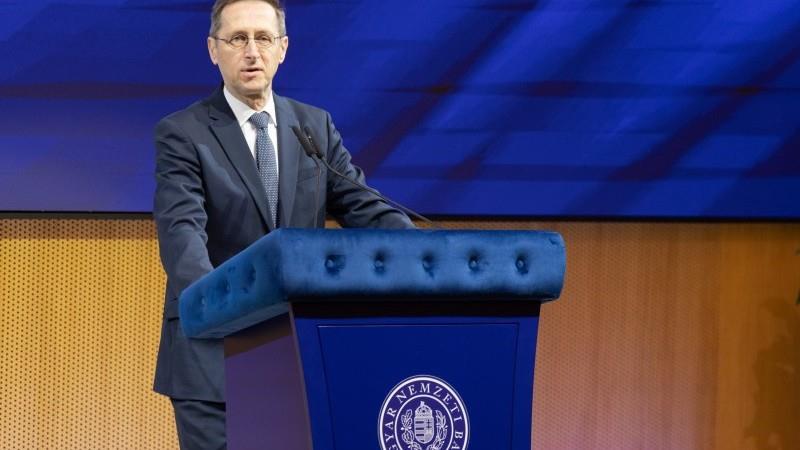
Our three takeaways from the presser Overall, the tone of the rate-setting meeting and the following presentation can be considered as hawkish with some flexibility added with the data-driven mode. During the press conference, Governor Varga specifically said that this approach gives the Monetary Council the opportunity to cut or hold the rate based on incoming information. The agenda was unusually – though expectedly – packed, with the Monetary Council adopting a new inflation target of 2.5% from 1 January 2028 to start paving the way for eurozone membership and bring Hungary into line with the best practices of regional and developed economies. However, this is not just for the sake of euro adoption; recent developments (foreign exchange stability, inflation expectations and actual inflation) are also making it possible. In line with best practice, the NBH will hold eight rather than twelve rate-setting meetings from 2027. This less frequent meeting cycle will allow for more robust decision-making, supported by more data, while the Monetary Council can still meet at any time if the situation warrants it. Governor Varga once again emphasised the importance of FX market stability in reducing and anchoring inflation expectations. These expectations, as well as the perceived inflation by households, have shown further improvement in the third quarter of 2026. We believe that the central bank's implied objective is to maintain the EUR/HUF exchange rate within its most recent range, while reducing volatility, which could lead to a monetary easing in the foreseeable future. Updated GDP and CPI forecasts of the NBH (% YoY) Source: NBH, ING"> The updated GDP & CPI forecastsThe full macroeconomic assessment and outlook will be published alongside the September Inflation Report on 24 September. Based on the latest GDP and inflation forecasts, the NBH's updated outlook aligns with our expectations.
The unfavourable developments in agriculture have worsened the economic outlook, but the negative impact has been somewhat limited by stronger export activity in the industrial sector. Against this backdrop, the central bank revised its GDP forecast downwards, which roughly matches our latest projections. Regarding inflation, the significant upward revision to the 2027 figure is mostly driven by the energy price shock but also sees some contribution from the recently announced excise duty hikes. However, we estimate that the latter is only having a 0.1ppt impact, with the rest being driven by energy prices. The 2028 inflation projection is in line with the new target.
Regarding alternative scenarios, the Monetary Council highlighted six, four of which were labelled as the most relevant. From both an economic activity and an inflation point of view, the risks are fully balanced, supporting the re-enabled data-driven approach.

Legal Disclaimer:
MENAFN provides the
information “as is” without warranty of any kind. We do not accept any
responsibility or liability for the accuracy, content, images, videos,
licenses, completeness, legality, or reliability of the information
contained in this article. If you have any complaints or copyright issues
related to this article, kindly contact the provider above.
Comments
No comment