Tuesday, 02 January 2024 12:17 GMT

Mobile App Install Fraud In MENA: Why Every Install Is Not A Real User


(MENAFN- Mid-East Info) Author: Minakshi Kushwaha { Digital Marketing Executive }

For brands running mobile acquisition campaigns across the MENA region, install fraud can make a successful campaign look better than it really is. Install numbers may increase, but the users behind those numbers may not be genuine. The problem often starts before the app is even installed-with clicks that are manipulated to claim credit for conversions that would have happened anyway. Borderless Finance. AI-Native.

Your digital companion for smarter everyday choices. Built for how you live, earn, and grow. Move money at your pace with AI-powered finance, all in one tap.

Join the waiting

The important question is not simply,“How many installs did we get?” It is:

“How many genuine users did those installs actually bring?” What Is App Install Fraud?

App install fraud happens when fraudulent traffic, devices, clicks, or attribution methods are used to generate or claim credit for app installs.

Sometimes the install itself is completely real. The fraud is in how the install is attributed.

For example, a user may discover an app organically and install it, while a fraudster generates a fake click just before the installation and gets the credit through last-click attribution.

That makes install fraud difficult to spot if you only look at the final install count. How Does Install Fraud Happen? 1. Click Spamming

Fraudsters generate large numbers of clicks in the background, hoping that some users will eventually install the app organically.

The fraudster then claims credit for those installs. 2. Click Injection

A fraudulent app detects when another app is being installed and triggers a fake click at the right moment to capture attribution. 3. Fake Clicks

Bots, emulators, device farms, VPNs and data-centre traffic can generate clicks at scale without genuine user intent. 4. Automated Click Behaviour

Repeated clicks from the same device, IP cluster or source can indicate automated activity rather than normal user behaviour.

The common thread is simple: the click may look like a conversion signal, but it does not necessarily represent a genuine user journey. Why High Click Volume Can Be Misleading

A large number of clicks does not automatically mean strong campaign performance.

One analysis highlighted in research recorded more than 64 million clicks over nine days but only 9,973 installs, producing an extremely low conversion rate. The click-to-install time (CTIT) distribution provided another signal: a large share of installs happened more than 96 hours after the click, making the relationship between the click and install questionable.

This is why marketers should look beyond click and install volumes and examine ho w users move through the funnel. What Happens When Fraudulent Clicks Reach the MMP?

Mobile measurement platforms are designed primarily to attribute conversions. If fraudulent clicks reach the attribution layer, they can influence the data used to evaluate media partners.

This can lead to:
    Installs being attributed to the wrong source Fraudulent publishers receiving credit Media spend moving toward poor-quality traffic Campaign optimisation being based on distorted signals

In other words, install fraud can become harder to stop when the fraudulent source starts looking like a successful source. How Can Brands Detect Install Fraud?

The best approach is to validate traffic before relying on the final install number.

Brands can look for signals such as:
    Repeated clicks from the same device or IP Sudden IP or traffic-volume spikes VPN, proxy and data-centre traffic Invalid device information Unexpected geographic patterns Unusual click-to-install time Low-quality post-install activity Suspicious in-app events

Looking at these signals together gives marketers a clearer picture than relying on one metric alone. Why Real-Time Validation Matters

Detecting fraud after attribution means the money has often already been spent and the conversion has already influenced campaign reporting.

Real-time click validation takes a different approach: identify suspicious traffic before it becomes an attributed conversion.

Clean clicks can continue to the measurement platform, while suspicious clicks can be rejected before they influence attribution, payouts or optimisation.

This creates a cleaner feedback loop for campaign optimisation. What Does Install Fraud Look Like in the MENA Region?

MENA provides a useful example of why install numbers need deeper validation.

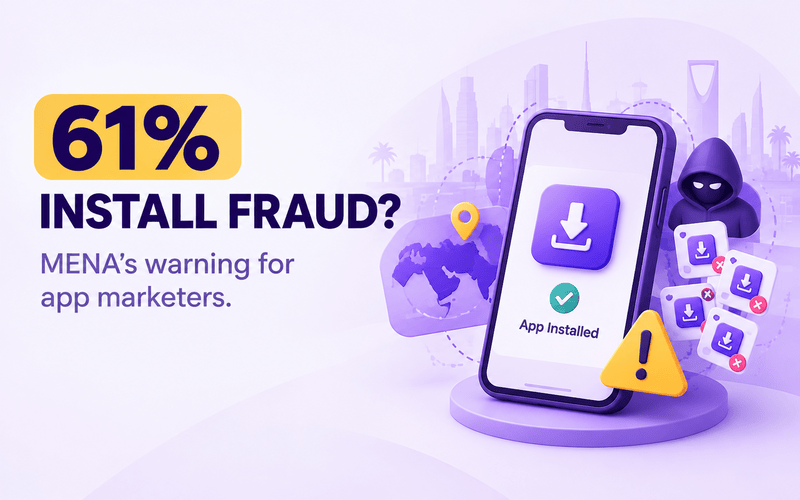
In a documented case involving a leading MENA ride-hailing app, more than 60% of installs were initially identified as invalid, with click spamming and fake devices among the contributing factors. After AI-driven traffic validation was introduced, reported install fraud dropped from 61.37% in March to 38.29% in May. The case also identified fake in-app events and publisher-level manipulation.

A separate 2026 case involving Tamam Finance in Saudi Arabia found that up to 66% of installs were potentially invalid or misattributed. The solution was applied across click, install and post-attribution levels to improve the quality of mobile attribution.

These examples show why MENA advertisers should not treat a growing install count as proof of genuine user acquisition. The Real Goal Is Not More Installs

For mobile marketers, the goal is not simply to generate more installs.

It is to acquire real users who engage with the app and contribute to meaningful business outcomes.

Install fraud can start with a manipulated click, pass through attribution, and eventually influence where the next advertising dollar goes. That is why traffic validation needs to cover the journey from **click to install to post-install activity.

For brands running mobile campaigns in MENA, validating traffic before it becomes a conversion can help separate genuine user acquisition from numbers that only look good in a campaign report.

The question is no longer just how many installs you bought. It is how many genuine users you actually acquired. Frequently Asked Questions What is install fraud?

Install fraud is the manipulation of mobile advertising traffic or attribution to generate or claim credit for app installs that do not represent genuine user acquisition. What are the most common types of install fraud?

Common techniques include click spamming, click injection, fake clicks, automated click activity, fake installs, SDK spoofing and device farms. How can I detect app install fraud?

Look at more than install volume. Analyse click-to-install time, device and IP patterns, traffic sources, geography, and post-install behaviour to identify unusual patterns. Why is install fraud a problem for MENA advertisers?

MENA brands investing heavily in mobile acquisition can see inflated install numbers without receiving the expected level of genuine engagement. Documented cases in the region have shown significant levels of invalid or misattributed installs. Can an install be real but still be fraudulent?

Yes. The user may genuinely install the app, but a fraudster can manipulate attribution and claim credit for that install. This is why install fraud is not always about creating fake installs. How can AI help detect install fraud?

AI can analyse large volumes of click, device, IP, attribution and behavioural signals to identify patterns that may indicate fraudulent activity and detect anomalies in real time. How can brands prevent install fraud?

Brands can validate traffic before attribution, block suspicious clicks and devices, monitor publishers, and continue checking traffic at the install and post-install stages.

MENAFN22092026005446012082ID1111697034


Mid-East Info

Legal Disclaimer:
MENAFN provides the information “as is” without warranty of any kind. We do not accept any responsibility or liability for the accuracy, content, images, videos, licenses, completeness, legality, or reliability of the information contained in this article. If you have any complaints or copyright issues related to this article, kindly contact the provider above.


More Story