

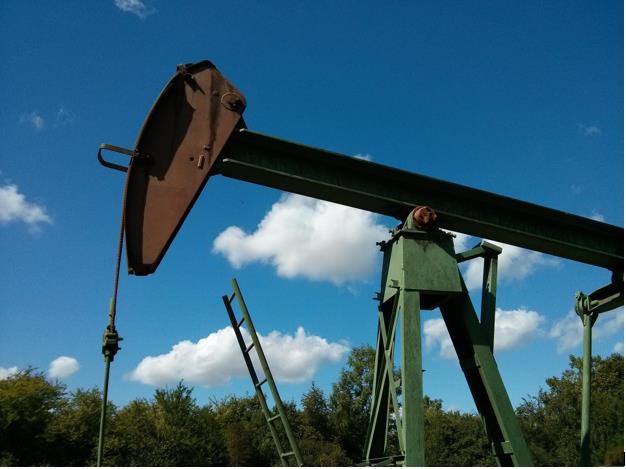
Should Investors Choose Oil or Solana in 2026?


(MENAFN) Entering 2026, the global investment arena will mostly reflect a split between physical commodities on one side and digital infrastructure assets on the other. Oil will continue to be the leading force of the global industrial economy. It remains highly susceptible to any geopolitical disruptions and changes in the supply chain. However, Solana has come to be a critical part of the digital economy, a high-performance instrument of investment for the decentralized finance and tokenization future.
For many people, it is no longer a question of this or that, but rather the question of how these two drastically different assets can coexist and complement each other in a well-diversified portfolio.
Numerous traders are now using sophisticated tools, including a Solana calculator that assists them in determining their exact entry points and potential profits at the moment. Be it that you are tracking the surplus in Brent crude or the number of transactions per second on a blockchain, 2026 is demanding a risk management approach supported by real hard data.
1. Oil Supply Shocks vs. Solana Network Expansion
In 2026, the oil market is facing a huge supply forecast problem, with Goldman Sachs indicating an oversupply of around 2.3 million barrels per day. The surplus, a result of the output of long-cycle projects and a deliberate unwinding of OPEC+ production cuts, is mainly pressuring prices.
In contrast, the value of Solana is increasingly being attributed to its community development. Solana's supply is getting doubled by technical upgrades like the Firedancer validator client. Even if oil prices can go through the roof very suddenly due to political unrest in the areas where energy is produced, Solana's growth is driven by its own internal numbers: developer retention, daily active wallet addresses (which have recently hit almost 3.8 million), and the successful Alpenglow consensus protocol implementation.
2. Energy Demand Cycles vs. Solana Adoption Growth
According to the latest reports from the EIA, the worldwide liquid fuel consumption in 2026 will continue to grow. It is forecasted to increase by around 1.1 million barrels per day. The increased use of renewable energy and energy-efficient vehicles is the main reason for this. Energy demand always goes up and down with the global economic conditions.
As the world economy expands at a relatively constant rate of about 3.1%, energy demand also stays at a similar level. The demand for Solana is not affected by the economic cycle. It depends on the number of stablecoin transfers and the tokenization of real-world assets (RWA). When banks digitize their traditional assets to the blockchain to reduce settlement costs, the need for SOL, the native token used for paying transaction fees, will rise regardless of the ups and downs of the overall economy.
3. Price Volatility in Oil Markets vs. Solana Price Swings
Volatility is still a hallmark characteristic of both assets. What mainly distinguishes them is the fact that their volatility is caused by different factors. If we take 2026 as an example and compare, oil volatility is quite often at a low ebb if we use historical levels as a benchmark, simply because the OPEC+ has a big spare capacity, which acts as a cushion for the world against any sudden shocks. Nevertheless, a single incident of regional dispute might still heavily influence the price of Brent crude to hit anywhere between $70 and $80.
Besides that, Solana went through a spectacular rally in early 2026 to hit $146, only to be followed by a market-wide correction. In the same way, oil volatility is a risk that a person needs to cover.
4. Institutional Exposure to Oil vs. Solana Investment Flows
Institutional capital in the oil market is a familiar tale, with a major part of it being controlled by pension funds, sovereign wealth funds, and large ETFs. The regulatory regime is very clear, thus it is considered a "safe" investment for conservative portfolios. But Solana is on the verge of a massive upheaval in institutional access. Last January saw the major players like Morgan Stanley filing for spot Solana ETFs, following the success of the previous crypto-based products.
The "ETF-ization" of Solana is providing a regulated entry door to institutional desks that, earlier, had shunned the asset owing to custody issues. Oil, obviously, remains a mainstay of institutional portfolios, while Solana is rapidly becoming the go-to "alternative" investment for those looking to diversify beyond traditional tech stocks.
5. Return Potential in 2026
Brent crude, which many analysts expect to average $56, can only have limited upside unless it faces a major supply disruption. At present, the return profile for oil is defensive. On the other hand, Solana offers a scenario with higher risk and higher reward.
TVL in Solana's DeFi protocols is nearing $10 billion. Besides that, the revenue streams are also getting diversified into mobile and gaming. Based on some market models, a move to $200 can be anticipated if ETF, driven institutional inflows continue to be stable. However, investors should keep in mind the crypto market's cyclicality, which might be impacted negatively if global liquidity is tightened.
Final Thoughts and FAQs
Whether to choose oil or Solana in 2026 is a very personal decision that boils down to your investment timeline and risk appetite. Oil is a stabilized, real asset backed by worldwide industrial demand, whereas Solana gives you a piece of the rapidly expanding blockchain platform globally. The oversupply in oil and the expansion in Solana have been the two major storylines to follow this year, as per our observations.
What will Solana be worth in 2026?
It is impossible to pinpoint a price prediction; however, most analysts see it being somewhere between $130 and $200. The factors that will drive the growth of company stock include the adoption of its Firedancer upgrade, which is essential, as well as the volume of institutional inflows through the newly approved ETFs.
What do I invest $1,000 in right now?
For someone prioritizing the safety of the investment and regular dividend income, investing in energy sector ETFs or buying oil futures might be the best options. As for those investors who are willing to take more risks and expect 2x or 3x returns, they often decide to put their money in Solana or other Layer 1 protocols, but this brings in more price fluctuations.
Is Solana a good investment for 2026?
Only with a strong, well-functioning Solana can the crypto sector grow healthily, and with a YOY increase in active addresses, it's clear that the fundamentals are strong. Although it is still a high-risk asset when compared to commodity investments such as oil, its existence as the main settlement platform for stablecoins and the leader of DeFi gives it the potential to become a major player in portfolios with a focus on capital growth for 2026.
MENAFN22092026009267019083ID1111696987

Legal Disclaimer:
MENAFN provides the
information “as is” without warranty of any kind. We do not accept any
responsibility or liability for the accuracy, content, images, videos,
licenses, completeness, legality, or reliability of the information
contained in this article. If you have any complaints or copyright issues
related to this article, kindly contact the provider above.
Comments
No comment