


Why Does a Tail Lift Sink Slowly Under Load? Signs of Hydraulic Seal Aging


(MENAFN- Global Industrial Parts Inc.) Anyone who has operated a tail lift for a few years has probably run into this: the platform reaches full height with a load on it, and before the operator even lets go of the button, the platform starts creeping down. At first it's just a few millimeters — easy to write off as normal. But the drift rarely stops there, and one day the platform doesn't land level with the truck bed anymore.
In more than nine out of ten cases, a tail lift that sinks under load isn't a motor problem or a structural problem. It's the hydraulic seals quietly wearing out.
How Hydraulic Seals Fail Without Anyone Noticing
A hydraulic tail lift lifts the platform using a cylinder, and inside that cylinder, seals keep the fluid on one side so pressure holds the platform in place. Those seals sit under constant pressure, friction, and temperature swings every time the lift cycles. Over time, the rubber hardens and loses elasticity. Once a seal develops a hairline crack or wears thin, fluid starts to bypass slowly — and the platform no longer holds its position; it settles, almost imperceptibly, toward the ground.
This is also why so many tail lift owners don't catch the problem early. The leak happens inside the cylinder, not at an external fitting, so there's no puddle on the ground to alert anyone. By the time fluid actually shows up outside the unit, the seal has usually already degraded well past the early stage.
Three Signs You Can Check Before It Becomes a Safety Issue
1. The static hold test. Raise the platform to full height, release the control, and watch it for 30 to 60 seconds without touching anything. A properly sealed tail lift should hold its position almost perfectly still. Any visible downward drift — even a slow one — is worth logging and tracking over the following weeks.
2. Slower rise, or a soft "give" at the top. If the platform used to snap crisply into its raised position and now eases into it, or briefly dips before settling, that's often an early symptom of pressure loss inside the cylinder, even before drift becomes visible under load.
3. Fluid film on the cylinder rod. A thin oily film on the exposed rod, especially after the platform has been idle overnight, points to a wiper seal starting to let fluid past. This usually shows up before drift becomes obvious under real load, which makes it one of the more useful early warnings for anyone doing routine checks on a tail lift.
Why This Matters More Than It Looks Like It Should
A slowly sinking tail lift isn't just an inconvenience. Under a loaded pallet, even a small unplanned drop changes the geometry between the platform and the truck bed at the exact moment an operator is pushing a hand truck across that gap. It's also a progressive problem — seal wear doesn't reverse itself, and a platform that drifts a few millimeters today will typically drift more next month. Waiting until the sink is dramatic enough to notice without testing usually means the seal has already failed to the point where a full cylinder rebuild, not just a seal swap, is on the table.
Routine tail lift maintenance schedules often focus on visible wear items — cables, hinges, control switches — and skip the static hold test because it takes an extra minute and doesn't produce an obvious "broken" result most of the time. That's exactly why it's worth building in deliberately: the problems that don't show up on a quick visual scan are the ones that turn into unplanned downtime later.
What to Do If You Catch Early Drift
If the static hold test shows even mild sinking, the next step isn't necessarily a full teardown. Start by checking hydraulic fluid level and condition — contaminated or low fluid can mimic early seal wear and is a much simpler fix. If fluid looks clean and topped up, the drift is more likely mechanical, and it's worth having a technician check cylinder seals, check valves, and any pressure-holding components in the circuit before the tail lift goes back into regular daily use.
Facilities that run high cycle counts — daily deliveries, multiple stops, heavier average loads — will see seal wear on a shorter timeline than lighter-duty operations. If your tail lift sees dozens of lift cycles a day, building the static hold check into a weekly routine, rather than waiting for an annual service visit, catches this issue while it's still a cheap fix rather than an emergency one.
For teams evaluating a replacement or upgrade, it's worth looking at how the sealing system on a tail lift is designed before comparing load ratings or price alone — the seal quality and cylinder engineering behind the platform tend to determine how many years pass before this exact problem shows up.
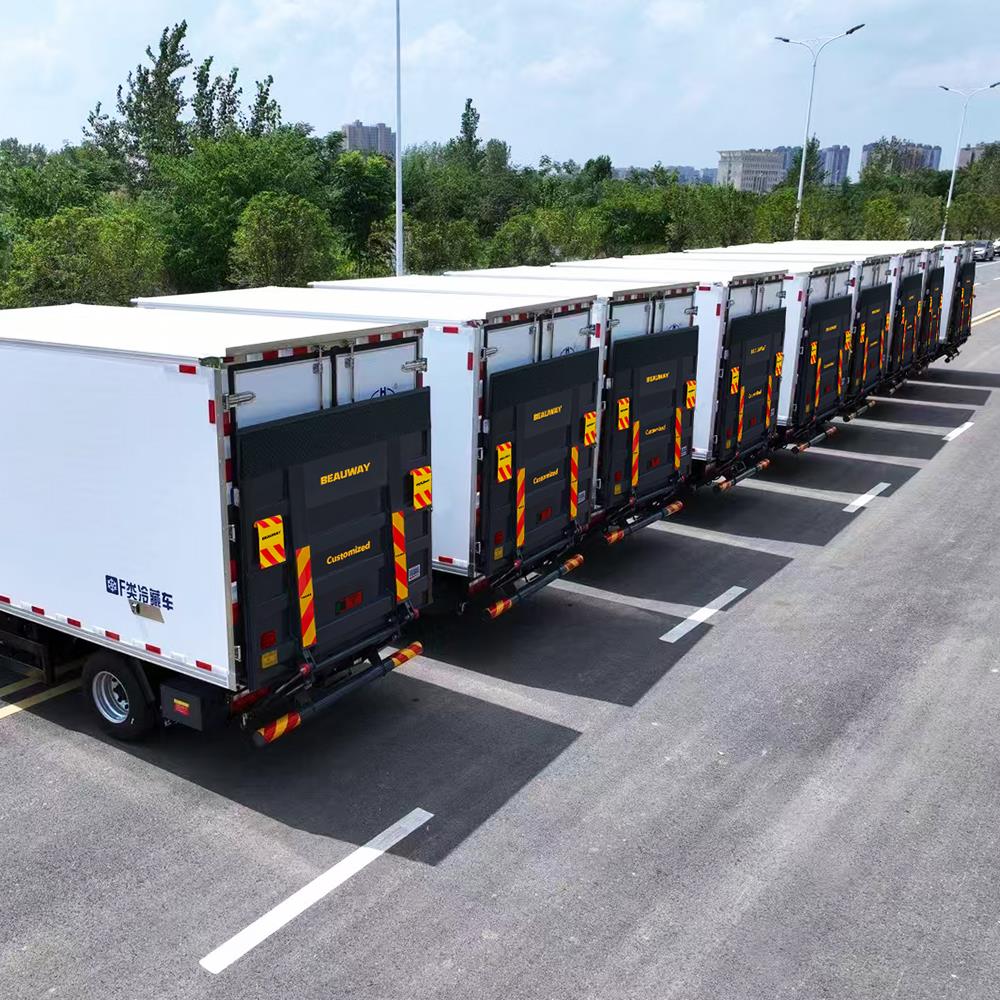
Beauway has been specializing in the field of logistics loading and unloading equipment for many years, with a full product range covering tail lifts, dock levelers, and lifting platforms. For a customized solution tailored to your specific site conditions, you are welcome to schedule a technical consultation.
In more than nine out of ten cases, a tail lift that sinks under load isn't a motor problem or a structural problem. It's the hydraulic seals quietly wearing out.
How Hydraulic Seals Fail Without Anyone Noticing
A hydraulic tail lift lifts the platform using a cylinder, and inside that cylinder, seals keep the fluid on one side so pressure holds the platform in place. Those seals sit under constant pressure, friction, and temperature swings every time the lift cycles. Over time, the rubber hardens and loses elasticity. Once a seal develops a hairline crack or wears thin, fluid starts to bypass slowly — and the platform no longer holds its position; it settles, almost imperceptibly, toward the ground.
This is also why so many tail lift owners don't catch the problem early. The leak happens inside the cylinder, not at an external fitting, so there's no puddle on the ground to alert anyone. By the time fluid actually shows up outside the unit, the seal has usually already degraded well past the early stage.
Three Signs You Can Check Before It Becomes a Safety Issue
1. The static hold test. Raise the platform to full height, release the control, and watch it for 30 to 60 seconds without touching anything. A properly sealed tail lift should hold its position almost perfectly still. Any visible downward drift — even a slow one — is worth logging and tracking over the following weeks.
2. Slower rise, or a soft "give" at the top. If the platform used to snap crisply into its raised position and now eases into it, or briefly dips before settling, that's often an early symptom of pressure loss inside the cylinder, even before drift becomes visible under load.
3. Fluid film on the cylinder rod. A thin oily film on the exposed rod, especially after the platform has been idle overnight, points to a wiper seal starting to let fluid past. This usually shows up before drift becomes obvious under real load, which makes it one of the more useful early warnings for anyone doing routine checks on a tail lift.
Why This Matters More Than It Looks Like It Should
A slowly sinking tail lift isn't just an inconvenience. Under a loaded pallet, even a small unplanned drop changes the geometry between the platform and the truck bed at the exact moment an operator is pushing a hand truck across that gap. It's also a progressive problem — seal wear doesn't reverse itself, and a platform that drifts a few millimeters today will typically drift more next month. Waiting until the sink is dramatic enough to notice without testing usually means the seal has already failed to the point where a full cylinder rebuild, not just a seal swap, is on the table.
Routine tail lift maintenance schedules often focus on visible wear items — cables, hinges, control switches — and skip the static hold test because it takes an extra minute and doesn't produce an obvious "broken" result most of the time. That's exactly why it's worth building in deliberately: the problems that don't show up on a quick visual scan are the ones that turn into unplanned downtime later.
What to Do If You Catch Early Drift
If the static hold test shows even mild sinking, the next step isn't necessarily a full teardown. Start by checking hydraulic fluid level and condition — contaminated or low fluid can mimic early seal wear and is a much simpler fix. If fluid looks clean and topped up, the drift is more likely mechanical, and it's worth having a technician check cylinder seals, check valves, and any pressure-holding components in the circuit before the tail lift goes back into regular daily use.
Facilities that run high cycle counts — daily deliveries, multiple stops, heavier average loads — will see seal wear on a shorter timeline than lighter-duty operations. If your tail lift sees dozens of lift cycles a day, building the static hold check into a weekly routine, rather than waiting for an annual service visit, catches this issue while it's still a cheap fix rather than an emergency one.
For teams evaluating a replacement or upgrade, it's worth looking at how the sealing system on a tail lift is designed before comparing load ratings or price alone — the seal quality and cylinder engineering behind the platform tend to determine how many years pass before this exact problem shows up.
Beauway has been specializing in the field of logistics loading and unloading equipment for many years, with a full product range covering tail lifts, dock levelers, and lifting platforms. For a customized solution tailored to your specific site conditions, you are welcome to schedule a technical consultation.
Global Industrial Parts Inc.
Legal Disclaimer:
MENAFN provides the
information “as is” without warranty of any kind. We do not accept
any responsibility or liability for the accuracy, content, images,
videos, licenses, completeness, legality, or reliability of the information
contained in this article. If you have any complaints or copyright
issues related to this article, kindly contact the provider above.


Comments
No comment