


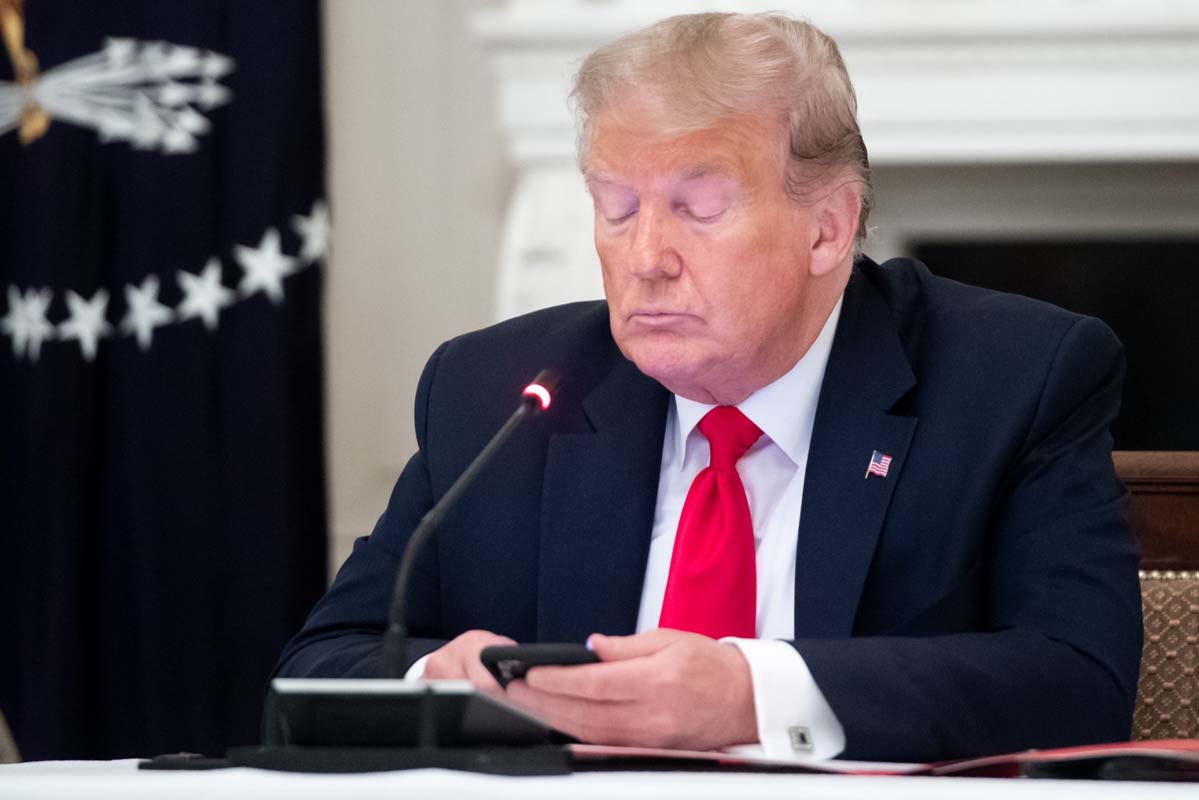
Trump Gets Russia Sanctions Bill as GOP Splits Over Tariffs


(MENAFN) The US Congress has handed President Donald Trump a sweeping Russia sanctions package just ahead of the midterms, even as Republican unease over its tariff provisions lays bare fresh divisions within the party.
The House passed the bill Wednesday in a 262-159 vote, with dozens of Democrats crossing the aisle to join Republicans in support. The legislation now heads to Trump's desk for signature.
The bulk of the Republican conference backs the measure, which mandates sanctions on top Russian officials — including President Vladimir Putin — along with oligarchs, state-owned enterprises, and foreign firms propping up Russia's defense sector.
But according to CNN, nearly a dozen Republicans quietly pressed party leadership to strip out provisions handing the administration expanded tariff authority, worried the move could push prices higher just as voters head to the polls.
As written, the bill would empower the Trump administration to slap tariffs as steep as 100% on nations buying Russian oil and gas, a list that includes China and India. While US Trade Representative Jamieson Greer would ultimately set the specific tariff rate, some Republicans remain wary that the provision hands Trump excessive latitude over trade policy, with potentially broad economic fallout.
Democrats have leveled similar criticism at the tariff language. House Democratic Leader Hakeem Jeffries came out against the bill, questioning the logic of expanding the president's economic powers. “Why in the world would this Congress give this president additional authority to visit that kind of economic harm on the American people?” he said.
Three senior House Democrats — Gregory Meeks, Richard Neal, and Don Beyer — echoed that opposition, warning the bill would "do more harm than good." “This bill would dramatically expand presidential tariff authorities while failing to mandate sanctions on Russia, both of which are unacceptable,” they said in a joint statement.
Backers on both sides of the aisle counter that the tariff authority is narrowly defined and tightly structured, dismissing fears of an unchecked expansion of presidential trade power.
The bill was first introduced in April 2025, capping more than a year of negotiations spearheaded by Sen. Lindsey Graham, who secured Trump's support shortly before his death.
The House passed the bill Wednesday in a 262-159 vote, with dozens of Democrats crossing the aisle to join Republicans in support. The legislation now heads to Trump's desk for signature.
The bulk of the Republican conference backs the measure, which mandates sanctions on top Russian officials — including President Vladimir Putin — along with oligarchs, state-owned enterprises, and foreign firms propping up Russia's defense sector.
But according to CNN, nearly a dozen Republicans quietly pressed party leadership to strip out provisions handing the administration expanded tariff authority, worried the move could push prices higher just as voters head to the polls.
As written, the bill would empower the Trump administration to slap tariffs as steep as 100% on nations buying Russian oil and gas, a list that includes China and India. While US Trade Representative Jamieson Greer would ultimately set the specific tariff rate, some Republicans remain wary that the provision hands Trump excessive latitude over trade policy, with potentially broad economic fallout.
Democrats have leveled similar criticism at the tariff language. House Democratic Leader Hakeem Jeffries came out against the bill, questioning the logic of expanding the president's economic powers. “Why in the world would this Congress give this president additional authority to visit that kind of economic harm on the American people?” he said.
Three senior House Democrats — Gregory Meeks, Richard Neal, and Don Beyer — echoed that opposition, warning the bill would "do more harm than good." “This bill would dramatically expand presidential tariff authorities while failing to mandate sanctions on Russia, both of which are unacceptable,” they said in a joint statement.
Backers on both sides of the aisle counter that the tariff authority is narrowly defined and tightly structured, dismissing fears of an unchecked expansion of presidential trade power.
The bill was first introduced in April 2025, capping more than a year of negotiations spearheaded by Sen. Lindsey Graham, who secured Trump's support shortly before his death.

Legal Disclaimer:
MENAFN provides the
information “as is” without warranty of any kind. We do not accept
any responsibility or liability for the accuracy, content, images,
videos, licenses, completeness, legality, or reliability of the information
contained in this article. If you have any complaints or copyright
issues related to this article, kindly contact the provider above.


Comments
No comment