

Philippine Supreme Court To Congress: Act Now On Political Dynasties


Following its August 26 en banc session, the SC consolidated three petitions and dismissed one petition challenging the prolonged absence of an anti-political dynasty law. It directed Congress to define political dynasties and determine the scope of the prohibition in its decision announced on Wednesday.
Recommended For YouThe magistrates added the country's 1987 Constitution has been ignored long enough. They called on the Senate and the House of Representatives to pass an anti-dynasty law before the 2028 national elections.
Stay up to date with the latest news. Follow KT on WhatsApp Channels. What is a political dynasty?
Political dynasticism is the practice of having families, even entire clans, occupying elective and appointed government offices in similar or varying positions at the same time. In the Philippines, elective positions are swapped with family members and passed on to the next generation like a birthright.
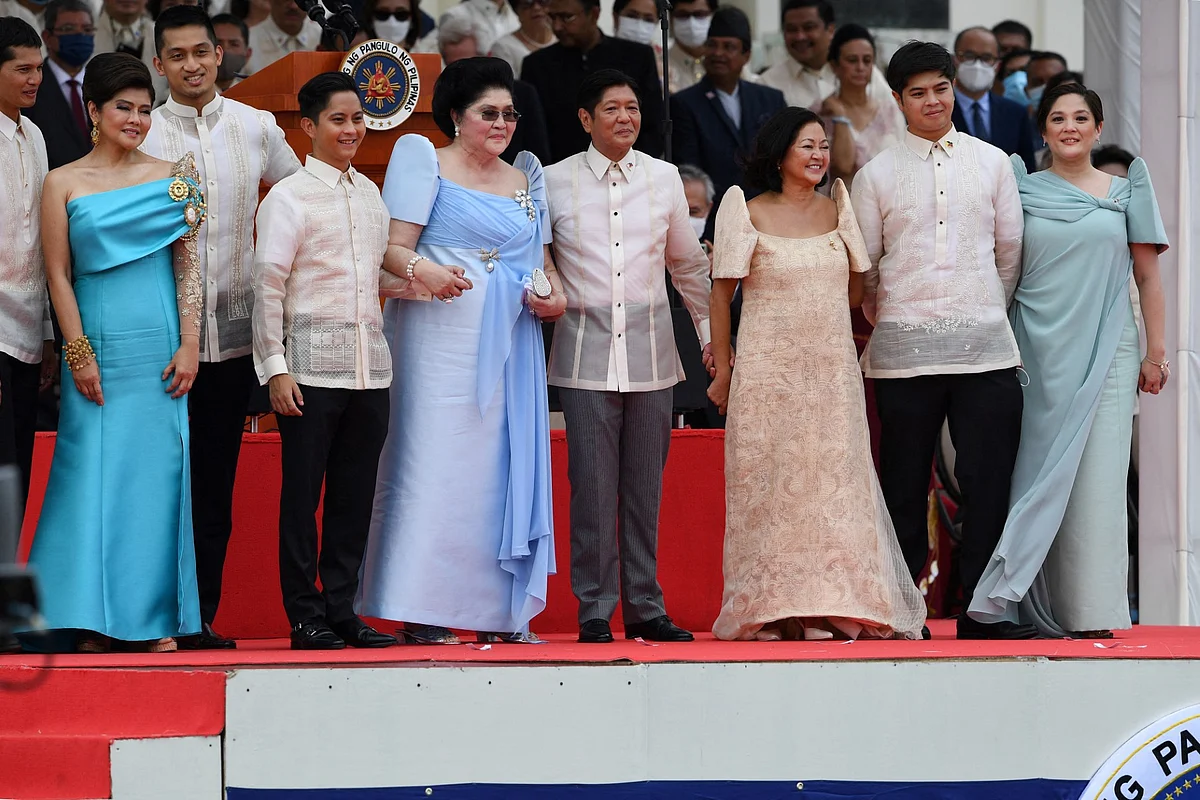
Philippine President Ferdinand Marcos Jr 's family is a classic example. His eldest son is a representative while a sister is a senator. Several other members of his extended family are representatives (including former speaker Ferdinand Martin Romualdez, who is facing plunder charges) governors, vice-governors, mayors and ambassadors.
The president himself is a third-generation dynast, a grandson of a representative and son of a former president who was his namesake. His mother, Imelda Marcos, was herself a representative, governor and cabinet minister.
While the Marcos dynasty holds sway in the Ilocos region and Leyte province, the family of Vice President Sara Duterte holds sway over Davao City. Her brother Paolo is a representative while another brother, Sebastian, took over as mayor after the arrest of their father, former president Rodrigo Duterte, who is facing three counts of crimes against humanity at the International Criminal Court.
Sara's nephew is also a representative while two others are Davao City councilors. She is a third-generation dynast, a granddaughter of a governor.
How widespread are political dynasties?Political dynasties hold roughly 54 per cent of all local government positions and up to 80 per cent of congressional seats in the Philippines.
In the Philippine Senate, 83 per cent of the current senators belong to political dynasties. Four sets of siblings – the Cayetanos, Ejercito-Estradas, Tulfos, and Villars, a full third of the 24-seat chamber – are now being asked to stop their practice.
In the House of Representatives (HOR), about 80 per cent of district representatives come from political families. Not content with district representation, the dynasties polluted the partylist system, taking over 66 per cent of the seats. The partylist system should have been a safeguard against political dynasticism.
In local governments, about 87 per cent, or 71 out of 82 provincial governors, belong to political clans, according to reports by the Philippine Center for Investigative Journalism (PCIJ). The centre also reported that about 53 per cent, or 113 out of 149 city mayors, belong to political families.
Meanwhile, an internal HOR study shows that 54 per cent (9,852 out of 17,983) of all local elective posts are held by dynastic members.
How political dynasties affect corruption, poverty?A 2024 Ateneo de Manila University School of Government study showed political dynasties, corruption and poverty share a strong link as the concentration of power in a single family weakens government accountability and increases the risk of abuse.
The monopoly removes internal oversight, making it easy to bypass bureaucratic rules and hide misuse of public funds. Dynastic clans often use government funds, projects, and appointed jobs to reward political supporters rather than fund public goods, the study concluded.
Nowhere is this situation better illustrated than in the case of Romualdez, who is facing plunder charges in connection with the flood control scandal rocking the government of his cousin, Marcos Jr.
Political dynasties have continued to rule the Philippines. After Marcos Sr., three more children of former presidents became heads of state: a Macapagal, an Aquino, and another Marcos.
Under nearly four decades of dynastic rule, 52 per cent of Filipino families rated themselves as poor in a March 2026 Social Weather Stations survey, with regional highs in Visayas and Mindanao.
Various anti-political dynasty bills have been filed in both the Senate and the HOR in the past three decades. None of them has reached the bicameral stages.
ALSO READ- Philippine Martial Law survivors outraged as Imelda Marcos' graft conviction overturned Marcos cousin, Duterte brother got biggest slices of Philippine infrastructure budget Philippines: Marcos cousin Martin Romualdez charged with plunder over flood control scandal

Legal Disclaimer:
MENAFN provides the
information “as is” without warranty of any kind. We do not accept any
responsibility or liability for the accuracy, content, images, videos,
licenses, completeness, legality, or reliability of the information
contained in this article. If you have any complaints or copyright issues
related to this article, kindly contact the provider above.
Comments
No comment