

Commentary: How Strait Of Hormuz Could Shape A Russia-Ukraine Peace Deal


Last week, a seafarer died after the Hercules Star, a tanker anchored off Port Rashid, was apparently hit by a projectile. Earlier, only six commercial vessels had crossed the Strait of Hormuz, and Brent crude was trading above $105 a barrel. Those numbers will shape the Ukraine settlement more than anything said in Moscow or Kyiv this month.
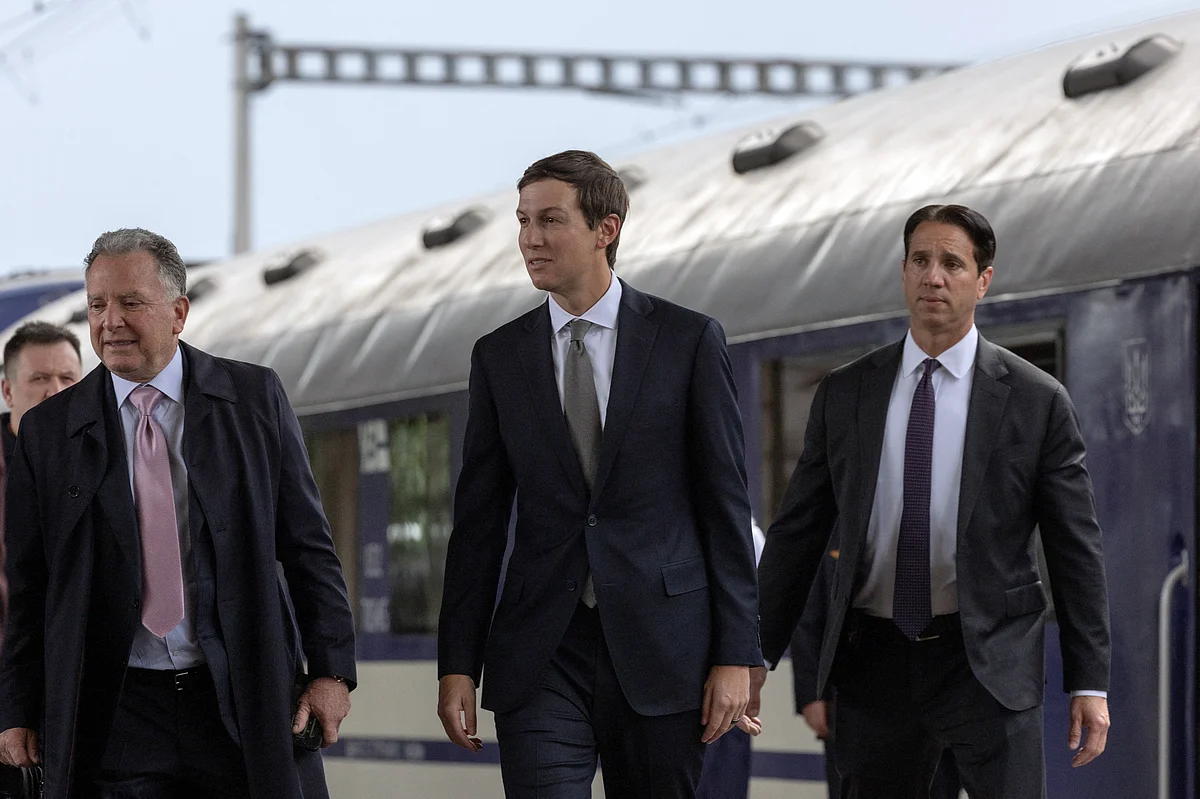
Recommended For YouSteve Witkoff and Jared Kushner spent more than three hours with Vladimir Putin on September 5, then held their first talks in Kyiv after eight trips to Moscow. Dmitry Peskov says a resolution is "very close." Volodymyr Zelenskyy has named the UAE among possible hosts for a three-way meeting, and Putin's aide Yuri Ushakov has floated Abu Dhabi, which hosted the first trilateral round in January and has brokered 26 prisoner exchanges during the war.
Stay up to date with the latest news. Follow KT on WhatsApp Channels.
Beneath all of it sits an assumption that Washington holds economic leverage over Moscow and is deciding how to spend it. This year's record points the other way. American sanctions on Russian oil have become indexed to the American pump price, and the Kremlin has watched the index move.
Within a week of the United States and Israel striking Iran on February 28, the US Treasury let Indian refiners buy Russian crude already at sea. The following week, it opened the licence to every buyer. It lapsed in April and again in May, and both times it returned within a week, the second time after India pushed Washington for an extension. Russia pocketed more than $2 billion extra while the licences ran.
They expired on June 17, the day Washington and Tehran signed a memorandum meant to reopen the strait. Donald Trump had explained the sequence at the G7 a day earlier: pressure on Russia could return "because the oil is now flowing."
The obvious rebuttal is that the leverage has held ever since. The memorandum collapsed within weeks and Hormuz closed again. American gasoline averages $4.27 a gallon, up from $2.98 in February, and no new waiver has appeared. A bill allowing tariffs of up to 100 per cent on the biggest buyers of Russian energy passed the Senate 86 to 11. On September 1, Scott Bessent reportedly told Russia's finance minister that "nothing is possible until the war is over."
Look at what the restored sanctions are buying. With no licence in force, Russia's Urals crude rose 23 per cent in August to $69.90 a barrel, far above EU's $44.10 cap. Moscow's total earnings slipped as volumes fell, but each barrel fetched more. Hormuz is doing for the Kremlin what the waiver did in March, minus the Treasury signature. The Senate bill still awaits the House, and tariff authority is not a tariff.
The calendar matters too. President Donald Trump said the Iran war "will end immediately after (US) election," meaning the Congressional midterms on November 3. Putin does not need to defeat the sanctions. He needs to outlast the pump price, and Washington has published the date.
That leaves Kyiv in an impossible spot. Zelenskyy told Axios that "Putin needs money" to continue the war, and pressed for more sanctions. He is right. He is also asking Washington to tighten a screw less than eight weeks before an election, with Brent above $100.
Moscow is using the room. Putin ordered a three-day pause on strikes against Kyiv for the envoys' visit. When it ended on September 8, Russia launched 32 cruise missiles and more than 140 drones, killing at least five people in the capital. UN monitors had already recorded 437 civilians killed in July, the worst monthly casualty count since March 2022. A pause timed to a visit is a product, priced and resold whenever a delegation needs a photograph. Russia's terms have not moved: all of Donetsk, Luhansk, Zaporizhzhia and Kherson, and no NATO membership for what remains.
Sanctions relief will be on the table in any settlement; Bessent's warning only makes sense if it is. But Moscow has already watched that relief handed over, and handed back after two lapses, for nothing. Washington is trying to sell an asset whose price it has publicly marked down, and the shortfall gets paid in the only other currency available, Ukrainian land. That sum is why European security advisers sat in the Kyiv talks, and why Zelenskyy wants Europeans in every negotiating format.
Gulf capitals should read this closely. The strait now setting the price of Russian oil runs past their ports, and the next round of Ukraine talks may sit at their tables. This year has also stress-tested a proposition the region's security has long leaned on: that American pressure, once applied, stays applied when Americans start paying for it. Sanctions on Russia bent within a fortnight of the Hormuz shock, and the end of a war on the Gulf's doorstep has been tied to a US polling day.
A Russia-Ukraine peace deal may be signed this autumn and presented as the reward for American persistence. It became reachable when Washington showed that cheap fuel at home outranks pressure on Moscow. The terms will be drafted wherever the envoys next sit down. The price was set in the strait.
ALSO READ- US wants Russia, Ukraine to end war by summer, Zelenskiy says How war in Ukraine resulted in increased demand for Indian jobseekers in Russia DP World says Strait of Hormuz 'will reopen', stays flexible as it keeps cargo moving

Legal Disclaimer:
MENAFN provides the
information “as is” without warranty of any kind. We do not accept any
responsibility or liability for the accuracy, content, images, videos,
licenses, completeness, legality, or reliability of the information
contained in this article. If you have any complaints or copyright issues
related to this article, kindly contact the provider above.
Comments
No comment