


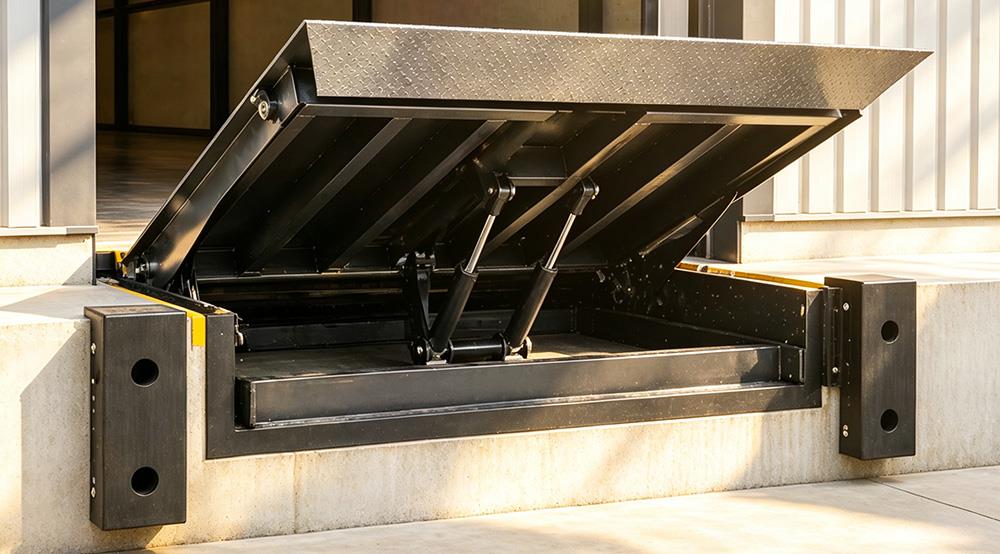
Why Dock Levelers Fail During Peak Season (Not Random Timing)


(MENAFN- Global Industrial Parts Inc.) Ask any warehouse manager when their equipment breaks down, and you'll usually hear the same answer: right when it's busiest. It feels like bad luck. It isn't.
A dock leveler that fails during peak season isn't failing randomly — it's failing on a schedule you just can't see. Understanding that schedule is the difference between an unplanned shutdown in your busiest week and a repair you scheduled two months in advance.
The Real Pattern Behind "Bad Timing"
Every dock leveler wears down through use, not through the passage of time. A unit cycling five times a day ages very differently from one cycling thirty times a day, even if both were installed on the same date. Most facilities don't track that difference. They check the leveler on a calendar — monthly, quarterly — regardless of how hard it's actually working.
During normal operations, that gap between calendar-based checks and actual usage doesn't matter much. The leveler is running below its wear threshold, so a missed early sign doesn't cost much. Peak season changes the math. Truck volume climbs, cycle counts climb with it, and a component that was already quietly wearing out gets pushed past the point where it can keep compensating.
That's the mechanism. It isn't random. It's degradation that was already in progress, meeting a spike in demand it was never tested against.
What's Actually Wearing Out Before the Failure
Three things typically compound into a peak-season breakdown, and none of them announce themselves clearly beforehand.
Fluid condition. Hydraulic fluid degrades gradually through contamination — particulates, moisture — long before it looks or smells wrong. Contaminated fluid is more abrasive and less able to hold pressure, and it accelerates wear on the pump every single cycle. Under normal traffic, that wear is slow. Under peak-season cycle counts, it accelerates fast.
Seal integrity. A cylinder seal that's just starting to wear produces an almost invisible leak — a thin film, a faint residue. It doesn't affect performance much at low cycle counts. Under sustained high-volume use, that same seal loses the ability to hold pressure consistently, and the deck starts moving unevenly or slower than it should.
Pump output. This is the quiet one. A pump that's still technically functioning but no longer delivering full rated pressure can go unnoticed for months on a low-traffic dock. On a high-traffic dock during peak season, that shortfall shows up as hesitation, slower cycles, or an outright stall — usually with a truck already backed up at the door.
Why Common Dock Leveler Problems Cluster at the Worst Time
This is why so many common dock leveler problems seem to arrive in a cluster right when a facility can least afford them. It's not coincidence — it's cause and effect. Fluid contamination, seal wear, and pressure loss are all cumulative. They build slowly during the months of moderate use, and peak season is simply where the cumulative total finally exceeds what the system can absorb.
Facilities that run tight docks — multiple bays, tail lift deliveries feeding in alongside standard freight, high daily turnover — see this most sharply. A dock that also cycles a tail lift on incoming trailers adds even more variability to daily load, which makes calendar-based maintenance an even worse fit for predicting real wear.
How to Prevent Dock Leveler Problems Before Volume Spikes
The fix isn't more frequent calendar checks. It's shifting the maintenance trigger from time to usage.
Track actual cycle counts, not just calendar intervals, especially on docks that see seasonal volume swings.
Schedule instrumented testing — fluid analysis, seal pressure testing, pump output verification — before the season that will push cycle counts up, not after problems appear.
Treat the pre-peak window as the maintenance window. A leveler serviced four to six weeks before a known volume increase enters that period with headroom instead of already running near its limit.
Log daily anomalies year-round. A note like "slightly slower on Tuesdays" from July is exactly the detail that helps a technician diagnose a November failure before it happens.
None of this requires guessing. It requires connecting the dots between how hard a dock leveler actually works and when it's serviced — instead of treating those two things as unrelated.
The Cost of Getting the Timing Wrong
A dock leveler that fails mid-shift during peak season doesn't just create a repair bill. It creates a truck that can't be loaded, a line that backs up behind it, and — if the failure is severe enough — a repair job that's bigger than the one preventive maintenance would have caught months earlier. The equipment itself isn't usually the problem. The timing of when it gets attention is.
Frequently Asked Questions
Q: Why does a dock leveler seem to fail without warning? A: It rarely fails without warning — the warning signs are just easy to miss. Fluid contamination, seal wear, and gradual pressure loss all build quietly over months. What looks like a sudden failure is usually the point where accumulated wear finally exceeds what the system can compensate for, often right as cycle counts spike.
Q: Can peak-season dock leveler problems be prevented, or just managed after they happen? A: They can largely be prevented. Since the underlying wear builds on a predictable, usage-based timeline, scheduling instrumented testing before a known volume increase — rather than reacting once trucks are already backed up — catches most of these issues while they're still a minor fix.
Beauway has been specializing in the field of logistics loading and unloading equipment for many years, with a full product range covering tail lifts, dock levelers, and lifting platforms. For a customized solution tailored to your specific site conditions, you are welcome to schedule a technical consultation.
A dock leveler that fails during peak season isn't failing randomly — it's failing on a schedule you just can't see. Understanding that schedule is the difference between an unplanned shutdown in your busiest week and a repair you scheduled two months in advance.
The Real Pattern Behind "Bad Timing"
Every dock leveler wears down through use, not through the passage of time. A unit cycling five times a day ages very differently from one cycling thirty times a day, even if both were installed on the same date. Most facilities don't track that difference. They check the leveler on a calendar — monthly, quarterly — regardless of how hard it's actually working.
During normal operations, that gap between calendar-based checks and actual usage doesn't matter much. The leveler is running below its wear threshold, so a missed early sign doesn't cost much. Peak season changes the math. Truck volume climbs, cycle counts climb with it, and a component that was already quietly wearing out gets pushed past the point where it can keep compensating.
That's the mechanism. It isn't random. It's degradation that was already in progress, meeting a spike in demand it was never tested against.
What's Actually Wearing Out Before the Failure
Three things typically compound into a peak-season breakdown, and none of them announce themselves clearly beforehand.
Fluid condition. Hydraulic fluid degrades gradually through contamination — particulates, moisture — long before it looks or smells wrong. Contaminated fluid is more abrasive and less able to hold pressure, and it accelerates wear on the pump every single cycle. Under normal traffic, that wear is slow. Under peak-season cycle counts, it accelerates fast.
Seal integrity. A cylinder seal that's just starting to wear produces an almost invisible leak — a thin film, a faint residue. It doesn't affect performance much at low cycle counts. Under sustained high-volume use, that same seal loses the ability to hold pressure consistently, and the deck starts moving unevenly or slower than it should.
Pump output. This is the quiet one. A pump that's still technically functioning but no longer delivering full rated pressure can go unnoticed for months on a low-traffic dock. On a high-traffic dock during peak season, that shortfall shows up as hesitation, slower cycles, or an outright stall — usually with a truck already backed up at the door.
Why Common Dock Leveler Problems Cluster at the Worst Time
This is why so many common dock leveler problems seem to arrive in a cluster right when a facility can least afford them. It's not coincidence — it's cause and effect. Fluid contamination, seal wear, and pressure loss are all cumulative. They build slowly during the months of moderate use, and peak season is simply where the cumulative total finally exceeds what the system can absorb.
Facilities that run tight docks — multiple bays, tail lift deliveries feeding in alongside standard freight, high daily turnover — see this most sharply. A dock that also cycles a tail lift on incoming trailers adds even more variability to daily load, which makes calendar-based maintenance an even worse fit for predicting real wear.
How to Prevent Dock Leveler Problems Before Volume Spikes
The fix isn't more frequent calendar checks. It's shifting the maintenance trigger from time to usage.
Track actual cycle counts, not just calendar intervals, especially on docks that see seasonal volume swings.
Schedule instrumented testing — fluid analysis, seal pressure testing, pump output verification — before the season that will push cycle counts up, not after problems appear.
Treat the pre-peak window as the maintenance window. A leveler serviced four to six weeks before a known volume increase enters that period with headroom instead of already running near its limit.
Log daily anomalies year-round. A note like "slightly slower on Tuesdays" from July is exactly the detail that helps a technician diagnose a November failure before it happens.
None of this requires guessing. It requires connecting the dots between how hard a dock leveler actually works and when it's serviced — instead of treating those two things as unrelated.
The Cost of Getting the Timing Wrong
A dock leveler that fails mid-shift during peak season doesn't just create a repair bill. It creates a truck that can't be loaded, a line that backs up behind it, and — if the failure is severe enough — a repair job that's bigger than the one preventive maintenance would have caught months earlier. The equipment itself isn't usually the problem. The timing of when it gets attention is.
Frequently Asked Questions
Q: Why does a dock leveler seem to fail without warning? A: It rarely fails without warning — the warning signs are just easy to miss. Fluid contamination, seal wear, and gradual pressure loss all build quietly over months. What looks like a sudden failure is usually the point where accumulated wear finally exceeds what the system can compensate for, often right as cycle counts spike.
Q: Can peak-season dock leveler problems be prevented, or just managed after they happen? A: They can largely be prevented. Since the underlying wear builds on a predictable, usage-based timeline, scheduling instrumented testing before a known volume increase — rather than reacting once trucks are already backed up — catches most of these issues while they're still a minor fix.
Beauway has been specializing in the field of logistics loading and unloading equipment for many years, with a full product range covering tail lifts, dock levelers, and lifting platforms. For a customized solution tailored to your specific site conditions, you are welcome to schedule a technical consultation.
Global Industrial Parts Inc.
Legal Disclaimer:
MENAFN provides the
information “as is” without warranty of any kind. We do not accept
any responsibility or liability for the accuracy, content, images,
videos, licenses, completeness, legality, or reliability of the information
contained in this article. If you have any complaints or copyright
issues related to this article, kindly contact the provider above.


Comments
No comment