

China's Evs, Llms And The Stopping Power Of The Real World


Caught in a landslide, no escape from reality
Open your eyes, look up to the skies and see.
– Queen
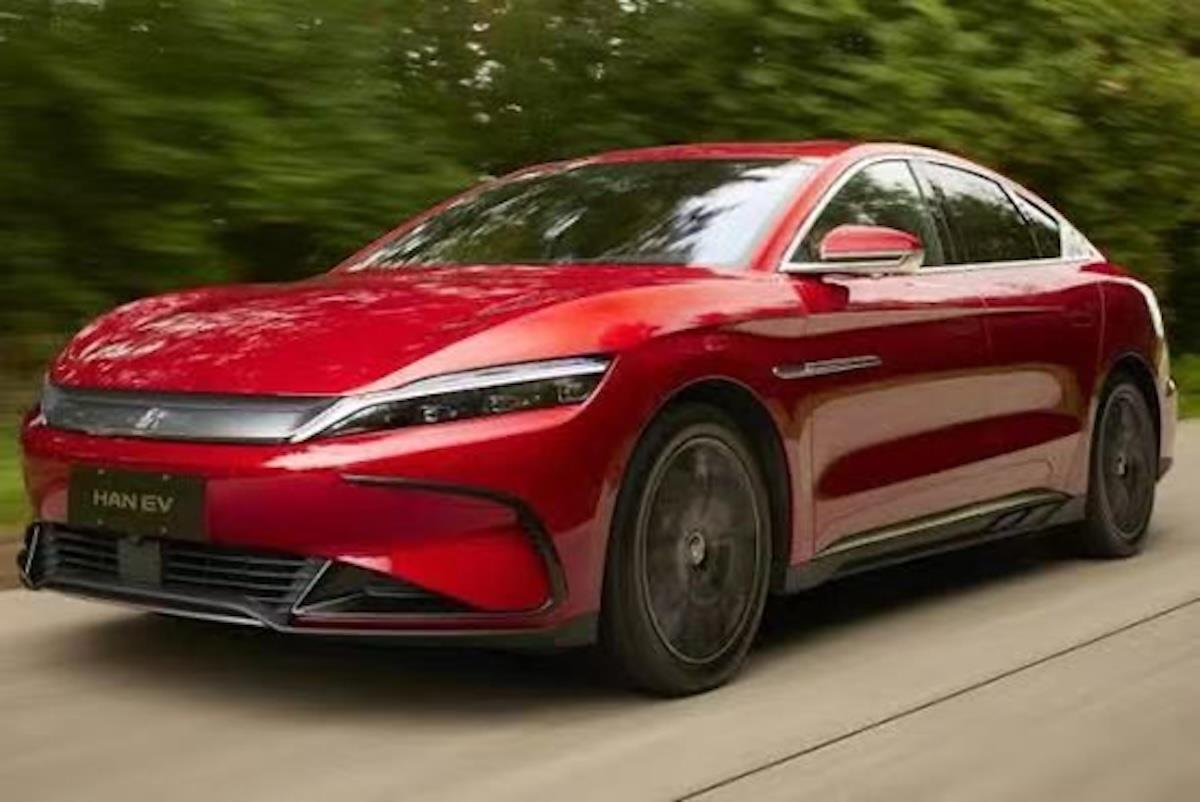
Shortly after moving from Hong Kong to Beijing in 2022, yours truly saw a BYD Han with a deep crimson metallic paintjob and thought it looked amazing. Yours truly checked the BYD Han's features, specs and pricing and was blown away. The BYD Han was a larger car than the Tesla Model 3, had similar features and performance and was priced at a 10% discount (22% vs US market).
Today, a 2022 BYD Han looks like a bald uncle's DiDi (China's Uber) ride with auntie specs.
Late November 2022, Han Feizi was one of the last travelers to be quarantined in China just a few days before the powers that be ripped off the zero Covid band-aid. It was during this time that OpenAI, a company very few people had heard of, introduced something called ChatGPT to the world. OpenAI was actually jumping the gun, releasing a janky large language model (LLM) to scoop what had been percolating in DeepMind, Google's more conservative lab, among others. This ignited a competitive frenzy among tech companies across the world.
BYD is going upmarket. The 2026 Seal 08 is a noticeably larger car than the 2022 Han with transformative improvements on its specifications from batteries to horsepower to self-driving to air suspension to rear wheel steering. The new DaHan (Great Han) has been upgraded to a different size category altogether.
The price of the 2026 Seal 08 is 25% lower than the 2022 Han for the top of the line version ($35.5k) and ~10-15% lower for entry and mid-level trims ($29.3-32.3k). The top of the line DaHan has all of the Seal 08's upgrades in D-class size (Mercedes S/BMW 7 series/Audi A8 territory) and priced flat ($44.7k) with the 2022 Han.
For a while, the LLM landscape turned into a game of hopscotch as OpenAI, Anthropic and Google took turns one-upping each other's models (with xAI straggling behind and Meta face-planting multiple times).
With the DaHan, BYD has stepped into the rarified realm occupied by flagship German luxury sedans. But in 2026 this class looks rather dusty, overpriced. Top of the line EV sedans from BMW, Mercedes and Audi sell in the US for for 3 to 4 times the price of a China-market BYD DaHan but offer broadly inferior specs and performance.
On September 2, in a speech at the Charlotte Economics Club, Treasury Secretary Scott Bessent lamented,“Anyone here ever seen a BYD car? It is the best $70,000 car $35,000 can buy – it is heavily subsidized.”
Similarly, the New York Times test drove a Geely M9 and reported:
In addition to being the best advertising money can't buy, Secretary Bessent complaining about BYD subsidies is economic nonsense. The bulk of EV subsidies across the world (79.4% in China according to CSIS) are for new car purchases (e.g. government rebates, tax exemptions etc). Historically, China's per vehicle EV purchase subsidy has been substantially lower than those offered by the US and the EU. The difference is that China's subsidies succeeded, driving 49 million EV sales since 2009, while those in the US and EU floundered, with 8 million and 12 million EV sales, respectively.
China succeeded because its subsidies coincided with the maturation of the country's higher education pipeline. China's EV industry has nearly 7 times the number of new engineering grads as the US to recruit from. In a few short years, China was able to birth over 100 EV makers and flood the market with over 300 EV models while the US, EU, Japan and Korea struggled to field a few dozen models.

Legal Disclaimer:
MENAFN provides the
information “as is” without warranty of any kind. We do not accept any
responsibility or liability for the accuracy, content, images, videos,
licenses, completeness, legality, or reliability of the information
contained in this article. If you have any complaints or copyright issues
related to this article, kindly contact the provider above.
Comments
No comment