

Digital Safety Panel Urges Parents To Guide, Not Ban, Children's Use Of AI And Social Media


The virtual panel, the first in a series hosted by 3A1Z Stories, focused on how parents can monitor children online without losing their trust.
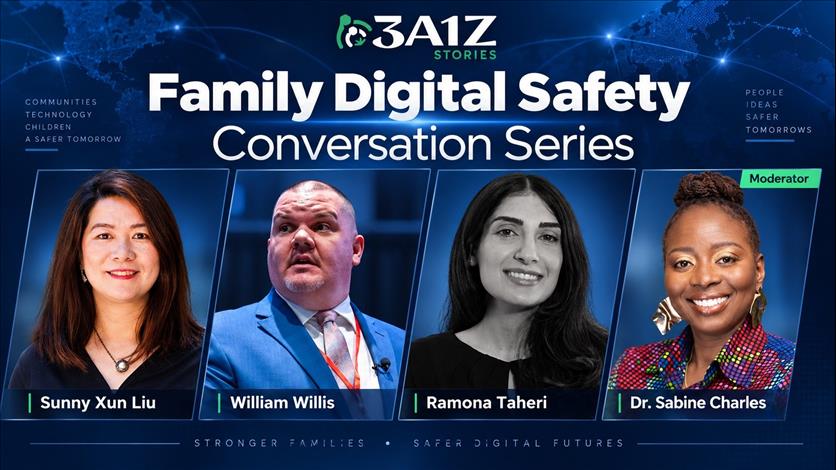
Sunny Xun Liu, director of research at the Stanford Social Media Lab, said children's needs change with age, and so should parental support. In surveys, she said, American teenagers' top request is that parents stop confiscating phones as punishment, the response families use most. A strong parent-child relationship, she said, is the biggest protective factor against online harm.
She cited A Parent's Guide to Digital Safety, produced by her lab with the Family Online Safety Institute and the California Partners Project around a framework called CALMER: communicate, assess, listen, monitor, educate and report.
William Willis, executive director of AI Ready RVA, a Richmond nonprofit that teaches AI literacy, said parents should learn alongside their children and set shared rules at home.“The tool itself is not inherently bad or inherently good,” Willis said, adding that outcomes depend on who uses it and how.
Ramona Taheri, executive director of the Peace Operations Training Institute, said AI can help students translate, edit and study but warned against“cognitive offloading,” or letting machines do the thinking. Parents cannot compete with companies she said design products to be addictive, and she called for stronger regulation and accountability.
Asked by moderator Dr. Sabine Charles whether too much responsibility falls on parents, Willis said yes, citing the lack of federal regulation. Liu agreed, saying schools, libraries, after-school programs and older teenagers should share the load.
The panel met amid mounting pressure on platforms. Australia bars under-16s from holding social media accounts, Britain's Online Safety Act imposes child protection duties, and the European Commission has preliminarily found that TikTok and Meta breached EU rules on addictive design. In August, Meta agreed to pay up to $18 billion and limit teenagers' daily use to settle claims by U.S. states that it built Facebook and Instagram to hook children, while denying liability. The platforms still face thousands of lawsuits, and a Portuguese rights group last week disclosed collective actions in Lisbon over infinite scroll and autoplay features.
3A1Z Stories is a Virginia-based nonprofit founded by Khushnood Nabizada, an Afghan-born media and social entrepreneur. It works to help families and communities raise children in the age of AI and social media.

Legal Disclaimer:
MENAFN provides the
information “as is” without warranty of any kind. We do not accept any
responsibility or liability for the accuracy, content, images, videos,
licenses, completeness, legality, or reliability of the information
contained in this article. If you have any complaints or copyright issues
related to this article, kindly contact the provider above.
Comments
No comment