

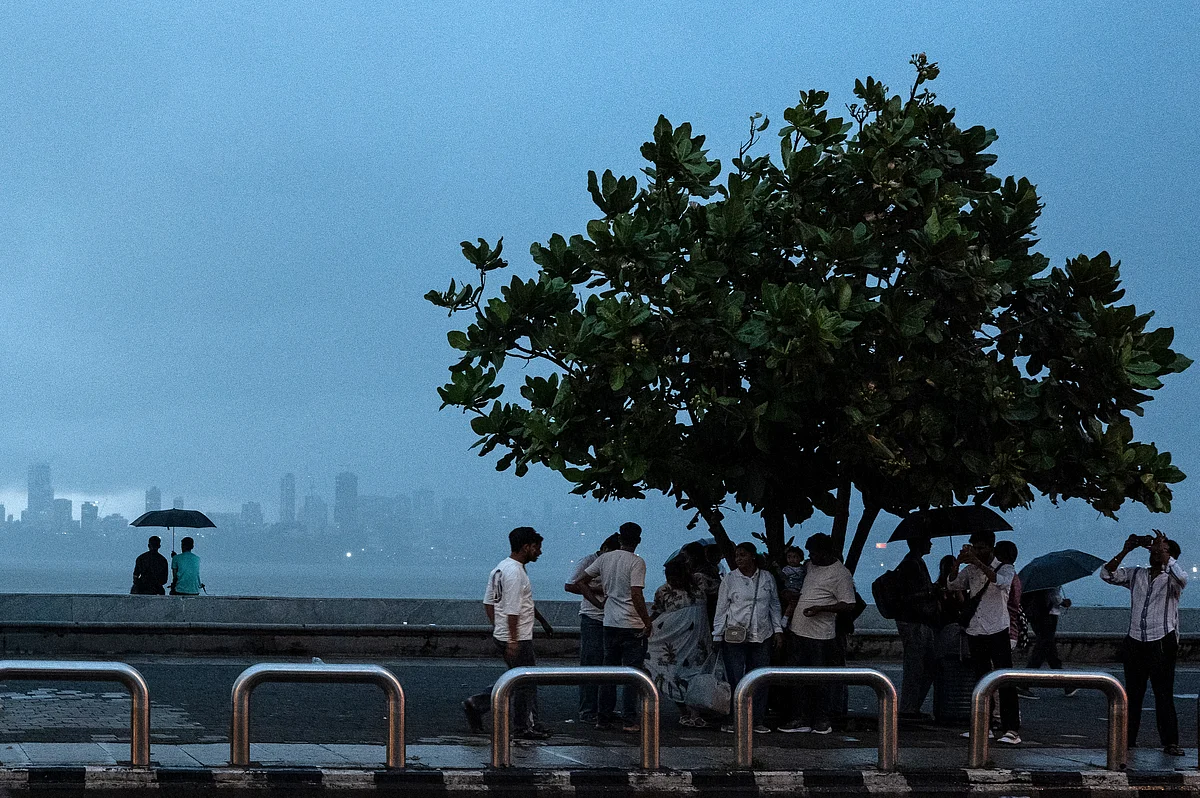
How Mumbai Manages Disaster Risks For A Daytime Population Of 20 Million


An international delegation of journalists covering the 18th Brics Summit in India visited the BMC headquarters in Mumbai as part of a programme organised by India's Ministry of External Affairs to showcase the country's urban and development experience.
Recommended For YouThe delegation, comprising journalists from Brics member countries, partner countries and invited nations, was briefed on Mumbai's disaster-management systems, emergency-response mechanisms and efforts to strengthen the city's resilience to climate-related risks.
Stay up to date with the latest news. Follow KT on WhatsApp Channels. 20 million daytime population
BMC officials said Mumbai's population swells significantly during working hours as millions of people travel into the city every day from surrounding areas.
The number of people in Mumbai during the daytime reaches around 20 million, placing additional pressure on infrastructure, public services and emergency-response systems.
Officials said this makes disaster preparedness particularly important for one of India's largest urban and economic centres.
Early-warning systems and disaster responseDuring the briefing, officials outlined Mumbai's early-warning and emergency response systems, as well as mechanisms used to assess multiple hazards and identify areas that are particularly exposed to risks.
The city is also working with the United Nations Development Programme (UNDP) on multi-hazard risk assessments designed to strengthen preparedness and enable a more proactive response to emergencies.
The presentation also covered projects aimed at reducing flood risks and improving stormwater drainage networks, an important part of Mumbai's efforts to manage weather-related emergencies.
Net-zero target by 2050Officials also highlighted the Mumbai Climate Action Plan, which sets a target for the city to achieve net-zero emissions by 2050. The plan includes expanding sustainable transport and electric buses, alongside projects covering water, health and the environment.
The measures form part of a wider effort to strengthen the city's infrastructure and sustainability while preparing Mumbai for increasing climate-related risks.
The visit was part of a programme organised by India's Ministry of External Affairs for the international media delegation following its participation in the 18th Brics Summit in New Delhi.
ALSO READ- Mumbai beaches resemble garbage dumps as heavy rains wash trash ashore Mumbai rains leave 2 million Vasai-Virar residents without power, water, telecom Mumbai rains kill 13 in 4 days, Maharashtra orders probe after building collapse

Legal Disclaimer:
MENAFN provides the
information “as is” without warranty of any kind. We do not accept any
responsibility or liability for the accuracy, content, images, videos,
licenses, completeness, legality, or reliability of the information
contained in this article. If you have any complaints or copyright issues
related to this article, kindly contact the provider above.
Comments
No comment