

Rates Spark: US 10Yr Likely Gets Above And Stays Above 5% Ahead


Ahead, we maintain a bearish stance on long rates despite the calmness post the decision, as a 25bp hike does not materially change the dynamics that have hampered long rates in recent months. Inflation remains high, as does the fiscal deficit, as is wider issuance. And the AI productivity-driven narrative remains in place. The odds see the 10yr yield breaking back above 5% in the days and weeks ahead. If so, the market will begin to settle at above 5%, and ponder the 5.25% to 5.5% range as an area that is perfectly attainable in light of the still quite loud mood music that has been driving long-end yields.
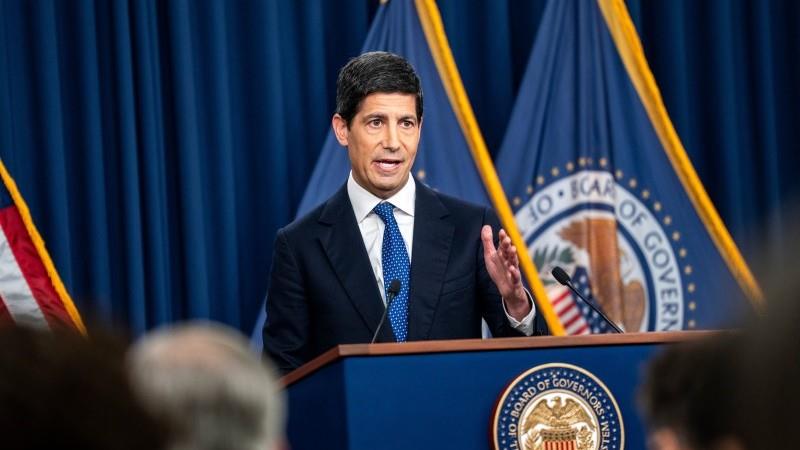
Delivery of the anticipated 25bp hike, by definition, should not have a material effect. The back end initially took the decision very fine, with yields steady in the 4.95% area, although it had shown a mild bias to test lower, as had been the theme through the morning into the decision. What helped here was the price action of previous days that saw the 10yr yield get above 5%, and indeed close above 5%, thus ticking off the need to necessarily have that reaction post this decision. Chair Warsh will be pleased that the breakout of the 10yr yield shows a moderate fall in inflation expectations, which telegraphs a nod of approval from the market to the hike as an inflation containment one. The 10yr real yield is a tad higher as an offset.
Also, the 30yr yield is a tad richer vs SOFR, although not by much. Even though the 30yr yield is still higher than it was before Treasury Secretary Bessent's buyback announcement, it's well below the subsequent highs. And it's clinging on to a 4bp richening versus SOFR compared with the pre-buyback announcement level. At the other end of the curve, the 2yr was a tad spooked by the unanimity shown by the committee on the hike (Chair Warsh voted for the hike too), and the implied priming for another hike from the dot plot. So, the 2yr yield is up 10bp to almost 4.7% post the decision. And the curve is flatter, mostly from the front end, and the 2/10yr Treasury yield curve is back below 30bp. The 5yr is flat on the 2/5/10yr fly though, suggesting that if there are more hikes, it should not be many.
Nothing of note on the plumbing, apart from noting ample bank reserves, suggesting a degree of comfort with balance sheet circumstances. Which is fair. We await the outcome of further deliberations in this space by the end of 2026, with the yet-to-come prescribed action to be taken from 2027.
Markets too hawkish on Bank of England, but oil pushes against usThe Bank of England (BoE) is next, and even though we see significant potential for a dovish repricing in sterling rates, we don't see that happening in the near term. We expect the BoE to hold rates steady for the time being and even see scope for cuts in 2027. In contrast, markets see the BoE hike almost four times over the next year, more so than the European Central Bank and the Federal Reserve. Trading against markets is challenging, however, given the strong correlation with oil. A $10/bbl increase in oil pushes up the 2Y GBP swap rate by some 15bp.
With oil staying in the driving seat for sterling rates, the BoE is unlikely to trigger a drastic turn for now. The latest inflation data does not show concerns about second-round inflation effects. One could argue the same for the ECB, even though it did pursue a rate hike last week. But compared to the ECB, with a Bank Rate of 3.75%, monetary policy in the UK is arguably already in contractionary territory. Meanwhile, job numbers reflect a cooling economy, so the inflation pass through to wages should be limited. As such, we don't expect the Bank of England narrative to turn more hawkish as we witnessed at the Fed and ECB.
We think 10Y gilt yields should also come down in 2027 as markets reprice inflation risks, but upward pressure on longer-dated gilts can sustain. Global supply pressures in the form of government spending, quantitative tightening (QT) and AI issuance can continue to increase longer-dated rates. We'll therefore also be watching for revisions of the Bank of England's pace of QT, which we think has had a significant contribution to higher gilt yields.
Our baseline is for a decrease in the pace of QT from £70bn to £50bn, since this would approximately keep active sales constant. These numbers are in line with consensus. We do see a small chance that the Bank of England slows the pace by more, or even halt the active sale entirely for longer maturities. The argument would be that the balance sheet has already shrunk enough and the private demand for longer maturities has fallen. This could benefit longer-dated gilts and help tighten the spread between gilts and swaps.
Thursday's events and market viewThe BoE is the main event of the day with markets seeing only marginal chances for the Monetary Policy Committee to decide on a hike – some 2bp are discounted, equivalent to a roughly 10% probability of a hike.
Ahead of the BoE we will hear from a number of ECB speakers, with Chief Economist Lane, France's Moulin and Finland's Rehn slotted for the day. The eurozone will also release final CPI data for August. The US will release the weekly jobless claims data and housing-market-related data: building permits, housing starts and pending home sales.
In primary markets, Spain will auction 6y, 8y and 10y bonds (€6bn), while France auctions 3y to 6y bonds (up to €13bn) as well as a new 11y inflation-linked bond (up to €2.5bn). The US auctions 10y TIPS (US$19bn).

Legal Disclaimer:
MENAFN provides the
information “as is” without warranty of any kind. We do not accept any
responsibility or liability for the accuracy, content, images, videos,
licenses, completeness, legality, or reliability of the information
contained in this article. If you have any complaints or copyright issues
related to this article, kindly contact the provider above.
Comments
No comment