

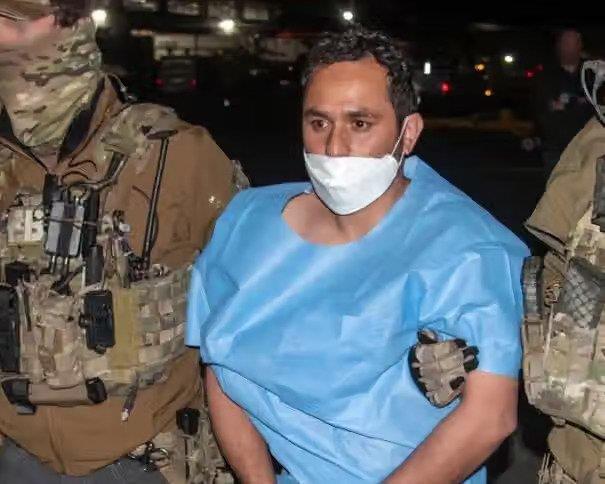
Afghan National Sentenced To 20 Years In US Over ISIS-K Role In Kabul Airport Bombing


The sentencing, handed down Wednesday in federal court in Alexandria, Virginia, is the maximum penalty available for the charge. The August 26, 2021 bombing at Abbey Gate killed 13 U.S. service members and about 160 Afghan civilians during the chaotic evacuation from Kabul, making it one of the deadliest attacks of the withdrawal operation.
Judge Anthony Trenga imposed the sentence after a federal jury convicted Sharifullah in April of providing material support to ISIS-K, the group that claimed responsibility for the bombing. Prosecutors argued that Sharifullah helped the militant group by scouting the route leading to the airport and sharing information that facilitated the attack.
Jurors, however, did not reach a unanimous conclusion that Sharifullah's actions directly caused the deaths of the victims. Had that allegation been proven beyond a reasonable doubt, he could have faced a life sentence under U.S. law.
According to U.S. prosecutors, Sharifullah pledged allegiance to ISIS-K as a teenager and remained committed to the group for years. They told the court he had expressed hatred toward Americans and said he wanted to“capture and kill” Americans in retaliation for the U.S. invasion of Afghanistan following the September 11, 2001 attacks.
Sharifullah did not testify during his trial and declined to address the court before sentencing. Judge Trenga described him as a“committed terrorist” and said he saw no evidence that the defendant had shown remorse for his actions.
Several relatives of the American troops killed in the Abbey Gate bombing addressed the court during the sentencing hearing. Parents of the victims described the lasting emotional impact of the attack and urged the judge to impose the toughest possible punishment.
Defense attorneys requested a 17-year sentence, arguing that Sharifullah was not an ISIS-K leader and had not been convicted of carrying out the suicide bombing itself. They also contended that the U.S. government brought him to the United States believing it could prove he played a central role in the Abbey Gate attack but ultimately failed to establish that claim before the jury.
The defense further argued that much of the government's case relied on statements Sharifullah made during FBI interrogations after his arrest in Pakistan. Lawyers said those statements may have been influenced by fears of mistreatment or torture while in Pakistani custody.
U.S. prosecutors rejected those arguments, maintaining that Sharifullah knowingly assisted ISIS-K's operations before the bombing and remained a committed member of the group.
The case is one of the most significant U.S. prosecutions related to the Abbey Gate bombing, which remains a defining episode of the U.S. withdrawal from Afghanistan and continues to shape investigations into ISIS-K's operations and accountability for the attack.

Legal Disclaimer:
MENAFN provides the
information “as is” without warranty of any kind. We do not accept any
responsibility or liability for the accuracy, content, images, videos,
licenses, completeness, legality, or reliability of the information
contained in this article. If you have any complaints or copyright issues
related to this article, kindly contact the provider above.
Comments
No comment