

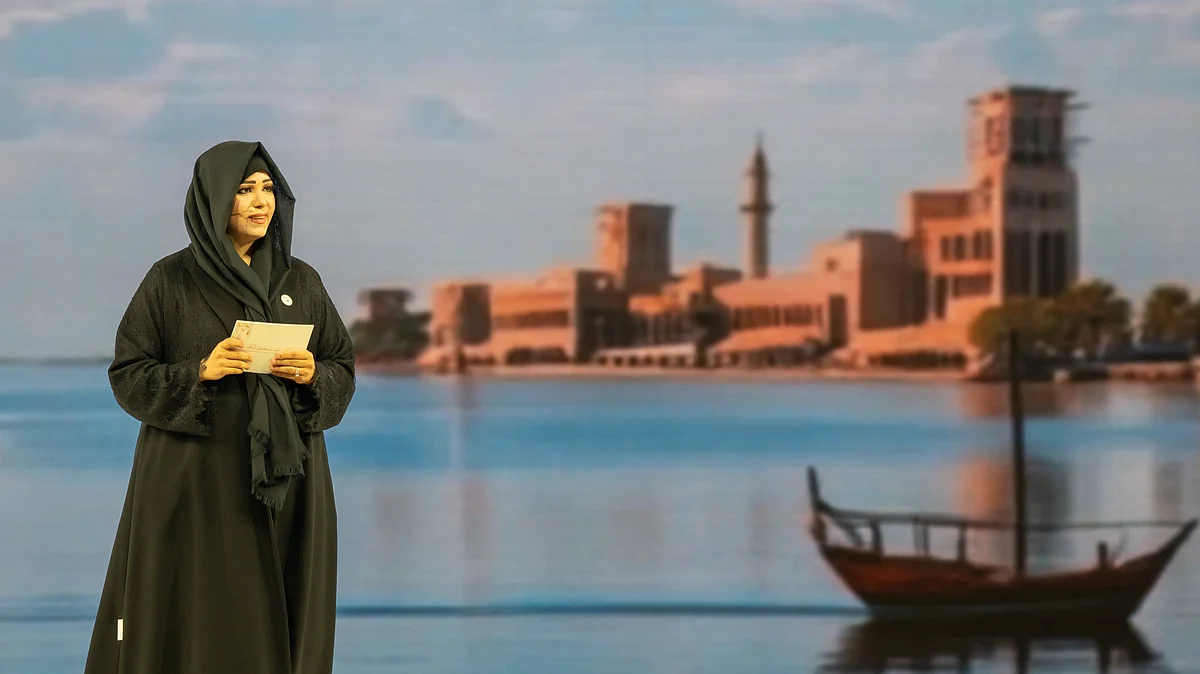
Sheikha Latifa Explains How Dubai Makes People Part Of Its Story, Gains Their Trust


- By: Arwa Almazrouei
A city can build the world's most recognisable skyline, attract millions of visitors, and become a global destination. But its most powerful achievement may be something you can't measure in numbers: the trust of the people who call it home.
For Sheikha Latifa bint Mohammed bin Rashid Al Maktoum, Chairperson of Dubai Culture and Arts Authority, that trust is at the heart of Dubai's story.
Recommended For YouDuring a keynote speech at the Arab Media Summit, Sheikha Latifa said Dubai's journey was no longer simply about building a global reputation, but about creating a place where people feel they belong, believe in its future and see themselves as part of its success.
Stay up to date with the latest news. Follow KT on WhatsApp Channels.
“The question should not be how we write a story for the city, but how we make the city have a story worth telling,” she said.
She said the most powerful stories about Dubai were not those the city tells about itself. Stories told by people who experienced its transformation contributed to its growth and made its success part of their own story.
From reputation to trustSheikh Latifa challenged the idea that cities should focus primarily on creating a story to establish a global identity. From her experience in government, she said, action, work and achievement must come before storytelling.
Dubai can produce thousands of stories about itself, she said, but the stories that leave the strongest impression are those told by people about their own experiences of living in the city.
Sheikh Latifa said Dubai and the UAE had moved beyond simply building a reputation and were now focused on building trust.
That trust, she said, was not built only during periods of prosperity, but through some of the most challenging circumstances the country had faced.
She highlighted the leadership's presence on the ground and its focus on people, along with the ability of government institutions to respond quickly, protect people, and ensure continuity in their lives and work.
This, she said, transformed responsibility from an institutional role into a wider social effort, with people from different cultures and nationalities coming together in solidarity.
The mindset behind success
Sheikha Latifa said the UAE's repeated achievements across sectors could not be explained only by the capabilities of its teams, the scale of its projects and investments or the strength of its infrastructure.
Behind these factors, she said, was a particular mindset, one focused on possibility and achievement.
“The UAE believed in its people and their capabilities and invested in them,” she said, adding that the country had provided people with the space, infrastructure, systems and knowledge needed to contribute to its future.
This created an environment where people could become genuine partners in shaping what comes next.
“In the UAE, achievement is linked to hard work. Whoever works hard can succeed,” she said.
For Sheikha Latifa, the deeper value of the UAE experience therefore lies not in the number of achievements recorded, but in the thinking and mindset that make those achievements possible.
Making people part of the story
Dubai has succeeded in attracting visitors, tourists and investors while continuing to add new chapters to its story, she said.
But simply presenting those achievements is not enough to create belonging.
“Human beings do not like to be an audience to someone else's success story. They want to be part of that success,” she said.
When people become part of a place's success and see it positively affect their lives, she explained, they develop a sense of belonging.
The story of Dubai then becomes not just the city's story, but the story of the people who live in it.
A city can attract people through jobs, opportunities, quality of life and infrastructure, she said. But attraction alone does not create belonging.
“Belonging begins when a person feels that their relationship with a place is not limited to what they receive from it, but also to what they can contribute to it,” she said.
Authenticity matters more
Sheikha Latifa also addressed how storytelling is changing in the age of social media and artificial intelligence.
Today, anyone with a phone can create and publish content, while access to information and audiences has become easier than ever.
Millions of stories are published every moment, and technology can create, enhance and distribute a story within seconds.
But culture, she said, cannot be built in seconds.
The rise of AI-generated content and misinformation has also created a new challenge: audiences increasingly understand that content can be manipulated, while some become more suspicious of information and vulnerable to conspiracy theories.
Sheikha Latifa noted that younger generations are among the most connected and exposed to news and are increasingly aware of the volume of misleading, fabricated and manipulated information circulating online.
The danger, she said, is not only that people realise content can be fabricated, but that they may eventually stop believing the truth when they encounter it.
As technology makes storytelling easier, she said, genuine human experiences and spontaneous stories become more valuable.
Giving future generations a role
Sheikha Latifa said these ideas extended beyond Dubai and the UAE to the wider Arab region, which possesses a rich legacy of history, cultures and civilisations, as well as a language that has carried knowledge, thought and poetry across centuries.
The region also has generations of young people with talent and potential, she said.
The question, she added, is what could happen if these generations were given not only opportunities but also the responsibility to shape the future.
The result, she said, would be generations that do not simply ask what opportunities exist, but create them and do not merely keep pace with change, but drive it.
Sheikha Latifa concluded by recalling a lesson from the leadership of Dubai Ruler, Sheikh Mohammed bin Rashid: Sincere work and genuine intentions create achievement, while true achievements are capable of speaking for themselves.
She also quoted a verse by her father, Sheikh Mohammed bin Rashid, reflecting the idea that those who seek greatness must work and persevere to achieve it.
ALSO READ- 'Build bridges, not walls': UAE official calls for effective media storytelling Global outlook, strong roots: Why UAE's next leaders need more than technical skills 'Money cannot buy thinking': Emirates marketing chief says Dubai is a brand on its own

Legal Disclaimer:
MENAFN provides the
information “as is” without warranty of any kind. We do not accept any
responsibility or liability for the accuracy, content, images, videos,
licenses, completeness, legality, or reliability of the information
contained in this article. If you have any complaints or copyright issues
related to this article, kindly contact the provider above.
Comments
No comment