

403
Sorry!!
Error! We're sorry, but the page you were looking for doesn't exist.
When Technology Leaders Choose Samsung for an Experience That Goes Beyond the Conventional Smartphone


(MENAFN- Asdaa-amman) In the world of technology and artificial intelligence, where tools and technologies are evolving at an unprecedented pace, choosing a smartphone may hardly seem like a casual or random decision for those at the heart of the industry, particularly technology leaders and business executives.
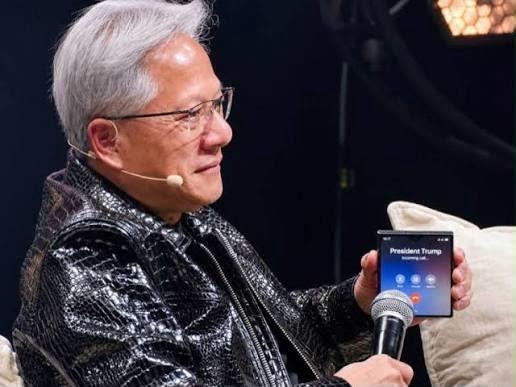
A striking example came when Jensen Huang, Founder and CEO of NVIDIA, was seen using Samsung’s latest foldable smartphone, the Galaxy Z Fold8, after receiving an unexpected call from U.S. President Donald Trump while taking part in a live session during the All-In technology summit. The moment not only captured attention but also brought renewed focus to the choice of one of the technology industry’s most prominent leaders to use a Samsung smartphone, having previously also been seen using the Galaxy Z Fold7.
Beyond the significance of the moment itself, the incident raises a more important question: what features does a professional working in such a complex technology environment look for, and expect, from the smartphone that accompanies them throughout the day?
For this category of users, whose fast-paced days bring together meetings, information, content, photography, communication, and decision-making, a smartphone is certainly no longer simply a communication device. It has become a tool for work and thinking, accessing information, creating content, and getting tasks done at the right time. That is why the value of a flagship smartphone is not determined solely by the number of features it offers, but by its ability to bring these capabilities together into one seamless and intelligent experience.
Data from Counterpoint Research, a global technology market research and data analytics firm covering smartphone, consumer electronics, and communications markets, points to Samsung’s growing presence in the global smartphone market. Samsung accounted for 23% of global smartphone shipments in the second quarter of 2026, reclaiming the number one position worldwide, with year-on-year growth of 9%. According to the company, the Galaxy S26 series, particularly the Ultra model, was among the key drivers behind Samsung’s performance, fueled by demand for AI capabilities and Privacy Display technology. In the United States, where flagship smartphones compete in one of the world’s most advanced technology markets, sales of the Galaxy S26 series increased by 29% year-on-year during its first three weeks of availability, while the Galaxy S26 Ultra alone accounted for approximately 71% of Galaxy S series sales during that period.
These figures do not, on their own, answer the many questions surrounding Samsung — most importantly, “Why Samsung?” — but they place Samsung smartphones, led by the Galaxy S26 Ultra, within a broader context: a smartphone is no longer measured simply by what it can do, but by how effectively it can keep pace with the way its user works, thinks, and interacts with the world around them.
This is where artificial intelligence is transforming the relationship between users and their smartphones. With the Galaxy S26 Ultra, Samsung has evolved the AI experience through its integrated Galaxy AI ecosystem, making it more closely connected to the user’s context and usage patterns, shortening the distance between what they want and what they want to accomplish by reducing the number of steps required.
The Now Nudge feature is a clear example of this enhanced experience, offering suggestions based on what appears on the screen, while Now Brief provides information and reminders that are more closely connected to the user’s personal context. The ecosystem also integrates with Samsung’s intelligent assistant Bixby, as well as AI assistants and intelligent search engines such as Gemini and Perplexity, enabling users to interact with their smartphone using natural language and complete certain tasks without having to manually navigate between settings and applications.
These capabilities become even more valuable when it comes to content creation. A smartphone that accompanies users to meetings, events, and while on the move needs to do more than simply capture a moment; it needs to help turn that moment quickly into content that can be used and shared. This is where the Galaxy S26 Ultra’s 200MP camera comes into play, alongside a 50MP ultra-wide camera and 10MP and 50MP telephoto cameras, offering 3x and 5x optical zoom, as well as optical-quality zoom at 2x and 10x. In addition, Samsung has introduced significant improvements to light capture, low-light photography, and video recording, working alongside AI-powered tools for photo editing and content creation.
Those who know how to read between the lines will recognize that the difference here lies not only in the numbers, but in the way the camera and AI work together. Through tools such as Photo Assist and Creative Studio, users can turn ideas into editable, shareable content using simple commands. They can move seamlessly from capturing an image to editing it — from removing unwanted elements to changing image details, enhancing composition, refining the final result, and preparing it for sharing — all through an experience designed to save time and reduce the number of steps involved. In this way, the camera becomes part of a broader content creation ecosystem, rather than simply an advanced lens within a smartphone.
In reality, this is particularly relevant in a working environment where content creation does not stop at the office. A photograph may be part of a meeting, material for a presentation, or documentation of an event.
For those who deal daily with information, conversations, correspondence, or content that they may not wish to share with those around them due to its sensitive nature, the Galaxy S26 Ultra offers Privacy Display, built directly into the screen. The feature limits the ability of people viewing from the sides to see the content displayed on the screen, and can be activated in specific situations, such as when entering passwords or using certain applications.
In everyday use, there are also features that may attract less attention but are closely connected to the realities of working on the move, such as the smooth performance of the Galaxy S26 Ultra, which enables efficient multitasking and AI-powered features. This is complemented by long-lasting battery performance, thanks to its 5,000mAh battery and fast-charging capabilities, which reduce the amount of time users need to spend away from their device.
Ultimately, choosing a smartphone for someone working in the technology sector may not come down to a single feature or specification. Its true value emerges when AI, camera capabilities, performance, and privacy work together to reduce the steps between an idea and its execution, between capturing a moment and turning it into content, and between needing information and accessing it.
Perhaps this is why, when a Samsung smartphone appears in the hands of one of the technology industry’s most prominent leaders, the story is not simply about the smartphone itself. It is about what the smartphone has become capable of doing when technology evolves from a collection of capabilities into an experience that understands the user’s context and keeps pace with the way they work and live.
A striking example came when Jensen Huang, Founder and CEO of NVIDIA, was seen using Samsung’s latest foldable smartphone, the Galaxy Z Fold8, after receiving an unexpected call from U.S. President Donald Trump while taking part in a live session during the All-In technology summit. The moment not only captured attention but also brought renewed focus to the choice of one of the technology industry’s most prominent leaders to use a Samsung smartphone, having previously also been seen using the Galaxy Z Fold7.
Beyond the significance of the moment itself, the incident raises a more important question: what features does a professional working in such a complex technology environment look for, and expect, from the smartphone that accompanies them throughout the day?
For this category of users, whose fast-paced days bring together meetings, information, content, photography, communication, and decision-making, a smartphone is certainly no longer simply a communication device. It has become a tool for work and thinking, accessing information, creating content, and getting tasks done at the right time. That is why the value of a flagship smartphone is not determined solely by the number of features it offers, but by its ability to bring these capabilities together into one seamless and intelligent experience.
Data from Counterpoint Research, a global technology market research and data analytics firm covering smartphone, consumer electronics, and communications markets, points to Samsung’s growing presence in the global smartphone market. Samsung accounted for 23% of global smartphone shipments in the second quarter of 2026, reclaiming the number one position worldwide, with year-on-year growth of 9%. According to the company, the Galaxy S26 series, particularly the Ultra model, was among the key drivers behind Samsung’s performance, fueled by demand for AI capabilities and Privacy Display technology. In the United States, where flagship smartphones compete in one of the world’s most advanced technology markets, sales of the Galaxy S26 series increased by 29% year-on-year during its first three weeks of availability, while the Galaxy S26 Ultra alone accounted for approximately 71% of Galaxy S series sales during that period.
These figures do not, on their own, answer the many questions surrounding Samsung — most importantly, “Why Samsung?” — but they place Samsung smartphones, led by the Galaxy S26 Ultra, within a broader context: a smartphone is no longer measured simply by what it can do, but by how effectively it can keep pace with the way its user works, thinks, and interacts with the world around them.
This is where artificial intelligence is transforming the relationship between users and their smartphones. With the Galaxy S26 Ultra, Samsung has evolved the AI experience through its integrated Galaxy AI ecosystem, making it more closely connected to the user’s context and usage patterns, shortening the distance between what they want and what they want to accomplish by reducing the number of steps required.
The Now Nudge feature is a clear example of this enhanced experience, offering suggestions based on what appears on the screen, while Now Brief provides information and reminders that are more closely connected to the user’s personal context. The ecosystem also integrates with Samsung’s intelligent assistant Bixby, as well as AI assistants and intelligent search engines such as Gemini and Perplexity, enabling users to interact with their smartphone using natural language and complete certain tasks without having to manually navigate between settings and applications.
These capabilities become even more valuable when it comes to content creation. A smartphone that accompanies users to meetings, events, and while on the move needs to do more than simply capture a moment; it needs to help turn that moment quickly into content that can be used and shared. This is where the Galaxy S26 Ultra’s 200MP camera comes into play, alongside a 50MP ultra-wide camera and 10MP and 50MP telephoto cameras, offering 3x and 5x optical zoom, as well as optical-quality zoom at 2x and 10x. In addition, Samsung has introduced significant improvements to light capture, low-light photography, and video recording, working alongside AI-powered tools for photo editing and content creation.
Those who know how to read between the lines will recognize that the difference here lies not only in the numbers, but in the way the camera and AI work together. Through tools such as Photo Assist and Creative Studio, users can turn ideas into editable, shareable content using simple commands. They can move seamlessly from capturing an image to editing it — from removing unwanted elements to changing image details, enhancing composition, refining the final result, and preparing it for sharing — all through an experience designed to save time and reduce the number of steps involved. In this way, the camera becomes part of a broader content creation ecosystem, rather than simply an advanced lens within a smartphone.
In reality, this is particularly relevant in a working environment where content creation does not stop at the office. A photograph may be part of a meeting, material for a presentation, or documentation of an event.
For those who deal daily with information, conversations, correspondence, or content that they may not wish to share with those around them due to its sensitive nature, the Galaxy S26 Ultra offers Privacy Display, built directly into the screen. The feature limits the ability of people viewing from the sides to see the content displayed on the screen, and can be activated in specific situations, such as when entering passwords or using certain applications.
In everyday use, there are also features that may attract less attention but are closely connected to the realities of working on the move, such as the smooth performance of the Galaxy S26 Ultra, which enables efficient multitasking and AI-powered features. This is complemented by long-lasting battery performance, thanks to its 5,000mAh battery and fast-charging capabilities, which reduce the amount of time users need to spend away from their device.
Ultimately, choosing a smartphone for someone working in the technology sector may not come down to a single feature or specification. Its true value emerges when AI, camera capabilities, performance, and privacy work together to reduce the steps between an idea and its execution, between capturing a moment and turning it into content, and between needing information and accessing it.
Perhaps this is why, when a Samsung smartphone appears in the hands of one of the technology industry’s most prominent leaders, the story is not simply about the smartphone itself. It is about what the smartphone has become capable of doing when technology evolves from a collection of capabilities into an experience that understands the user’s context and keeps pace with the way they work and live.

Legal Disclaimer:
MENAFN provides the
information “as is” without warranty of any kind. We do not accept any
responsibility or liability for the accuracy, content, images, videos,
licenses, completeness, legality, or reliability of the information
contained in this article. If you have any complaints or copyright issues
related to this article, kindly contact the provider above.
Comments
No comment