(MENAFN- GlobeNewsWire - Nasdaq) New York, USA, Sept. 16, 2026 (GLOBE NEWSWIRE) --
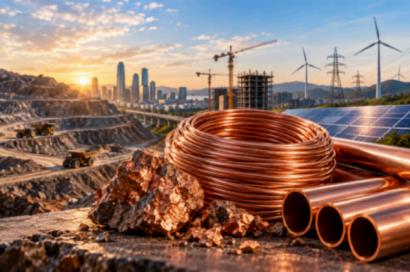
Maezawa Daniel of MizoraTrade Examines Copper's Role Across Construction, Infrastructure, Manufacturing, Transportation and the Expanding Electrification Economy
Copper may receive less public attention than gold or oil, but its presence across the global economy makes it an important industrial commodity. From power grids and construction projects to electronics, transportation and manufacturing, copper is embedded in many of the systems that support modern economic activity.
Maezawa Daniel, Senior Broker at MizoraTrad, examines the broader economic connections surrounding copper and explains why the metal can offer useful context when viewed through the industries that consume it rather than through price movements alone.
“Copper connects parts of the economy that we often discuss separately,” Daniel said.“Construction needs it. Electricity infrastructure needs it. Manufacturers use it. Transportation uses it. The interesting part is how many different economic activities eventually lead back to the same material.”
Copper's Broad Industrial Footprint
Copper's importance begins with its physical characteristics. The metal is an efficient conductor of electricity and heat, can be shaped into a variety of forms and offers resistance to corrosion. These properties have made copper a widely used material in electrical systems and industrial applications.
Electrical infrastructure represents one of copper's major areas of use, including power generation and transmission, building wiring, telecommunications and electronic equipment. Construction is another significant area where copper is used in wiring, plumbing and building systems.
Daniel points to the breadth of these applications as one reason copper has such a wide economic footprint.
“Think about what happens when a new building goes up,” Daniel said.“There is wiring, plumbing, heating and cooling infrastructure. Then think about expanding an electricity grid, building industrial machinery or manufacturing vehicles. Copper appears again and again.”
This does not mean copper should be treated as a standalone measure of economic growth. Instead, its diverse applications illustrate how developments in construction, manufacturing and infrastructure can ultimately intersect through a single industrial commodity.
Electrification Is Expanding the Infrastructure Story
Copper's traditional applications were already extensive before electrification became a major industrial theme. As economies invest in electricity generation, transmission and distribution infrastructure, the physical systems required to move electricity remain an important part of the equation.
Transmission lines, distribution networks, transformers, cables and electrical connections all depend on materials capable of supporting electrical systems.
“Electrification sounds like a technology story, but underneath it is also a materials story,” Daniel said.“Electricity requires infrastructure, and infrastructure requires metals.”
The distinction is significant because adding electricity-generation capacity represents only one part of the broader system. Power must still travel from generation facilities to homes, businesses, factories and transportation networks.
This places copper at an intersection between energy production, infrastructure development and energy consumption.
Electric Vehicles Are Only One Part of Copper Demand
Electric vehicles are frequently discussed in connection with future copper consumption, but Daniel notes that focusing exclusively on EVs can overlook the metal's much broader industrial role.
Copper has long been used in conventional vehicles, electrical systems, motors, machinery and other industrial equipment. The continued electrification of transportation may increase the importance of electrical components, but it did not create copper's industrial relevance.
A similar relationship can be seen in the digital economy.
Cloud computing, artificial intelligence and other digital technologies may appear largely intangible to consumers, but they depend on substantial physical infrastructure. Data centers require electricity, cooling systems and connectivity. Servers and networking equipment require physical components, while expanding digital infrastructure can require additional power and communications capacity.
“We sometimes talk about the digital economy as though the physical economy is disappearing,” Daniel said.“In reality, digital growth creates its own demand for physical infrastructure.”
Artificial intelligence provides another example. While AI applications are software-based, the infrastructure supporting them includes data centers, electricity systems, networking equipment and cooling systems.
Copper Has Another Side: Supply
The copper story is not limited to demand. Before the metal can become part of a building, vehicle, electrical network or industrial machine, it must be extracted, processed, refined and transported.
Mining operations have production constraints, while developing new sources of copper can involve substantial investment, planning and time. These factors can influence how quickly additional supply can enter the market.
Recycling provides another important part of the supply picture.
Copper can be recovered and returned to productive use rather than being permanently consumed. Scrap generated through manufacturing, building demolition, old electrical wiring and discarded equipment can become sources of recycled copper.
“Knowing that an industry will require more copper doesn't automatically tell you what happens to the copper market,” Daniel said.“Demand is one side. Mine production, refining, inventories and recycling sit on the other.”
The distinction highlights why simple commodity narratives can overlook important market dynamics. Growth in electric-vehicle production, for example, does not occur independently of mining and refining capacity. Similarly, increased grid construction exists alongside recycling, inventory levels and changes in industrial demand.
Why Economists Pay Attention
Copper has occasionally earned the nickname“Dr. Copper” because its widespread industrial use is thought to provide clues about economic activity. Daniel prefers a more cautious interpretation of the relationship between copper and broader economic conditions.
“Copper doesn't predict the economy,” Daniel said.“What makes it interesting is how many different parts of the economy it touches.”
Copper's broad economic connections can be seen across several major sectors:
A construction slowdown can weaken one source of copper consumption while electricity infrastructure investment strengthens another. Manufacturing activity can change in one region while major infrastructure projects expand elsewhere.
That complexity is precisely why Daniel sees more value in understanding copper's connections than treating its price as a simple economic scoreboard.
“A tonne of copper doesn't know whether it will eventually become part of an apartment building, a power network, a factory motor or a vehicle,” Daniel said.“But when you put all those destinations together, you understand why this metal reaches so deeply into the real economy.”
Gold has its relationship with money and wealth, while oil sits at the center of the global energy system. Copper occupies a different position, with its applications spread across construction, manufacturing, electricity, transportation and communications infrastructure.
As a result, understanding copper requires looking beyond its market price and considering the many economic activities that depend on the metal.
Copper's importance ultimately comes from the number of economic activities that depend on it.
As electrification, digital infrastructure and industrial development continue to shape economic investment, copper remains positioned across many of these interconnected activities.
Rather than viewing copper solely through the lens of its price, examining where and how the metal is used can provide a broader perspective on the physical infrastructure underlying economic activity.
MizoraTrade is a global trading platform offering access to multiple market categories, including commodities and precious metals. The platform provides market-related tools and resources for users following global financial markets.
This press release is provided for general informational and educational purposes only. The views and commentary attributed to Maezawa Daniel are informational in nature and should not be interpreted as investment, financial, trading or other professional advice. Nothing contained in this release constitutes a forecast, recommendation, solicitation or invitation to enter into any financial transaction. Commodity markets can be affected by economic, political, industrial, supply and other factors and may experience significant price volatility. Readers should conduct their own research and consult appropriately qualified professional advisers before making financial decisions.





Comments
No comment