


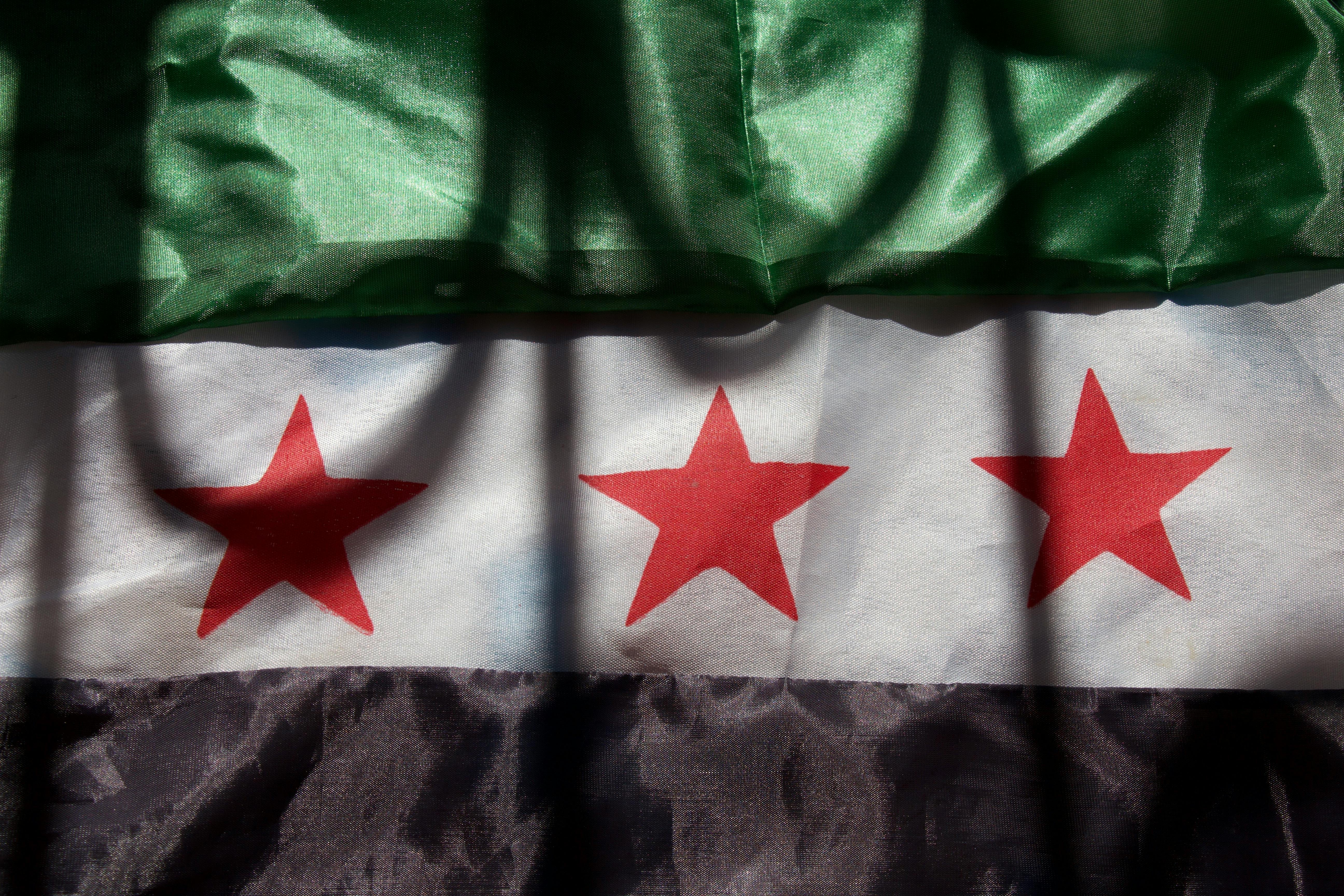
Syria 'Born Again' After Sanctions Lifted, Says President Sharaa


(MENAFN) Syrian President Ahmad al-Sharaa declared Tuesday that the lifting of sanctions has given Syria a fresh start, opening the door to economic recovery, foreign investment and a stronger role across the region.
Addressing the Arab Media Summit 2026 in Dubai, United Arab Emirates, Sharaa said Syria endured one of the most extensive sanctions regimes in modern history, with some measures dating back to 1979 — a burden so prolonged that entire generations grew unfamiliar with international financial transactions and banking guarantees.
He credited mediation by Arab and regional leaders, along with Turkish President Recep Tayyip Erdogan's engagement with US President Donald Trump, for what he called a "historic decision" to lift the restrictions.
"I believe Syria was born again after the sanctions were lifted and the road ahead was opened. In other words, the restrictions were broken," he said. "What remains now is to adopt the right policies and procedures and make sound choices," he added.
Economic overhaul, Gulf investment pour in
Sharaa said Syria is shifting away from a socialist-style economic system marked by bureaucracy and corruption toward a more liberal, private-sector-driven model — a transition he acknowledged may demand difficult choices early on.
He outlined the scale of the collapse and recovery: Syria's economy stood near $60 billion in 2010, sank to roughly $20 billion by 2024, and has since rebounded to $32 billion in 2025. He projected it could hit $50 billion this year and climb back to 2010 levels by 2027.
"Our programs aim to bring the economy to around $200 billion over the following five to 10 years," he said, provided international conditions remain stable.
Sharaa said investors from the UAE, Saudi Arabia, Qatar and Kuwait are already entering the Syrian market, with several memorandums of understanding signed and some projects underway — including plans involving Emirati businessman Mohamed Alabbar and a DP World investment in the Port of Tartus on Syria's Mediterranean coast.
He argued Syria's geography positions it as a key link in alternative trade, energy and supply routes connecting East and West, and suggested the country could become a regional food powerhouse — capable of feeding 70 million to 75 million people using traditional methods, and more than 100 million with modern agricultural technology.
Addressing the Arab Media Summit 2026 in Dubai, United Arab Emirates, Sharaa said Syria endured one of the most extensive sanctions regimes in modern history, with some measures dating back to 1979 — a burden so prolonged that entire generations grew unfamiliar with international financial transactions and banking guarantees.
He credited mediation by Arab and regional leaders, along with Turkish President Recep Tayyip Erdogan's engagement with US President Donald Trump, for what he called a "historic decision" to lift the restrictions.
"I believe Syria was born again after the sanctions were lifted and the road ahead was opened. In other words, the restrictions were broken," he said. "What remains now is to adopt the right policies and procedures and make sound choices," he added.
Economic overhaul, Gulf investment pour in
Sharaa said Syria is shifting away from a socialist-style economic system marked by bureaucracy and corruption toward a more liberal, private-sector-driven model — a transition he acknowledged may demand difficult choices early on.
He outlined the scale of the collapse and recovery: Syria's economy stood near $60 billion in 2010, sank to roughly $20 billion by 2024, and has since rebounded to $32 billion in 2025. He projected it could hit $50 billion this year and climb back to 2010 levels by 2027.
"Our programs aim to bring the economy to around $200 billion over the following five to 10 years," he said, provided international conditions remain stable.
Sharaa said investors from the UAE, Saudi Arabia, Qatar and Kuwait are already entering the Syrian market, with several memorandums of understanding signed and some projects underway — including plans involving Emirati businessman Mohamed Alabbar and a DP World investment in the Port of Tartus on Syria's Mediterranean coast.
He argued Syria's geography positions it as a key link in alternative trade, energy and supply routes connecting East and West, and suggested the country could become a regional food powerhouse — capable of feeding 70 million to 75 million people using traditional methods, and more than 100 million with modern agricultural technology.

Legal Disclaimer:
MENAFN provides the
information “as is” without warranty of any kind. We do not accept
any responsibility or liability for the accuracy, content, images,
videos, licenses, completeness, legality, or reliability of the information
contained in this article. If you have any complaints or copyright
issues related to this article, kindly contact the provider above.


Comments
No comment