


What Is a Dock Leveler? Types and Applications Explained


(MENAFN- Global Industrial Parts Inc.) If you''ve ever watched a forklift roll smoothly from a warehouse floor straight into the back of a trailer, you''ve seen a dock leveler doing its job. It''s one of those pieces of equipment that goes unnoticed when it''s working well, but understanding what it actually does — and which type fits your facility — matters a great deal when it''s time to build, retrofit, or upgrade a loading dock.
What a dock leveler actually does
A dock leveler bridges the gap between a warehouse''s loading dock and the bed of a trailer or truck, which are rarely at exactly the same height. Trailer bed heights vary depending on the vehicle''s load, tire pressure, and suspension, and without a leveler, forklifts and pallet jacks would be forced to navigate an uneven, potentially dangerous transition point dozens or even hundreds of times a day. The leveler adjusts to compensate for that height difference, providing a continuous, stable surface for material handling equipment to cross.
Mechanical dock levelers
Mechanical dock levelers use a spring-assisted mechanism, typically operated by pulling a chain to release the platform, which then rests on the trailer bed under its own weight. They''re a straightforward, lower-cost option that has been used in warehouses for decades. Because they rely on manual operation, they do require the operator to use some physical effort to position the deck and lip correctly, which is worth factoring into daily workflow, especially at high-traffic docks.
Hydraulic dock levelers
Hydraulic dock levelers replace the manual chain-pull operation with push-button control, using a hydraulic pump to raise, lower, and extend the platform and lip. This gives a smoother, more controllable transition and reduces the physical effort required from dock personnel. Many hydraulic designs also include a self-flexing deck that allows the platform to adjust slightly under load, helping the leveler settle evenly against uneven or out-of-balance trailer beds rather than resting on just a few contact points.
Pit levelers vs. vertical-storing designs
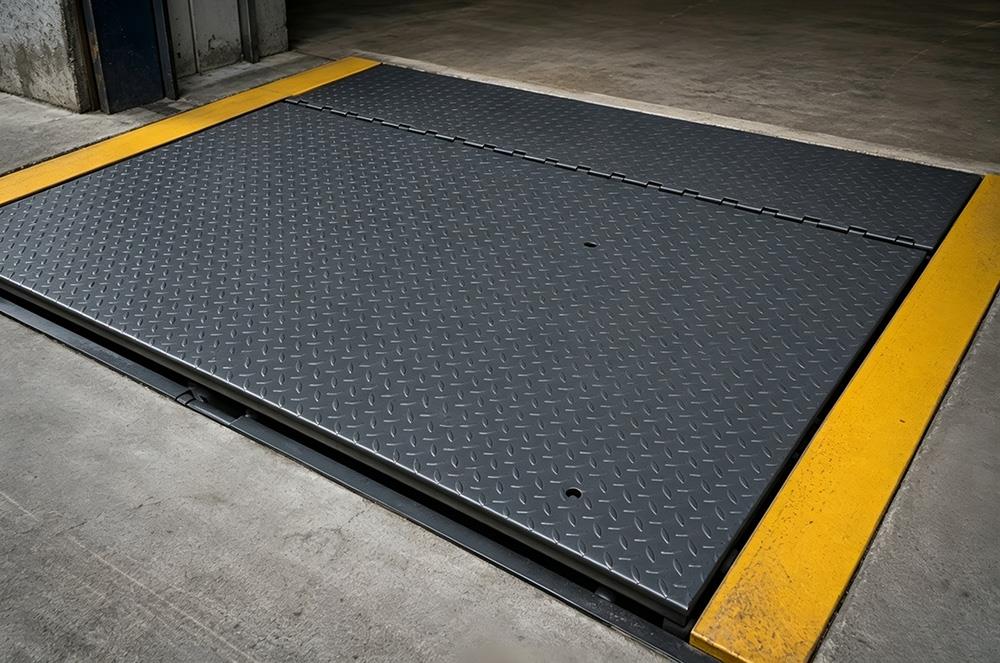
Most dock levelers are installed in a pit built into the loading dock structure, sitting flush with the dock floor when not in use — these are generally referred to as pit levelers, and they remain the most common configuration for standard warehouse and distribution center docks. Vertical dock levelers, by contrast, store in an upright position rather than resting flat in a pit. This design is often chosen for temperature-controlled facilities, since a vertical leveler can help maintain a tighter seal at the dock opening when not in use, reducing energy loss in refrigerated or climate-controlled warehouses.
Edge-of-dock levelers for lighter-duty applications
Where a full pit-mounted leveler isn''t necessary or practical — smaller facilities, lower trailer traffic, or retrofits where excavating a pit isn''t feasible — an edge-of-dock leveler offers a lighter-duty alternative. These units mount directly to the face of the dock and provide a shorter bridging span, suited to lighter loads and lower-frequency operations rather than the continuous heavy-duty cycles of a large distribution center.
Choosing based on how the dock is actually used
The right dock leveler type depends less on brand preference and more on how the facility operates day to day. High-frequency distribution centers with heavy forklift traffic generally benefit most from hydraulic, pit-style levelers built for continuous duty. Temperature-sensitive facilities should weigh the energy efficiency benefits of vertical storage designs. Smaller warehouses or facilities with lighter, less frequent trailer traffic may find that a well-specified mechanical or edge-of-dock unit meets their needs without the added investment of a full hydraulic system.
Why this matters beyond day-to-day convenience
A leveler that''s mismatched to the facility''s actual traffic and load patterns tends to wear out faster, require more frequent repairs, and create more friction in daily operations than one specified correctly from the start. Taking the time to understand these categories before a purchase decision pays off in fewer disruptions down the road. For warehouses and distribution centers evaluating a durable, push-button solution, a hydraulic dock leveler built for demanding, high-cycle environments is often the more future-proof choice compared to manual alternatives.
Beauway has been specializing in the field of logistics loading and unloading equipment for many years, with a full product range covering tail lifts, dock levelers, and lifting platforms. For a customized solution tailored to your specific site conditions, you are welcome to schedule a technical consultation.
What a dock leveler actually does
A dock leveler bridges the gap between a warehouse''s loading dock and the bed of a trailer or truck, which are rarely at exactly the same height. Trailer bed heights vary depending on the vehicle''s load, tire pressure, and suspension, and without a leveler, forklifts and pallet jacks would be forced to navigate an uneven, potentially dangerous transition point dozens or even hundreds of times a day. The leveler adjusts to compensate for that height difference, providing a continuous, stable surface for material handling equipment to cross.
Mechanical dock levelers
Mechanical dock levelers use a spring-assisted mechanism, typically operated by pulling a chain to release the platform, which then rests on the trailer bed under its own weight. They''re a straightforward, lower-cost option that has been used in warehouses for decades. Because they rely on manual operation, they do require the operator to use some physical effort to position the deck and lip correctly, which is worth factoring into daily workflow, especially at high-traffic docks.
Hydraulic dock levelers
Hydraulic dock levelers replace the manual chain-pull operation with push-button control, using a hydraulic pump to raise, lower, and extend the platform and lip. This gives a smoother, more controllable transition and reduces the physical effort required from dock personnel. Many hydraulic designs also include a self-flexing deck that allows the platform to adjust slightly under load, helping the leveler settle evenly against uneven or out-of-balance trailer beds rather than resting on just a few contact points.
Pit levelers vs. vertical-storing designs
Most dock levelers are installed in a pit built into the loading dock structure, sitting flush with the dock floor when not in use — these are generally referred to as pit levelers, and they remain the most common configuration for standard warehouse and distribution center docks. Vertical dock levelers, by contrast, store in an upright position rather than resting flat in a pit. This design is often chosen for temperature-controlled facilities, since a vertical leveler can help maintain a tighter seal at the dock opening when not in use, reducing energy loss in refrigerated or climate-controlled warehouses.
Edge-of-dock levelers for lighter-duty applications
Where a full pit-mounted leveler isn''t necessary or practical — smaller facilities, lower trailer traffic, or retrofits where excavating a pit isn''t feasible — an edge-of-dock leveler offers a lighter-duty alternative. These units mount directly to the face of the dock and provide a shorter bridging span, suited to lighter loads and lower-frequency operations rather than the continuous heavy-duty cycles of a large distribution center.
Choosing based on how the dock is actually used
The right dock leveler type depends less on brand preference and more on how the facility operates day to day. High-frequency distribution centers with heavy forklift traffic generally benefit most from hydraulic, pit-style levelers built for continuous duty. Temperature-sensitive facilities should weigh the energy efficiency benefits of vertical storage designs. Smaller warehouses or facilities with lighter, less frequent trailer traffic may find that a well-specified mechanical or edge-of-dock unit meets their needs without the added investment of a full hydraulic system.
Why this matters beyond day-to-day convenience
A leveler that''s mismatched to the facility''s actual traffic and load patterns tends to wear out faster, require more frequent repairs, and create more friction in daily operations than one specified correctly from the start. Taking the time to understand these categories before a purchase decision pays off in fewer disruptions down the road. For warehouses and distribution centers evaluating a durable, push-button solution, a hydraulic dock leveler built for demanding, high-cycle environments is often the more future-proof choice compared to manual alternatives.
Beauway has been specializing in the field of logistics loading and unloading equipment for many years, with a full product range covering tail lifts, dock levelers, and lifting platforms. For a customized solution tailored to your specific site conditions, you are welcome to schedule a technical consultation.
Global Industrial Parts Inc.
Legal Disclaimer:
MENAFN provides the
information “as is” without warranty of any kind. We do not accept
any responsibility or liability for the accuracy, content, images,
videos, licenses, completeness, legality, or reliability of the information
contained in this article. If you have any complaints or copyright
issues related to this article, kindly contact the provider above.


Comments
No comment