

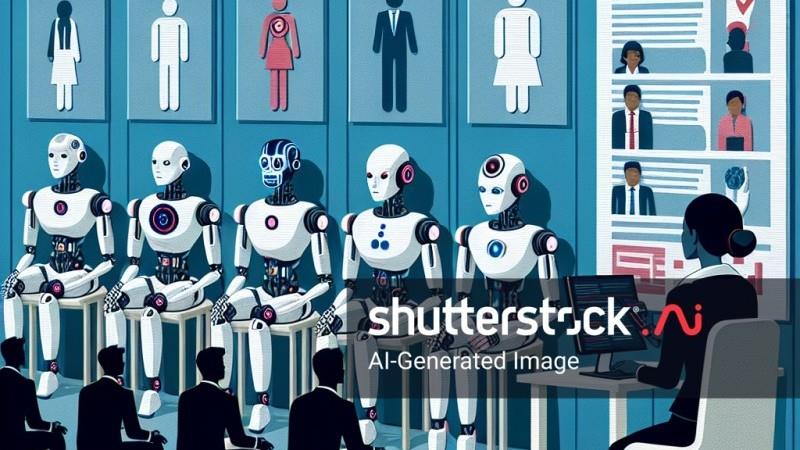
Why India And Philippines Aren't Losing The AI Battle-Yet


India and the Philippines have long emerged as global outsourcing powerhouses, leveraging skilled labour, English proficiency, and cost competitiveness to build large software, IT, and business services sectors.
The rise of AI, therefore, matters disproportionately for both economies. Many outsourced services involve routine tasks that AI can increasingly automate, raising questions about the future of services exports and employment.
The stakes are high. The Philippines accounts for an estimated 15-17% of the global business process outsourcing (BPO) market, while India commands more than half of the global outsourcing industry. These sectors are important export earners, generating more than $40bn in annual revenue in the Philippines and around $205bn in software services exports in India. But they're also major sources of employment in the Philippines and India, supporting roughly 1.9 million and 5.8 million workers, respectively.
The sector's resilience matters because services exports play a critical role in financing persistent current account deficits of both economies. In the Philippines, telecom and business services exports amounted to around 7% of GDP in 2025, more than offsetting the country's current account deficit of 3.5% of GDP. In India, software and business services exports stood at roughly 8.5% of GDP, compared with a current account deficit of 0.5% of GDP. So, services exports are more than just a source of growth and employment. They're a key pillar of external stability, providing an important buffer for the balance of payments and serving as a crucial source of support for the peso and the rupee.
Are services exports showing signs of disruption?India's software services exports show little sign of AI-driven disruption. Export growth remained robust at around 12% year-on-year in mid-2026, slightly above pre-pandemic rates. Software services exports have risen to roughly 5.2% of GDP from 3.3% before Covid.
While part of the initial increase reflects a post-Covid surge in digitalisation and outsourcing demand, the trend has remained firmly intact even after that boost faded. In fact, software services exports have increased by a further 1ppt of GDP since the mainstream AI explosion with the launch of ChatGPT in 2022, suggesting that demand for Indian technology and business services continues to expand despite rapid advances in AI.
More interestingly, business services exports have accelerated sharply. They've more than doubled their share of GDP to 3.3% from 1.6% before Covid. This category captures many of the higher-value activities that firms increasingly offshore to India, including finance and accounting, risk management, legal and compliance support, engineering design, R&D, analytics, and consulting. As firms shift from traditional back‐office outsourcing toward more knowledge‐intensive work, demand for these services is holding up strongly despite rapid advances in AI.
In the Philippines, this resilience has been notable, though growth has been more modest than in India. Telecom/computer services and business services exports have continued to expand, lifting their combined share of GDP to 7.1% by mid-2026 from 6.3% before the pandemic. The composition, however, has been different. Telecom and computer services have emerged as the main growth engine, while business services have moderated after the post-Covid surge in outsourcing demand. Even so, little evidence suggests AI has materially weakened external demand for Philippine services exports.
Yet strong export growth doesn't mean AI has no impact on the industry. Rather, the disruption is increasingly visible in the composition of outsourced work and the skills in demand.
India is seeing a sharp acceleration in business services exports Philippines - computer services take the lead Source: CEIC"> AI is changing the nature of work, not eliminating demand
While BPOs have traditionally relied on repetitive, rules-based tasks, AI is increasingly automating these activities. Large language models are improving efficiency in customer support, legal reviews, claims processing, document verification and data entry, allowing many tasks to be completed in a fraction of the time previously required. The disruption is spreading beyond text. AI-powered voice assistants are becoming more capable of handling customer service interactions. AI-assisted coding tools are making software development faster and less labour-intensive.
As a result, industry growth is gradually shifting away from routine processing activities towards analytics, software development and other higher-value services. To understand where this growth is occurring, it's useful to look more closely at exports of all digitally delivered services (DDS). They capture a broader range of cross-border business and technology services delivered electronically, including both outsourced activities and work undertaken through multinational Global Capability Centres (GCCs).
Global trade patterns favour higher-value servicesThe composition of global DDS exports suggests that higher-value services are becoming increasingly important. The largest category is other business services, which account for around 40% of total DDS exports and include research and development, professional consulting, management and legal services. This is followed by computer services (20%), financial services (16%) and charges for the use of intellectual property (12%).
This is particularly relevant because GCCs increasingly undertake activities that fall within the "other business services" category, including finance, risk management, analytics, technology and R&D . Given the rapid expansion of GCCs in both India and the Philippines, DDS provides a more comprehensive measure of the sector's performance and resilience to AI.
India is gaining share in higher-value servicesIndia's strength lies in business services, the largest component of DDS exports. This arguably puts the country in a better position to withstand AI's impact, as demand is increasingly shifting toward higher-value, knowledge-intensive work rather than routine tasks.
Since 2022, India's DDS exports have grown by 45%. This outpaced global growth of 32% and allowed the country to gain market share despite weaker performance in several large Asian economies, including China and Japan. Much of this growth has come from other business services, which have expanded at an average annual rate of 15% since 2022, significantly faster than global growth of 9.3%.
India's DDS exports are outpacing global growth Source: World Trade Organisation"> India is emerging as a bigger player in global DDS Source: WTO"> The Philippines is shifting its mix
The Philippines presents a somewhat different picture, with the composition of services exports evolving rather than market share expanding. While the country's share of global DDS exports has remained broadly unchanged since 2022, the export mix appears to be evolving. While DDS exports have grown by 24% since 2022, financial services and computer services are increasingly driving growth rather than traditional business services. Financial services exports have expanded by around 25% per year since 2022, while computer services exports have also grown strongly.
In other words, while India is gaining share through its strength in business services and GCC-driven activities, the Philippines appears to be adjusting by increasing its exposure to faster-growing segments such as financial and computer services. The common theme across both countries is that AI is changing the composition of services exports. Yet there's little evidence so far that it's causing outright contraction in export revenues.
Composition of Philippines services' exports is changing Source: World Trade Organisation"> Is employment under pressure?The Philippine IT-business process management (IT-BPM) sector has a much larger footprint than its direct employment share suggests. According to the ILO, more than a quarter of jobs in the Philippines are potentially exposed to GenAI, the highest share among ASEAN economies with comparable data. However, exposure does not necessarily imply displacement. Only a small fraction of jobs, estimated at around 4%, fall into the highest-risk category for automation. The vast majority are more likely to experience productivity gains than outright replacement.
This distinction is important. While the Philippines is among the economies most exposed to AI-driven change, the evidence so far points to job transformation rather than job destruction. Data on employment, particularly sector-level employment, are not readily available for either India or the Philippines. As a result, we rely on the closest available proxies. For the Philippines, we combine employment data for the information and communication, professional, scientific and technical services sectors. By this measure, employment has grown by around 4.5% over the past year, with the recent readings remaining close to their long-term trends.
The evidence from India points in a similar direction. Rather than widespread job losses, the impact of AI appears to be showing up through slower hiring and changing skill requirements.
As per news reports, India's top IT firms added just 17 net employees in the first nine months of FY2026, down sharply from the previous year. Entry- and mid-level roles face the greatest pressure. This points to rising productivity and lower labour intensity as AI adoption accelerates.
Yet the broader industry continues to expand. The National Association of Software and Service Companies (NASSCOM) expects India's technology workforce to reach around 6 million workers in FY26, up 2.3% YoY. AI may be reducing the need for traditional hiring, but it is also creating demand for different skills.
This is partly because demand itself is evolving. While traditional IT firms are hiring more cautiously, GCCs continue to expand and absorb higher-skilled talent. Government outsourcing is growing, IT services are moving deeper into smaller cities, and demand for software, analytics, AI and cybersecurity talent remains strong. Even as AI writes more code, humans remain critical for designing, testing and deploying solutions.
Philippine IT and professional services employment remain on trend Source: CEIC"> ConclusionThe evidence so far suggests that AI is reshaping the composition of services exports and employment in India and the Philippines, but not yet causing a broad-based decline in exports or jobs. The bigger story is one of upgrading, with growth increasingly concentrated in higher-skilled, more technology-intensive activities.

Legal Disclaimer:
MENAFN provides the
information “as is” without warranty of any kind. We do not accept any
responsibility or liability for the accuracy, content, images, videos,
licenses, completeness, legality, or reliability of the information
contained in this article. If you have any complaints or copyright issues
related to this article, kindly contact the provider above.
Comments
No comment