

Where Was The GCC During Recent Crisis? Experts Debate Gulf Unity At Dubai Summit


- By: Ruqayya Al Qaydi
[Editor's Note: Follow Khaleej Times live blog for the latest regional developments amid the US-Iran war.]
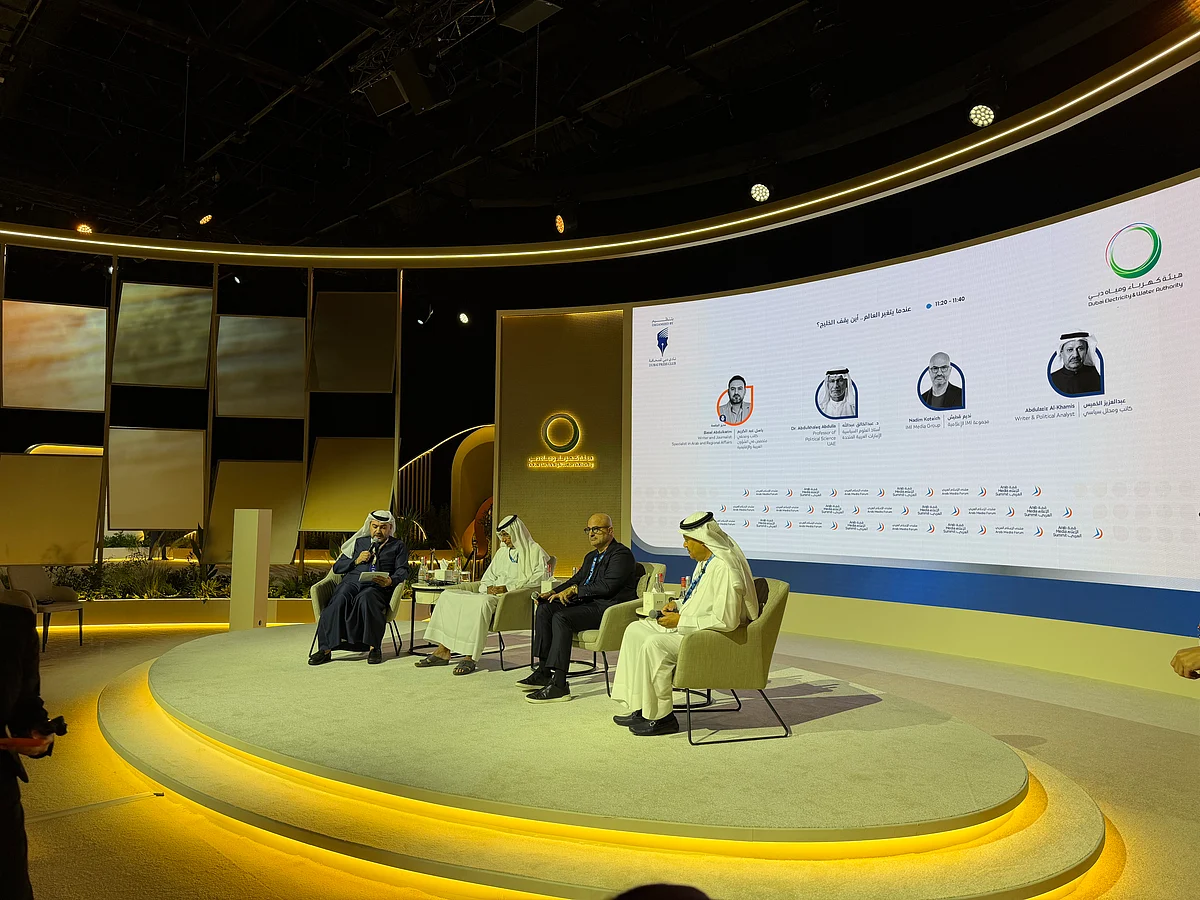
Did Gulf countries confront the recent crisis as one bloc or as six states acting largely on their own? Three analysts offered starkly different answers to this question at the Arab Media Summit in Dubai, exposing a wider debate over whether GCC states share the same view of regional threats and alliances.
Recommended For YouWriter and political analyst Abdulaziz Al Khamis delivered the most critical assessment, saying the GCC“disappeared completely during the crisis”.
Dr Abdulkhaleq Abdulla, a professor of political sciences in the UAE, said logistical cooperation among Gulf states had been crucial and argued that the confrontation proved the region's defensive strength. On the other hand, Nadim Koteich from IMI Media Group went further, questioning the idea of a single Gulf political position.“There is no single Gulf,” he said.
Stay up to date with the latest news. Follow KT on WhatsApp Channels. Where was the GCC?
Al Khamis said recent events challenged the long-held perception that Gulf countries could not defend themselves without Western protection. However, he argued that the crisis also exposed the limits of collective GCC action.
“The GCC disappeared completely during the crisis,” he said, noting that the bloc did not lead a common political or defence effort when it mattered.
Several defence and security agreements were not activated, he added, while the Peninsula Shield Force remained in the background. Individual states and leaders drove the response instead, according to Al Khamis.
He praised the UAE and President Sheikh Mohamed bin Zayed Al Nahyan for what he described as political and defence support extended to other Gulf countries.
“We hoped there would be one Gulf, or one GCC acting together,” Al Khamis said.“But we saw Gulf states working individually.”
'New global centre of gravity'
Abdulla rejected what he called an overly bleak reading of the Gulf's response. While acknowledging tensions among GCC members, he said cooperation and logistical coordination were critical during what he described as Iranian aggression.
He cited“6,000 to 7,000 drones and missiles” and said the response had surprised both the region and the world.“The Gulf states were not defensively helpless, as some believe,” he said.
Abdulla argued that the crisis had established the Gulf as“a new global centre of gravity that can no longer be overlooked”.
He placed the region alongside the United States, Europe and Asia as an increasingly important force in the international system.
“There is America as a traditional centre of gravity, Europe as an old centre, and Asia as a rising centre,” he said.“Today, there is also the Arabian Gulf as an important and rising global centre of gravity.”
He also played down the risk of lasting divisions among Gulf states.“Allies quarrel, but soon reconcile,” Abdulla said.“What unites us is far greater than what divides us.”
Do Gulf states see the same threat?
Koteich said the Gulf was no longer watching global change from the sidelines. Energy, investment power, governance and the ability to take strategic decisions quickly had turned its countries into active players, he said.
But influence did not necessarily mean unity. Koteich said Gulf states followed different political, security and geopolitical paths. He warned that economic and development competition was beginning to shape how countries defined common security and risk.
“Do we have the same position on Iran? I don't think so,” he said.“Do we have the same reading of the Iranian threat? I don't think so.”
Different regional security frameworks and economic corridors reflected competing visions of the future, he added, including who is considered a friend or ally.
The region could not hide those differences under the suggestion that“we are all friends”, he said.
Koteich also addressed international media coverage of the Gulf. Attention from major global publications demonstrated the region's growing weight, even when reports were critical, he said.
ALSO READ- Gulf states need greater security autonomy, but US remains key, experts say 'Ball is in Iran's court': GCC chief says Tehran must rebuild Gulf trust after attacks GCC must take greater diplomatic role amid Iran conflict, experts say at Abu Dhabi forum

Legal Disclaimer:
MENAFN provides the
information “as is” without warranty of any kind. We do not accept any
responsibility or liability for the accuracy, content, images, videos,
licenses, completeness, legality, or reliability of the information
contained in this article. If you have any complaints or copyright issues
related to this article, kindly contact the provider above.
Comments
No comment