

Levant Agricultural Exports Conference Calls For Stronger Agricultural Integration


Vegetable exports increased by 19.1 per cent, while fruit exports rose by 17.8 per cent, Khreisat said, noting that the figures reflect confidence in the sector's capabilities and underscore the need to expand value-added production and diversify markets.
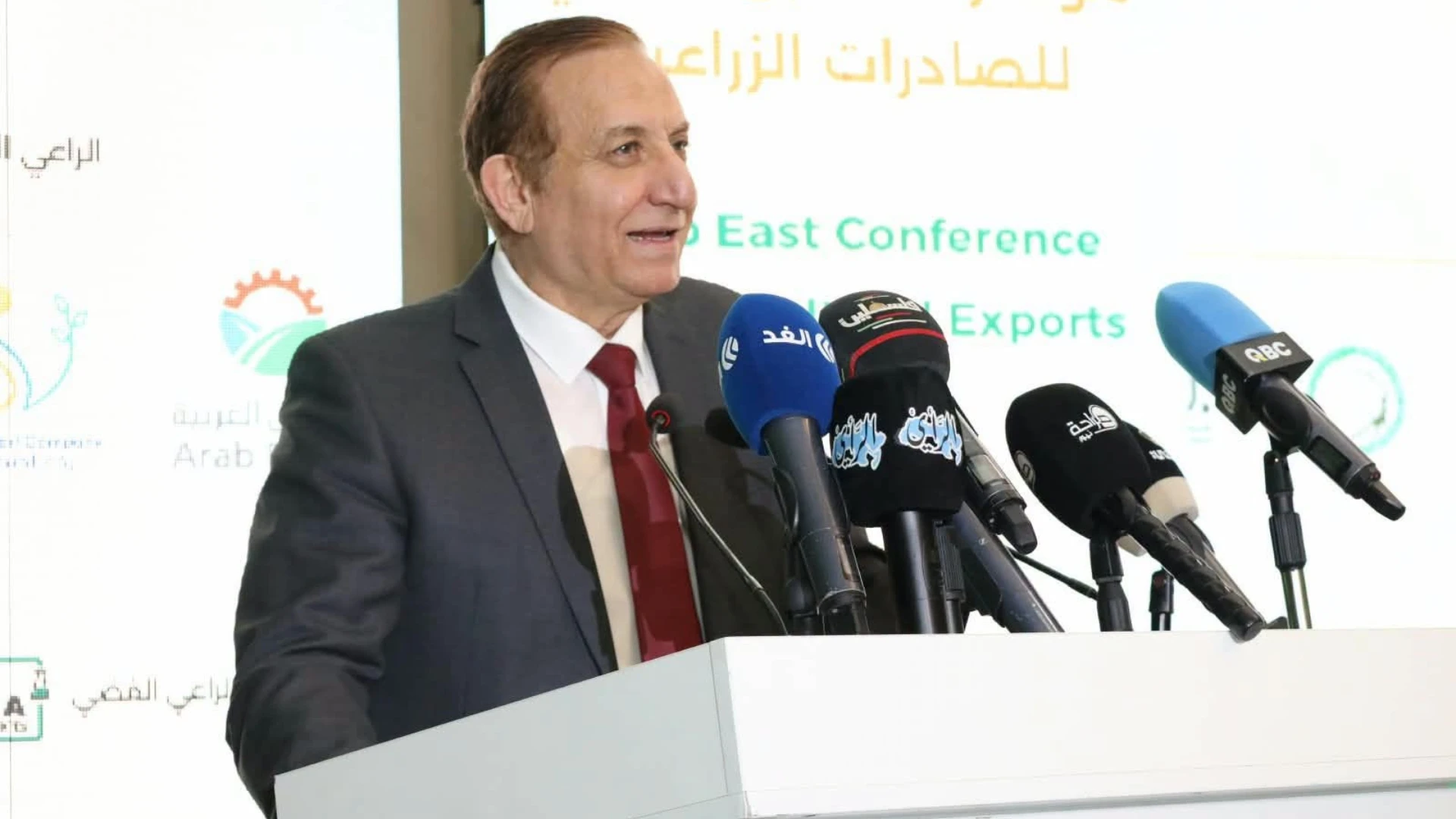
The minister made the remarks during the opening of the Levant Agricultural Exports Conference, held under the theme "One Agricultural Power, Borderless Markets" and organised by the Jordanian Association of Vegetable and Fruit Producers and Exporters.
Jordan's geographical location provides an economic and logistical advantage in connecting national agricultural production with regional and international markets, Khreisat said, noting that the conference comes amid growing competition and rising requirements for quality, safety, traceability and sustainability.
He stressed that export success depends not only on increasing production, but also on developing competitive products, ensuring consistent quality and supply, and improving transport and marketing.
Khreisat called for shifting from exporting products to exporting value through food processing, sorting, packaging, storage, cooling, traceability and branding.
He added that the Levant has significant potential for agricultural integration, given its diverse climates, seasons and crops, as well as its strategic position linking production areas with Gulf, European and international markets.
Agricultural exports must also be developed alongside food security, with policies that balance food availability, fair returns for farmers, product competitiveness and access to export markets, he said.
Khreisat expressed hope that the conference would result in practical cooperation, including information exchange, stronger links between producers and buyers, investment and export opportunities, and solutions to logistical and regulatory challenges.
He reaffirmed the ministry's support for farmers, producers and exporters, as well as efforts to diversify markets and attract investment.
Jordanian Association of Vegetable and Fruit Producers and Exporters President Mazen Hamarneh stressed the importance of regional integration in production and marketing to expand opportunities and open new markets for Jordanian products.
Hamarneh said domestic agricultural production is high compared with neighbouring markets, where competition is strong, adding that the association is seeking partnerships to open larger markets capable of absorbing Jordanian produce.
He praised government support for helping the sector access new European markets, noting that the opening of land routes has improved access to those markets.
Hamarneh stressed that relations with neighbouring countries should be based on integration rather than competition, and called for using existing frameworks to advance the shared interests of the agricultural sector.
Lebanese Agriculture Minister Nizar Al Hani called for reactivating the quadrilateral agricultural cooperation agreement between Lebanon, Jordan, Iraq and Syria and transforming it into an implementation programme with specific projects, timelines and measurable outcomes.
He said agricultural integration has become a strategic necessity amid supply chain disruptions and growing food, water, energy and climate challenges, expressing appreciation for Jordan's continued support for Lebanon and its readiness to strengthen cooperation in trade, transport and joint investment.
Palestinian Agriculture Minister Rizq Salimieh, speaking via videoconference, called for leveraging the different resources and comparative advantages of Levant countries to build an integrated agricultural and food system and strengthen regional food security.
The region's combined energy and water resources, favourable climate, human capital and private-sector capabilities provide a strong basis for cooperation, he said, calling for a shift from countries seeking to secure their food needs independently towards greater regional food integration.
Meanwhile, Syrian Deputy Agriculture Minister Mohammad Maqdadi said major challenges are threatening agricultural production and supply chains, stressing Syria's readiness to cooperate and its productive capacity.
He expressed hope that the conference would produce recommendations that could serve as a roadmap for the agricultural sector.

Legal Disclaimer:
MENAFN provides the
information “as is” without warranty of any kind. We do not accept any
responsibility or liability for the accuracy, content, images, videos,
licenses, completeness, legality, or reliability of the information
contained in this article. If you have any complaints or copyright issues
related to this article, kindly contact the provider above.
Comments
No comment