

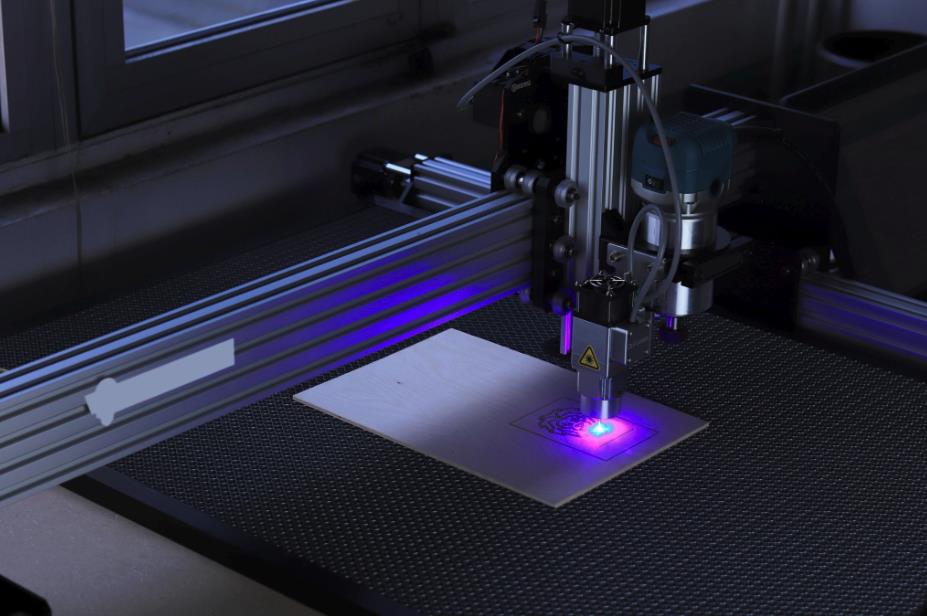
How Laser Marking Supports Automated Manufacturing


One common example of evolving manufacturing is product identification. While many items are traditionally marked with labels or engraving processes, manufacturers are turning to lasers to permanently mark components.
Laser marking eliminates the need for consumables and additional tools; it can also produce high-quality and repeatable identifications necessary for automated lines.
As manufacturing moves towards increased levels of automation for all processes, laser marking equipment can keep up and connect to the larger production system.
Why Laser Marking Fits Automated ProductionAs manufacturing moves towards additional automation, production lines will consist of more connected and intelligent equipment. This type of environment supports the use of laser marking for creating permanent product identification.
Programmable laser marking can be easily adjusted to different parts while eliminating human error associated with manual marking or engraving.
Once appropriate laser settings have been determined for a component or material, the same marking can be easily applied to hundreds or thousands of items
Another advantage is flexibility. Production lines often handle different components, models, or batches during the same shift.
A digitally controlled marking system can switch between designs and identification data without replacing physical tooling. This allows manufacturers to accommodate changing production requirements while maintaining consistent marking quality.
Key Advantages for ManufacturersLaser marking can provide several practical benefits within an automated environment:
-
Permanent identification: Marks can remain readable throughout a product's service life.
Non-contact processing: The laser does not need to physically touch the component.
Digital control: Marking designs and parameters can be managed through software.
High repeatability: Automated systems can reproduce the same marking across production batches.
Flexible identification: Serial numbers, barcodes, QR codes, graphics, and text can be processed.
Traceability: Unique marks can connect individual components with production records.
Manufacturing environments typically involve some level of change, whether it consists of running smaller batches of multiple product styles or switching tooling between shifts to produce different items.
The same laser marking equipment which runs on large batches of one product can flex to run a new item with only software adjustments.
A UV laser marking solution can use a shorter wavelength to create detailed marks while limiting unwanted heat transfer to the surrounding material.
This characteristic can be valuable when manufacturers need clear identification on products that could be affected by excessive thermal exposure.
Numbers That Show the Value of AutomationThe impact of automated laser marking becomes easier to understand when looking at the types of information and production volumes involved. The following figures represent typical industry considerations rather than specifications for a particular machine.
1.png" alt="" width="950" height="603" srcset="
Legal Disclaimer:
MENAFN provides the
information “as is” without warranty of any kind. We do not accept any
responsibility or liability for the accuracy, content, images, videos,
licenses, completeness, legality, or reliability of the information
contained in this article. If you have any complaints or copyright issues
related to this article, kindly contact the provider above.
Comments
No comment