

Can US-India Minerals Deal Unlock Bougainville Mine's Potential?


An Indian iron ore company, a bilateral agreement between Washington and New Delhi and the Trump administration's America First policies may hold the key to the final resolution of a long-standing political dispute between the government of Papua New Guinea and a state seeking complete political autonomy.
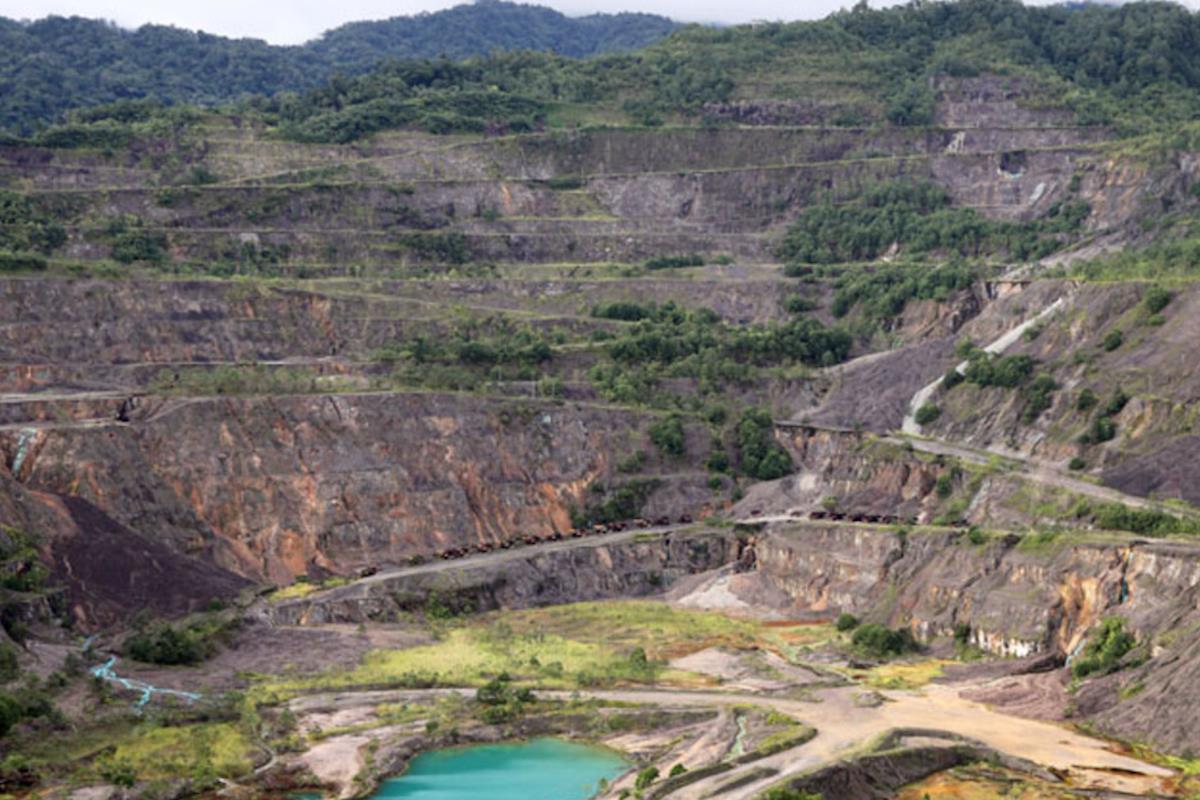
India's Lloyds Metals and Energy Limited was endorsed in November 2025 by the PNG Autonomous Bougainville Government's Executive Council to redevelop the Panguna mine project.
The local firm Bougainville Copper Limited is the lawful exploration license holder of the mine's redevelopment project, but it lacks the financial and technical capacities to reopen the mine independently.
On January 14, 2026, the Bougainville government officially became the sole majority shareholder of Bougainville Copper, with a 72.9% stake.
Although the local company during bidding proposed engaging the Chinese-based giant miner CMOC Group Limited, the Bougainville government rejected CMOC's proposal as it included a condition diluting the autonomous government shares to CMOC as part of the partnership.
Contribution, closure and redevelopmentThe Bougainville government's decision to engage Lloyds Metals to reopen Panguna mine came amid consultations between the autonomous government and the central government of PNG over Bougainville's political independence.
Almost 98% of the estimated population of 300,000 Bougainvilleans had voted in favor of breaking away from PNG and becoming an independent state, in a 2019 referendum that was held in accordance with the Bougainville Peace Agreement reached in 2001.
While the decision to reopen Panguna mine has provided optimism and leverage to the autonomous government and its people regarding determination of Bougainville's economic future, the region's political future remains a constitutional matter – to be decided by the government of PNG and its National Parliament, even though the autonomous government has set September 1, 2027 as a de facto deadline for effective political independence.
Panguna is not an ordinary mine. Since it reached full operation in 1972 it greatly contributed to the economic and political development of Papua New Guinea through a period of self-government in 1973 to becoming an independent sovereign state in 1975, and beyond.
During the mine's 17-year operation between 1972 and 1989, Panguna produced significant quantities of high concentrates of copper, gold and silver. But only 2% of the profits were shared with the mine's local ownership – despite the mine's contribution of almost 44% of PNG export earnings, generating approximately 17% of the country's internal revenue during Panguna's operation.
The Panguna mine was closed in May 1989 as disgruntled locals, angered by unequal distribution of profits and severe environmental damage caused by toxic waste disposal, demanded justice from the government of PNG and the Rio Tinto Group, the Panguna mine's then-owner, which was the majority shareholder of Bienville Copper. This explosive issue led to the outbreak of a decades-long civil war claiming more than 15,000 lives.

Legal Disclaimer:
MENAFN provides the
information “as is” without warranty of any kind. We do not accept any
responsibility or liability for the accuracy, content, images, videos,
licenses, completeness, legality, or reliability of the information
contained in this article. If you have any complaints or copyright issues
related to this article, kindly contact the provider above.
Comments
No comment