

403
Sorry!!
Error! We're sorry, but the page you were looking for doesn't exist.
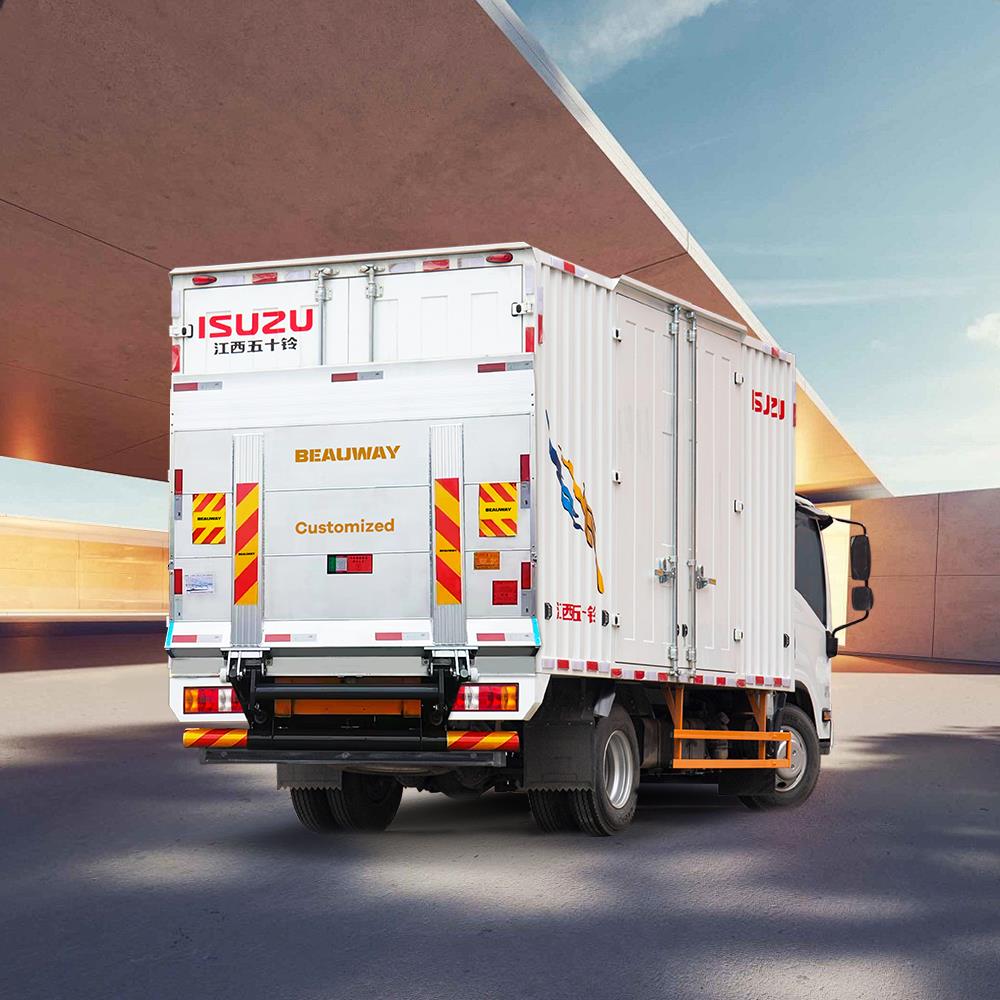
How to Match Tail Lift Capacity to Your Fleet (Load Center of Gravity Explained)


(MENAFN- Global Industrial Parts Inc.) A surprising number of tail lift capacity decisions go wrong not because someone picked the wrong number, but because they picked the right number without understanding what it actually means. A "1,500 kg tail lift" is not a flat guarantee that the platform will safely lift 1,500 kg under any conditions — that figure only holds true at a specific load position. Move the weight further from the vehicle, and the safe lifting capacity drops. This single detail is the source of more overloading incidents, and more oversized or undersized equipment purchases, than almost any other factor in tail lift selection.
Rated Capacity Is Not a Single Number — It's a Curve
Every tail lift's maximum capacity is tied to a defined load center of gravity, typically expressed as a distance from the vehicle body, such as 600 mm or 750 mm. A platform rated for 1,000 kg at a 600 mm load center will not safely carry 1,000 kg positioned further out toward the edge of the platform — the effective safe capacity decreases as the load moves away from the vehicle. This is standard behavior across virtually all tail lift designs, and it is documented on the manufacturer's load diagram, which is the single most important document to check before assuming a given capacity rating fits your cargo.
For fleets moving palletized goods, machinery parts, or bulky items that cannot always be positioned close to the vehicle, this is not a minor technicality — it is the difference between a lift that performs safely every day and one that is quietly overloaded on a regular basis without anyone realizing it.
How Tail Lift Weight Affects Your Actual Payload
Capacity is only half the equation. The tail lift itself adds weight to the vehicle, and that weight comes directly out of usable payload. On a typical light van, installing a tail lift can add somewhere in the range of 150 to 300 kg to the vehicle's kerb weight, depending on the lift type and rated capacity — a subframe, wiring, controls, and often a reinforced rear bumper all add up. That weight sits right at the back of the vehicle, which can shift how load is distributed and bring a fleet closer to its rear axle limit sooner than expected, even when the total payload figure still looks fine on paper.
The practical takeaway: capacity selection should always be checked against the vehicle's actual payload allowance after the lift is installed, not just the vehicle's advertised payload before any equipment is added.
Matching Lift Type to Load Profile, Not Just Weight
Design type matters as much as rated capacity. Cantilever-style lifts fold down to form the platform and tend to offer strong stability, making them a common choice for larger box vans and Luton-style bodies. Column lifts provide precise vertical movement and are often preferred for palletized freight where consistent, controlled positioning matters more than raw platform size. Tuck-away designs retract fully under the chassis, which keeps the rear doors completely clear — a real advantage for multi-drop delivery routes where the driver is in and out of the vehicle dozens of times a day. Heavier-duty slider designs are built for larger vehicles and higher capacity requirements where the other formats fall short.
Choosing based on load weight alone, without factoring in how the vehicle is actually used — multi-drop urban delivery versus single heavy pallet drops, for instance — often results in a lift that technically meets the capacity spec but is awkward or slow in daily use.
A Practical Way to Approach Selection
Start with the heaviest realistic load the fleet handles, not the average one, and check where that load will typically sit on the platform relative to the vehicle body. Cross-reference that position against the manufacturer's load diagram rather than the headline capacity number alone. From there, confirm the installed weight of the tail lift against the vehicle's payload allowance, accounting for driver, fuel, and any other permanent equipment already on board. Only after both of those checks line up does the platform size and lift-type decision become a matter of operational preference rather than a safety question.
Fleets that skip this sequence tend to discover the mismatch the hard way — either through a lift that cannot handle real-world load positions despite its rated number, or through a vehicle that quietly runs over its legal payload once the lift and driver are accounted for. Both are avoidable with a few checks done before the order is placed rather than after the vehicle is on the road.
Getting the Spec Right the First Time
Because capacity, load center of gravity, installed weight, and lift type all interact with each other, the safest approach is treating tail lift selection as a full-vehicle calculation rather than a single spec choice. A lift that is correctly matched to both the cargo profile and the vehicle's payload budget will run reliably for years; one selected on capacity number alone is far more likely to either underperform for the job or quietly erode the fleet's usable payload.
Beauway has been specializing in the field of logistics loading and unloading equipment for many years, with a full product range covering tail lifts, dock levelers, and lifting platforms. For a customized solution tailored to your specific site conditions, you are welcome to schedule a technical consultation.
Rated Capacity Is Not a Single Number — It's a Curve
Every tail lift's maximum capacity is tied to a defined load center of gravity, typically expressed as a distance from the vehicle body, such as 600 mm or 750 mm. A platform rated for 1,000 kg at a 600 mm load center will not safely carry 1,000 kg positioned further out toward the edge of the platform — the effective safe capacity decreases as the load moves away from the vehicle. This is standard behavior across virtually all tail lift designs, and it is documented on the manufacturer's load diagram, which is the single most important document to check before assuming a given capacity rating fits your cargo.
For fleets moving palletized goods, machinery parts, or bulky items that cannot always be positioned close to the vehicle, this is not a minor technicality — it is the difference between a lift that performs safely every day and one that is quietly overloaded on a regular basis without anyone realizing it.
How Tail Lift Weight Affects Your Actual Payload
Capacity is only half the equation. The tail lift itself adds weight to the vehicle, and that weight comes directly out of usable payload. On a typical light van, installing a tail lift can add somewhere in the range of 150 to 300 kg to the vehicle's kerb weight, depending on the lift type and rated capacity — a subframe, wiring, controls, and often a reinforced rear bumper all add up. That weight sits right at the back of the vehicle, which can shift how load is distributed and bring a fleet closer to its rear axle limit sooner than expected, even when the total payload figure still looks fine on paper.
The practical takeaway: capacity selection should always be checked against the vehicle's actual payload allowance after the lift is installed, not just the vehicle's advertised payload before any equipment is added.
Matching Lift Type to Load Profile, Not Just Weight
Design type matters as much as rated capacity. Cantilever-style lifts fold down to form the platform and tend to offer strong stability, making them a common choice for larger box vans and Luton-style bodies. Column lifts provide precise vertical movement and are often preferred for palletized freight where consistent, controlled positioning matters more than raw platform size. Tuck-away designs retract fully under the chassis, which keeps the rear doors completely clear — a real advantage for multi-drop delivery routes where the driver is in and out of the vehicle dozens of times a day. Heavier-duty slider designs are built for larger vehicles and higher capacity requirements where the other formats fall short.
Choosing based on load weight alone, without factoring in how the vehicle is actually used — multi-drop urban delivery versus single heavy pallet drops, for instance — often results in a lift that technically meets the capacity spec but is awkward or slow in daily use.
A Practical Way to Approach Selection
Start with the heaviest realistic load the fleet handles, not the average one, and check where that load will typically sit on the platform relative to the vehicle body. Cross-reference that position against the manufacturer's load diagram rather than the headline capacity number alone. From there, confirm the installed weight of the tail lift against the vehicle's payload allowance, accounting for driver, fuel, and any other permanent equipment already on board. Only after both of those checks line up does the platform size and lift-type decision become a matter of operational preference rather than a safety question.
Fleets that skip this sequence tend to discover the mismatch the hard way — either through a lift that cannot handle real-world load positions despite its rated number, or through a vehicle that quietly runs over its legal payload once the lift and driver are accounted for. Both are avoidable with a few checks done before the order is placed rather than after the vehicle is on the road.
Getting the Spec Right the First Time
Because capacity, load center of gravity, installed weight, and lift type all interact with each other, the safest approach is treating tail lift selection as a full-vehicle calculation rather than a single spec choice. A lift that is correctly matched to both the cargo profile and the vehicle's payload budget will run reliably for years; one selected on capacity number alone is far more likely to either underperform for the job or quietly erode the fleet's usable payload.
Beauway has been specializing in the field of logistics loading and unloading equipment for many years, with a full product range covering tail lifts, dock levelers, and lifting platforms. For a customized solution tailored to your specific site conditions, you are welcome to schedule a technical consultation.
Global Industrial Parts Inc.
Legal Disclaimer:
MENAFN provides the
information “as is” without warranty of any kind. We do not accept any
responsibility or liability for the accuracy, content, images, videos,
licenses, completeness, legality, or reliability of the information
contained in this article. If you have any complaints or copyright issues
related to this article, kindly contact the provider above.
Comments
No comment