

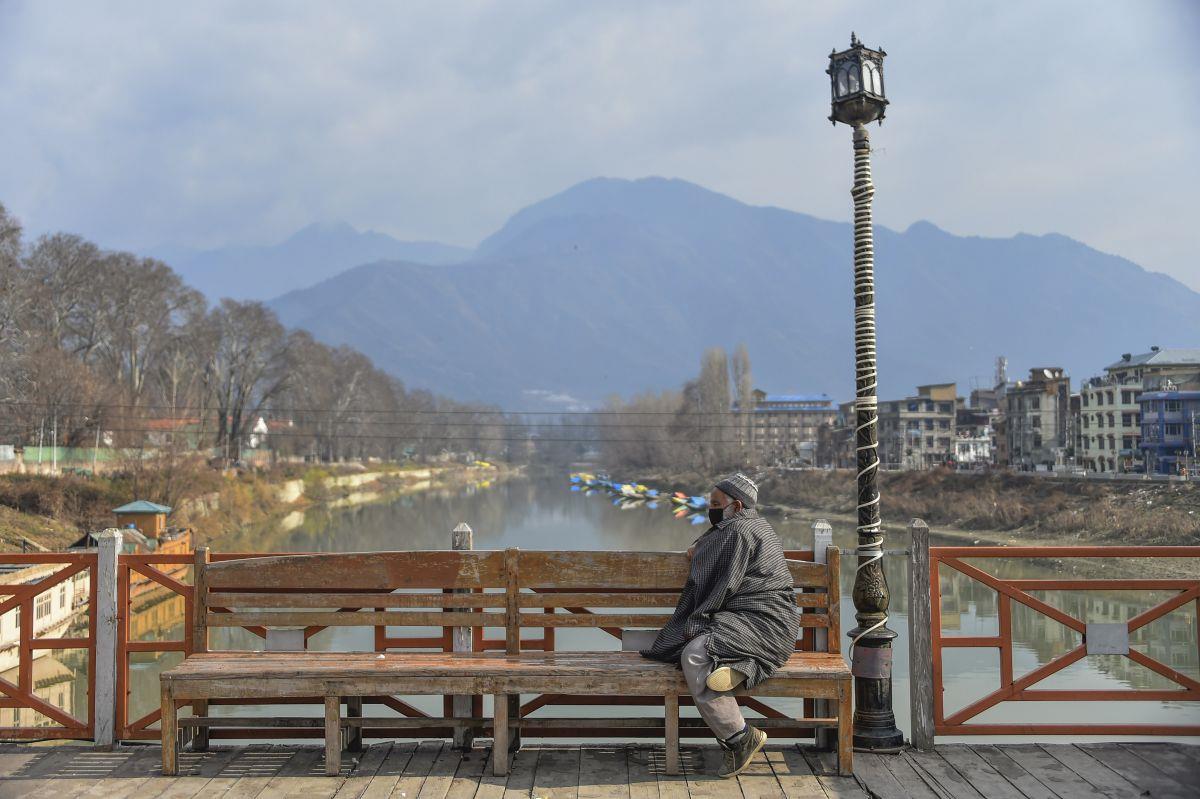
J&K May See Mild, Dry Winter: Met Director


Addressing social media claims that winter may not occur in India this year, Ahmad said such assertions were unscientific, stressing that winter was a natural seasonal phenomenon whose intensity could vary.
“Winter will definitely come. Sometimes winters are severe and sometimes mild. What we have been seeing for the last few years is a relatively mild winter,” he said.
Ahmad said indications from the World Meteorological Organisation (WMO) suggested that the latter part of 2026 and the beginning of 2027, particularly the peak winter period, could be somewhat warmer and drier due to the El Nino effect.
He, however, cautioned against making a definitive forecast this far in advance, saying weather conditions remained dynamic and could change significantly with even small shifts in atmospheric patterns.
“If there are one or two good spells during peak winter, especially if the moisture supply is good or a major Western Disturbance occurs, it can be helpful,” Ahmad said.
ADVERTISEMENTHe said Jammu and Kashmir had witnessed a similar pattern in recent years, with prolonged dry periods followed by one or two snowfall spells that were generally weaker than expected.
Feeble Western Disturbances currently affecting J&KThe MeT director said frequent but feeble Western Disturbances were currently affecting the region, generally arriving every third or fourth day but producing little significant weather activity.
“These are mostly feeble Western Disturbances. In the mountainous areas of North Kashmir, we may see some light snow or cloudiness, but there has been no major weather activity,” he said.
Ahmad said a strong Western Disturbance, particularly during the beginning or peak of winter, would be important for the region.
Rising temperatures changing snowfall patternThe MeT director also linked the changing snowfall pattern in the Himalayan region to climate change and rising temperatures, saying warmer conditions were altering the form and timing of precipitation.
Over the past four to five years, Kashmir has not consistently received snowfall during the peak winter period, resulting in shorter-lasting snow cover and longer dry spells, he said.
“Timely snowfall, especially in hilly states like Jammu and Kashmir and other Himalayan regions such as Himachal Pradesh and Uttarakhand, is as important as rainfall during summer,” Ahmad said.
He explained that snowfall during the peak winter months has a longer-lasting impact because lower temperatures allow snow to remain on the ground and contribute to glacier recharge.
Snowfall occurring later in February or March can also be beneficial, he said, but warmer temperatures can cause it to melt more rapidly.
“Due to rising temperatures, the snow melts quickly. So timely snowfall is very important for the Himalayan region,” he said.
Precipitation currently near normalOn the overall precipitation situation in Jammu and Kashmir, Ahmad said the seasonal scenario was currently near normal despite significant variations between individual months.
He said July recorded 35 per cent excess rainfall, although the early monsoon period also caused considerable losses.
August, however, recorded around 25 per cent rainfall deficit, with some spells occurring during the month but without consistent or widespread activity.
“Overall, the precipitation scenario for the season is almost near normal,” he said.
Ahmad also dismissed claims that February or winter itself would somehow be absent this year, saying such conclusions could not be drawn from seasonal forecasts.
He advised people to remain positive, saying snowfall and rain were still expected even though the overall winter could be milder than normal.
“Let us see what happens. It is very difficult to say from now. These things are very dynamic. There will be snow, God willing, and there will be rain,” he said.
'J&K to See Rain Till Sept 17'
Jammu and Kashmir is likely to witness brief spells of rain and thundershowers at scattered to many places during the early morning and afternoon hours from September 15 to 17, the Meteorological Department said on Monday.
The MeT department said the Union Territory is expected to remain generally dry between September 18 and 25, with the possibility of brief spells of rain at isolated places.
It also issued an advisory for thunderstorms, lightning and gusty winds at a few places from September 14 to 17.
According to the daily weather parameters issued by the Meteorological Centre Srinagar, Srinagar recorded a maximum temperature of 30.4 degrees Celsius on Monday, which was 2.6 degrees above normal, while the minimum temperature stood at 13.5 degrees Celsius, which was normal.
Jammu recorded a maximum temperature of 33.5 degrees Celsius, 0.8 degrees above normal, while the minimum temperature was 23.3 degrees Celsius, one degree below normal.
Read Also Rain, Thundershowers Likely Across J&K From Sept 14 Dry Weather to Prevail Across J&K for Next 10 Days: MeTAmong other stations, Qazigund recorded a maximum temperature of 26.5 degrees Celsius and a minimum of 11.6 degrees Celsius, while Pahalgam recorded 23.9 degrees Celsius and 8.9 degrees Celsius, respectively.
Kupwara recorded a maximum of 30.9 degrees Celsius and a minimum of 11.9 degrees Celsius, while Kokernag recorded 28.6 degrees Celsius and 11.8 degrees Celsius, respectively.
Gulmarg recorded a maximum temperature of 21.8 degrees Celsius and a minimum of 8.7 degrees Celsius, making it among the cooler locations in the Valley.
In the Jammu division, Katra recorded a maximum temperature of 31.7 degrees Celsius and a minimum of 20.9 degrees Celsius, while Banihal recorded 29.5 degrees Celsius and 13.6 degrees Celsius, respectively.
The weather department advised farmers to continue harvesting apple and paddy crops along with other agricultural operations, while taking necessary precautions in view of the possibility of thunderstorms, lightning and gusty winds.
The MeT department said the forecast could change depending on evolving weather conditions.
Legal Disclaimer:
MENAFN provides the
information “as is” without warranty of any kind. We do not accept any
responsibility or liability for the accuracy, content, images, videos,
licenses, completeness, legality, or reliability of the information
contained in this article. If you have any complaints or copyright issues
related to this article, kindly contact the provider above.
Comments
No comment