

As Kashmir's Heritage Fades, Chennai Offers A Model


Chennai -For a delegation of journalists from Kashmir, a visit to a heritage museum in Chennai offered more than a glimpse into South India's rich cultural past-it raised a question that is becoming increasingly urgent back home: Who will preserve Kashmir's disappearing heritage? ADVERTISEMENT
A 13-member media delegation from Srinagar, organised by the Press Information Bureau (PIB), visited Dakshina Chitra Heritage Museum at Muttukadu on Monday as part of its September 13-19 media tour of the southern state.
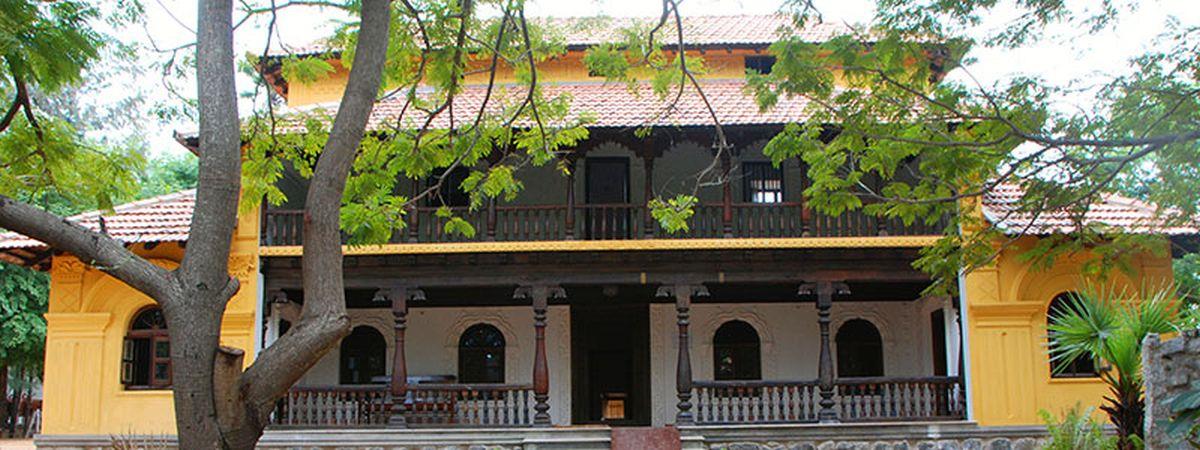
Spread across a large site overlooking the Bay of Bengal, Dakshina Chitra-meaning“a picture of the South”-has created a remarkable living record of the traditional architecture, crafts, lifestyles and performing arts of South India.
For the visiting journalists, however, its significance went beyond Tamil Nadu.
The museum offered a striking template for Kashmir, where traditional houses, wooden architecture, crafts and cultural practices are disappearing at an alarming pace.
Curator Lakuma Chebrolu briefed the delegation about the museum's heritage structures and the architectural traditions they represent. The museum houses carefully reconstructed traditional homes from Tamil Nadu, Kerala, Karnataka, Telengana and Andhra Pradesh.
ADVERTISEMENTMany of these structures were facing demolition at their original locations. Instead of allowing them to disappear, they were carefully dismantled, transported and reconstructed at Dakshina Chitra with the involvement of traditional artisans and master builders.
The result is not simply a collection of old buildings. It is a recreated world-complete with homes, streetscapes, interiors, tools, crafts and everyday objects-showing visitors how people once lived.
A model Kashmir could learn fromThe visit was particularly relevant for the Kashmir delegation, given the rapid transformation of the Valley's traditional built environment.
Old Kashmiri houses, dab and khatamband ceilings, intricately carved wooden façades, traditional windows, pinjrakari, brickwork and other elements of Kashmir's architectural heritage are increasingly being lost to demolition, neglect and unplanned construction.
At the same time, traditional crafts and skills that gave these structures their character are also facing decline.
Dakshina Chitra demonstrates that heritage conservation need not mean freezing the past. It can become an educational, cultural and economic resource for the future.
The institution was conceived by cultural historian and conservationist Dr Deborah Thiagarajan, who founded the Madras Craft Foundation in 1984. The museum opened to the public in 1996 after years of research, documentation and efforts to preserve South India's traditional cultural heritage.
Sharath Nambiar, Director, Dakshina Chitra, interacted with the delegation and explained the institution's evolution and its role in preserving India's tangible and intangible heritage.
He also highlighted government support, particularly the role of the Ministry of Culture.
The project itself represents an unusual combination of government support, institutional initiative and philanthropy. The Government of Tamil Nadu provided ten acres of land for the project, while the Ministry of Culture and other government agencies extended assistance. Early and continuing support also came from organisations including the Ford Foundation, American Express Foundation, State Bank of India, Sundaram Finance, ICICI and several other corporate and philanthropic patrons.
Could Kashmir have its own Dakshina Chitra?The question may be worth asking seriously.
Kashmir has a heritage far richer than its surviving monuments alone. Its traditional homes, village layouts, wooden architecture, crafts, music, food traditions, clothing and everyday cultural practices together form a living cultural landscape.
Read Also Video: The Fading Charm of Zero Bridge Kashmir Beyond Real EstateYet much of it remains undocumented and vulnerable.
A dedicated“Kashmir Heritage Village” or living museum could bring together representative traditional houses from different parts of the Valley-carefully documented, dismantled where necessary and reconstructed in one protected location.
Such an institution could showcase quake-resistant Dajji Diwari, khatamband, pinjrakari, wood carving, papier-mâché, carpet weaving, willow work, traditional cuisine, folk music and other elements of Kashmir's cultural inheritance.
It could also provide a permanent platform for master artisans to train younger generations, turning heritage preservation into employment and entrepreneurship.
For Kashmir, the lesson from Dakshina Chitra is therefore simple: heritage survives when it is documented, valued and given a living space, not merely photographed after it is gone.
The media tour assumes added significance as Jammu and Kashmir and Tamil Nadu are paired under the Government of India's Ek Bharat Shreshtha Bharat initiative, promoting cultural exchange and greater understanding between regions.
For the Kashmir journalists, the Chennai visit may ultimately prove to be more than a media tour.
It may have offered a glimpse of what Kashmir needs to build before its own architectural and cultural memory becomes irretrievable.

Legal Disclaimer:
MENAFN provides the
information “as is” without warranty of any kind. We do not accept any
responsibility or liability for the accuracy, content, images, videos,
licenses, completeness, legality, or reliability of the information
contained in this article. If you have any complaints or copyright issues
related to this article, kindly contact the provider above.
Comments
No comment