

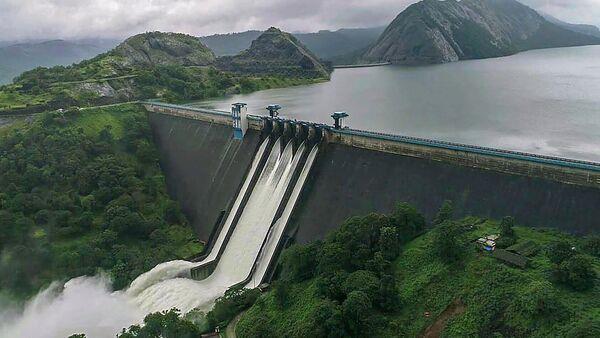
Reservoir Levels Recover, But Water Storage Remains Below Normal


The national picture remains weaker than normal. Water storage in 178 monitored reservoirs stood at 130.55 billion cubic metres (BCM) as of 10 September, or 70.66% of their combined live storage capacity-6.9% below the normal level and 20.1% lower than a year earlier.
Also Read | How sub-normal rains may affect reservoir levels Also Read | India steps in to help flood-hit Nepal rebuild key infrastructureThe reservoir position also matters for food prices, with water availability for the rabi crop becoming important as food inflation remains elevated. Food inflation in August increased to 5.95% compared to 5.52%, according to data released by the National Statistics Office on Monday.
Regional recoveryThe western region, comprising Goa, Gujarat and Maharashtra, had 31.575 BCM in 58 reservoirs, or 81.79% of live storage capacity, against a normal level of 77.81%. Storage was still below the 91.35% recorded a year earlier.
The central region, comprising Chhattisgarh, Madhya Pradesh, Uttar Pradesh and Uttarakhand, had 40.613 BCM in 28 reservoirs, or 83.59% of capacity, against a normal level of 79.5%. The eastern region's 31 reservoirs held 15.247 BCM, or 69.77% of capacity, marginally above its normal level of 69.6%.
The northern region, by contrast, had 12.652 BCM in 11 reservoirs, or 63.78% of capacity, against a normal level of 78.53%. The southern region, with 50 reservoirs, held 30.467 BCM, or 54.52%, well below its normal level of 73%.
“The improved reservoir storage is positive for the rabi crop. However, the low water levels in the southern region are a cause for concern, given the region's greater dependence on reservoirs for irrigation. In the northern region, areas with good irrigation facilities are unlikely to face major issues, but regions without adequate irrigation could come under pressure,” said Sudhir Panwar, farm policy expert and former member of Uttar Pradesh Planning Commission.
Also Read | India's reservoir storage deficit narrows, but water stress persistsThe improvement is significant compared with 13 August, when reservoir levels were weaker across most regions. The northern region had the lowest storage at 50.5% of capacity, against a normal level of 62% as of 13 August. The southern region was at 54.8%, well below its normal level of 64.3%. In the central region, reservoirs were 57% full, with live storage of 27.70 BCM, against a normal level of 60.5%.
The eastern region was an exception, with storage at 50.8%, or 11.06 BCM, marginally above its normal level of 48.4%. The western region had the strongest position, with storage at 78.78% of capacity, or 30.01 BCM, against a long-term normal of 62.83%.
An email query sent to the ministry of jal shakti remained unanswered until press time.
Monsoon mattersThe recovery in reservoir levels reflects improved monsoon in recent weeks, even as cumulative rainfall remains below normal for the season.
India received 213.3mm of rainfall in August against the normal 254.9mm. Cumulative rainfall from 1 June to 12 September stood at 662.3mm, against the normal 778.6mm, a deficit of 15%. Rainfall was 35.4% below normal in June, 1% above normal in July and 16.3% below normal in August. India is likely to receive less than 91% of its long-period average (LPA) rainfall in September. The September LPA, based on the 1971-2020 climatological record, is 167.9mm.
The improved rainfall and reservoir levels could also support hydropower generation, which fell 11% year-on-year during April-August. Hydropower typically helps fill gaps in thermal generation, particularly when coal supplies are disrupted by rains. This year, weaker coal production and lower hydropower generation have put additional strain on the power system, with daily energy shortages crossing 25 million units in September, according to Grid Controller of India.
"Overall monsoon has been erratic this year. However, recent increase in rains and reservoir levels may lead to better hydro power generation in the days ahead," said Raj Kumar Chaudhary, former chairman and managing director, NHPC Ltd.
Any increase in hydropower generation, however, could be short-lived as the monsoon retreats and the lean period for hydro generation begins. Winter rainfall could alter that outlook, potentially supporting higher winter generation, as seen in 2025.
India's farm sector remains heavily dependent on the monsoon, with the southwest monsoon accounting for more than 70% of the country's annual rainfall and serving as a primary source of water for agriculture and reservoirs.
The impact is already visible in kharif sowing. Farmers had planted 108.63 million hectares as of 4 September, about 1.6% below the area covered during the same period last year, according to agriculture ministry data.

Legal Disclaimer:
MENAFN provides the
information “as is” without warranty of any kind. We do not accept any
responsibility or liability for the accuracy, content, images, videos,
licenses, completeness, legality, or reliability of the information
contained in this article. If you have any complaints or copyright issues
related to this article, kindly contact the provider above.
Comments
No comment