

Commentary: Middle East Needs Sustainable Security, Not Just Deterrence To Regional Conflicts


In earlier writings on national security, I argued that sustainability is no longer a separate developmental pillar but a foundational component of modern security. Today, amid accelerating regional transformations, it has become clear that sustainability is not merely part of the security equation - it is the lens through which regional security itself must be redefined.
Recommended For YouSecurity is not measured solely by a state's capacity for deterrence, but by its ability to endure. In a world where crises intersect - from energy volatility to fragile supply chains, from climate pressures to economic and social strains - this principle becomes not only relevant but essential. Regional security can no longer be confined to military balances or traditional alliances; it is increasingly shaped by the capacity of states to build sustainable systems that can withstand long-term shocks.
Stay up to date with the latest news. Follow KT on WhatsApp Channels.
A state without a sustainable economy, a cohesive society, an education system that produces knowledge, or a health sector that protects its people, is far more vulnerable regardless of its military strength. This is the essence of what I previously described as sustainable security: a form of security rooted not in the power of the moment, but in the resilience of the long term.
Recent developments between Iran and the United States - with their tensions, threats, and economic and security repercussions - have demonstrated that regional security can no longer rely on conventional approaches alone. Neighbouring states felt the impact through energy markets, trade flows, and heightened geopolitical risk, underscoring how fragility in one country can reverberate across the region.
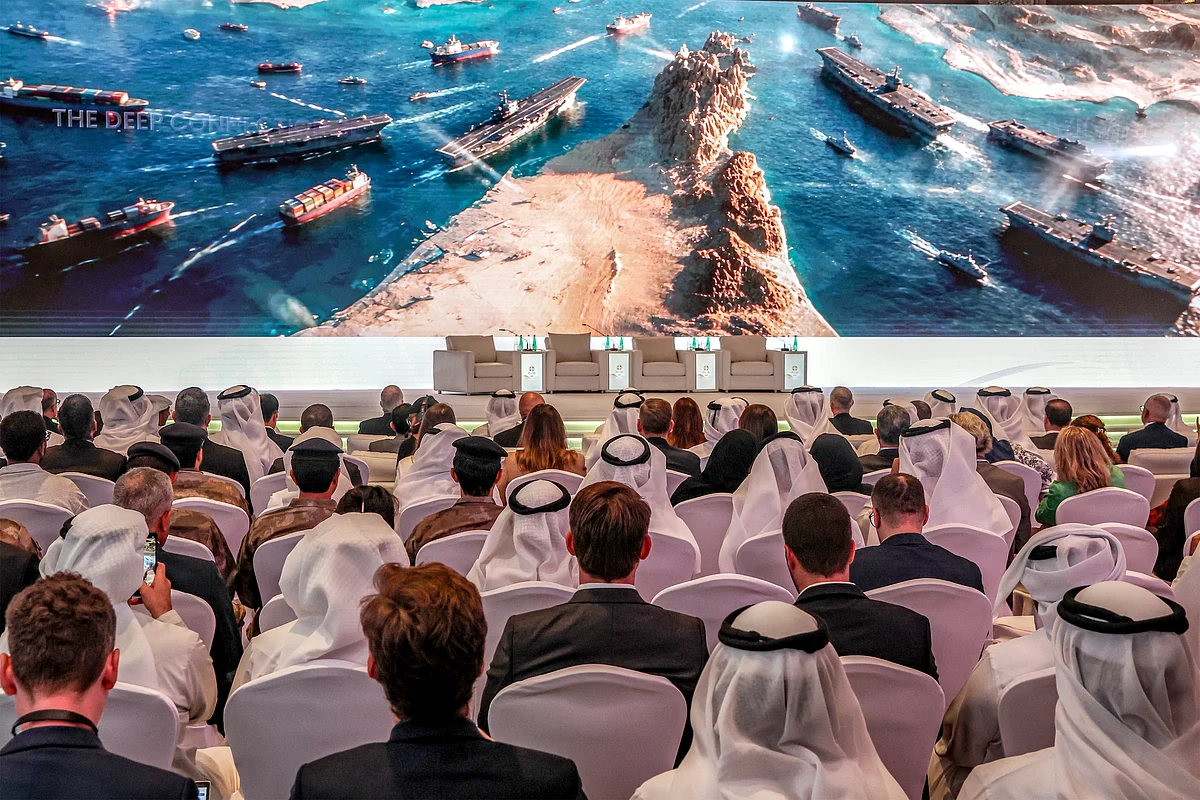
Realistic frameworkWithin this context, sustainable regional security emerges as the most realistic framework for addressing cross-border challenges, particularly in the domains of energy, food, and water. The repeated disruptions in the Strait of Hormuz have shown that dependence on a single maritime corridor increases the vulnerability of the entire region. This has driven states to diversify routes and build more resilient energy pathways - a practical expression of sustainable security.
Food security presents another shared challenge. According to FAO data, Middle Eastern countries import nearly 85 per cent of their food needs, making regional cooperation in supply chains and external agricultural investment a strategic necessity rather than a developmental choice. Water security is equally critical as around 60 per cent of the region's population depends on transboundary water basins, while renewable water resources average 500 cubic metres per capita annually, compared to a global average of 5,000 cubic metres. These indicators illustrate that sustainable regional security cannot be built on deterrence alone; it requires collective systems for energy, food, and water that strengthen regional resilience and reduce exposure to recurring shocks.
Amid these dynamics, the UAE has emerged as one of the region's most sustainable states - not only through economic diversification and legislative development, but through its ability to build an integrated framework of economic, social, and political resilience. Recent events have shown that countries with forward-looking visions, such as the UAE, are better positioned to safeguard their interests, maintain institutional continuity, and preserve internal stability despite external turbulence.
The UAE's model of sustainability has evolved from a national experience into a regional reference point, demonstrating that genuine security begins from within. These are the components of sustainable strength that form a unified architecture:
- Social sustainability - cohesion and adaptive capacity
Economic sustainability - diversification, flexibility, and strategic autonomy
Political sustainability - stable institutions and public trustEducational sustainability - knowledge production and human capital
Health sustainability - human protection and quality of lifeSustainable leadership - foresight, balance, and the ability to turn sustainability into daily practice
Sustainable security - long-term capacity for resilience and renewalLeadership is not an accessory in this equation; it is its core. It is leadership that transforms sustainability from plans into reality, from initiatives into systems, and from aspirations into national and regional strength.
Today, sustainability stands as the most accurate expression of the future of regional security. It is not an extension of traditional security concepts, but a framework that reshapes them and gives them strategic depth.
Sustainability is no longer a developmental option; it has become part of the architecture of modern national security. This principle now extends beyond national boundaries to encompass the entire region.
Sustainable societies, economies, politics, education, health, and leadership are not supporting elements - they are the pillars of a resilient regional order capable of enduring, stabilising, and shaping a future built on awareness, confidence, and responsibility.
ALSO READ- Commentary: Gargash's doctrine is the way to break the 'no war, no peace' limbo Commentary: Don't let geopolitical noise silence climate concerns Commentary: Safeguarding Strait of Hormuz is securing world's ability to feed itself

Legal Disclaimer:
MENAFN provides the
information “as is” without warranty of any kind. We do not accept any
responsibility or liability for the accuracy, content, images, videos,
licenses, completeness, legality, or reliability of the information
contained in this article. If you have any complaints or copyright issues
related to this article, kindly contact the provider above.
Comments
No comment