

Switzerland Feels Cost Of Record Summer Heat


I am a climate and science/technology reporter. I am interested in the effects of climate change on everyday life and scientific solutions. Born in London, I am a dual citizen of Switzerland and the UK. After studying modern languages and translation, I trained as a journalist and joined swissinfo in 2006. My working languages are English, German, French and Spanish.
-
More from this aut
English Departm
I write original and in-depth data-driven articles using my skills in data analysis and visualisation. I cover a wide array of topics, among which are Switzerland's place in global trade, climate change and demographics. Born and raised in France, I studied international relations in Lyon, then graduated from Lille journalism school in 2011. I have been living in Switzerland since 2012 and worked at RTS for eight years before joining SWI swissinfo in 2020.
-
More from this aut
French Departm
I work as a designer in the multimedia team at SWI swissinfo. At the intersection between journalism, design and marketing, I develop infographics, animations, maps and new formats for social media.
-
More from this aut
Multime
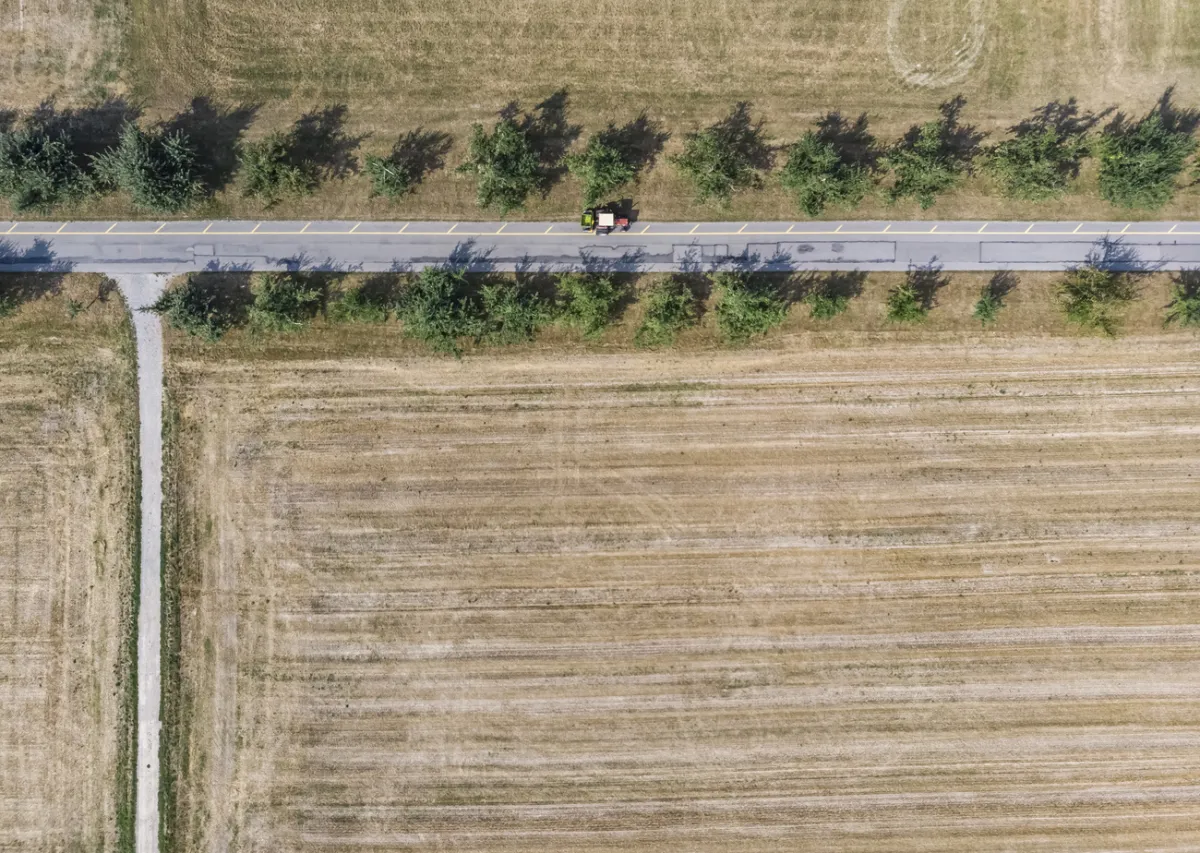
Swiss agriculture is facing climate-related losses estimated by the Swiss Farmers' Association at CHF522 million ($645 million), exceeding the damage caused by the 2003 heatwave. The government has responded with a CHF70 million support package for farmers and forests.
A severe fodder shortage has emerged after Alpine pastures dried out, forcing farmers to bring livestock down from mountain grazing areas early and use winter hay reserves. To ease the crisis, authorities have released up to 16,000 tonnes of compulsory feed stocks and suspended customs duties on imported hay and silage. Some farmers have even importedExternal link hay from Canada.
The fodder shortage has also hit livestock production. According to Proviande data cited by the Federal Office for Agriculture, the number of cows slaughtered between June and August rose 45% year-on-year, an increase of 10,275 animals, likely linked to feed shortages.
The drought and successive heatwaves have led to major crop losses and higher production costs for farmers. Many crop yields are expected to be down.
External ContentAlongside lower productivity, farmers have had to make extra efforts to irrigate their crops, which has also led to higher production costs. Market prices are expected to rise, in particular milk and potatoes.
2. Fish suffer unprecedented heat stressSeveral rivers and streams broke temperature records set during the hot summers of 2003 and 2018. On July 14, the Aare in Bern reached 24.82°C, while low water levels and reduced flows accelerated warming and depleted oxygen levels.
The drought caused dozens, possibly hundreds, of streams to dry up, particularly on the Swiss Plateau and in the Pre-Alps.
Major Swiss lakes also recordedExternal link their warmest average summer surface temperatures since records began in 1981.
The consequences for aquatic life have been severe. David Bittner, head of the Swiss Fisheries Association, saysExternal link the final toll could reach“millions of dead fish”, with recovery taking years. Cold-water species such as trout, grayling and burbot were especially vulnerable.
Authorities intervened in some regions to prevent mass losses. In canton Bern, over 100,000 fish were manually relocatedExternal link from threatened waterways. Temporary fishing bans were introduced in several areas.
3. Human health: pressure on the health systemBetween mid-July and mid-August, the EuroMomo monitoring platformExternal link estimates Europe recorded more than 32,000 excess deaths.
Switzerland has yet to produce consolidated figures for this summer, but the blistering back-to-back heatwaves are thought to have claimed the lives of numerous elderly people.
External ContentAccording to weekly figures published by the Federal Statistical Office, the mortality rate for over-65-year-olds was higher than projected for several weeks in summer. A total of 1,281 people aged over 65 died during the last week of June, for example. The statistics had forecast 1,104 deaths, 177 fewer.
The Swiss Tropical and Public Health Institute (Swiss TPH) estimates around 500 heat-related deaths occur each summer in Switzerland in recent years. During the summer of 2003, Swiss TPH recorded around 1,400 additional deaths. In 2015, it was 747.
A 20 Minutes/Tamedia surveyExternal link found that the extreme summer heat took a heavy toll on Swiss residents, with 74% describing it as“rather” or“very” difficult. Women were disproportionately affected, with 46% reporting the heat as very difficult to cope with, compared with 31% of men. Over a third of respondents reported major physical effects, including sleep disturbances and circulatory problems, with women again reporting higher rates than men (46% versus 29%).
Lausanne University Hospital (CHUV) reported a 10-15% increase in emergency activity this summer, a spokesperson told Swissinfo.
4. As the Rhine drops, fuel costs soarLow water levels on the River Rhine this summer disrupted a key transport route for Swiss imports, driving up logistics costs and fuel prices.
Switzerland imports fuel, chemicals, consumer and industrial goods, grain/feed products, metals, and construction materials via the Rhine. In 2024, Swiss Rhine Ports handledExternal link 5.4 million tonnes of goods, or 8% of Swiss imports and exports.
This summer, freight tariffs for Rhine barges jumped almost tenfold from around CHF25 to CHF240 per tonne, as vessels were forced to reduce loads in shallow waters.
External ContentAccording to the non-profit Touring Club Switzerland (TCS), transport costs alone added roughly CHF0.16 per litre to fuel prices. Unleaded 98 roseExternal link to CHF2.13 per litre while diesel reached CHF2.27 in late August.
5. Energy: more cooling, less water... but more solarRecord temperatures created headaches for energy officials: increased electricity demand for cooling, while reducing nuclear and hydro production capacity.
Air conditioning and fan sales surgedExternal link. Meanwhile, the drought has had a major impact on electricity production. Water levels in Swiss hydropower reservoirs dropped to their lowest in 20 years, according to the Swiss Federal Office of Energy. Small rivers were reduced to mere trickles. River flows on major waterways, including the Aare, Rhine and Rhône, fell to record lows, reducing electricity output. Hydropower supplies just over half of Switzerland's electricity.
More More Climate adaptation Drought in Switzerland: Europe's 'water tower' runs dryThis content was published on Aug 21, 2026 Rivers reduced to trickles, scorched landscapes and forests taking on autumn colours weeks ahead of schedule: such scenes highlight the severity of a drought unmatched in Switzerland for decades.
Read more: Drought in Switzerland: Europe's 'water tower' run
Legal Disclaimer:
MENAFN provides the
information “as is” without warranty of any kind. We do not accept any
responsibility or liability for the accuracy, content, images, videos,
licenses, completeness, legality, or reliability of the information
contained in this article. If you have any complaints or copyright issues
related to this article, kindly contact the provider above.
Comments
No comment