

How Heatwaves Are Changing Switzerland's Major Lakes


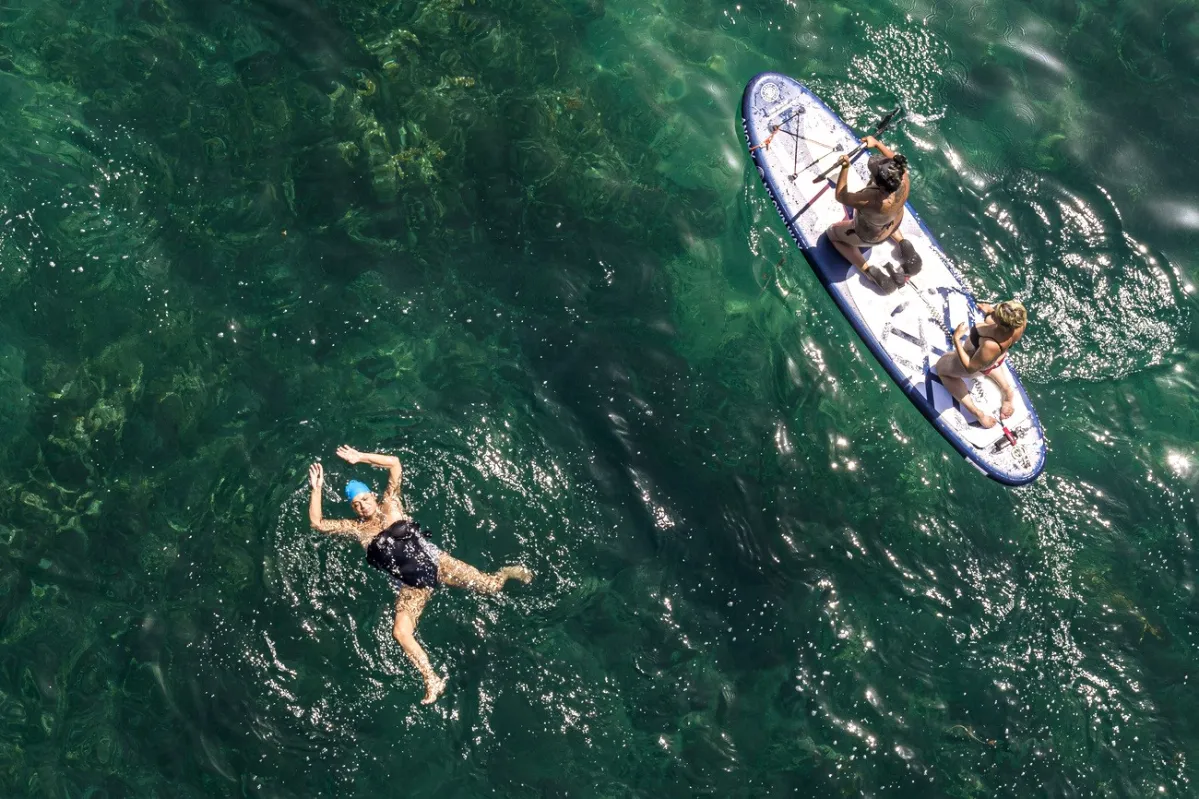
This summer, aquatic vegetation has proliferated to an extraordinary extent in the Geneva harbour, the wide inlet of Lake Geneva facing the city. At Collonge-Bellerive, the expanses of macrophytes have grown to an extent rarely seen in the past, to the point where the cantonal technical teams responsible for clearing passages for boats and keeping bathing areas clear have had to be called out almost daily.
Staff responsible for keeping aquatic vegetation in check at the far end of the lake also observed a higher number of dead fauna than in previous years, particularly fish and waterbirds. Experts believe these phenomena are compounded by other worrying signs, such as algal blooms, the presence of cyanobacteria and the spread of invasive species.
3.5°C above average in Lake GenevaData collected from Lake Geneva confirm the scale of the phenomenon. Between the surface and a depth of 10 metres, the average temperature in August reached 24°C, which is 3.5°C higher than the average recorded between 1991 and 2020. Even the deeper waters have warmed, with an increase of around 1°C. The figures released by the International Commission for the Protection of the Waters of Lake Geneva show levels never seen before.
One of the most visible effects of the warming waters is the proliferation of filamentous algae along the shores. These gelatinous masses, observed in large quantities throughout Lake Geneva, do not, however, pose a danger. Like the green mats of macrophytes, however, they are a considerable nuisance to bathers, some of whom report having been bitten by so-called“duck fleas” more than in any other summer.
Cyanobacteria are also a cause for particular concern. Some species can in fact produce toxins that are dangerous, particularly for dogs. Since June, warnings have been issued along various shores of Lake Geneva and Lake Neuchâtel, whilst researchers have noted the unusual presence of new cyanobacteria at various depths in the lake.
Unexpected species are appearingWarming also encourages the appearance of unexpected species. In eastern France, the presence of freshwater jellyfish in the Lac d'Orient, in the Aube department, has attracted a great deal of attention. Also found in several Swiss lakes in the form of polyps, they are harmless and appear when the water temperature exceeds approximately 25°C.
This species is native to China and was introduced to Europe over a century ago alongside aquatic plants intended for botanical gardens. Lake Geneva, as well as Lakes Constance, Zurich and Lugano, have already been colonised by these jellyfish for short periods.
Finally, rising temperatures are altering the balance of fish populations. Species that prefer cold waters, such as whitefish and Alpine char, are in decline, whilst catfish and perch are thriving.
For some professional fishermen on Lake Neuchâtel, catfish now account for a significant proportion of their income. Behind this economic adaptation, however, lies a growing concern for the future of lake ecosystems.
Translated from French, sub-edited by Luigi Jorio/ac
Popular Stories Most DiscussedIn compliance with the JTI standards
More: SWI swissinfo certified by the Journalism Trust Initiati
You can find an overview of ongoing debates with our journalists here. Please join us!
If you want to start a conversation about a topic raised in this article or want to report factual errors, email us at ....
Read more
Legal Disclaimer:
MENAFN provides the
information “as is” without warranty of any kind. We do not accept any
responsibility or liability for the accuracy, content, images, videos,
licenses, completeness, legality, or reliability of the information
contained in this article. If you have any complaints or copyright issues
related to this article, kindly contact the provider above.
Comments
No comment