

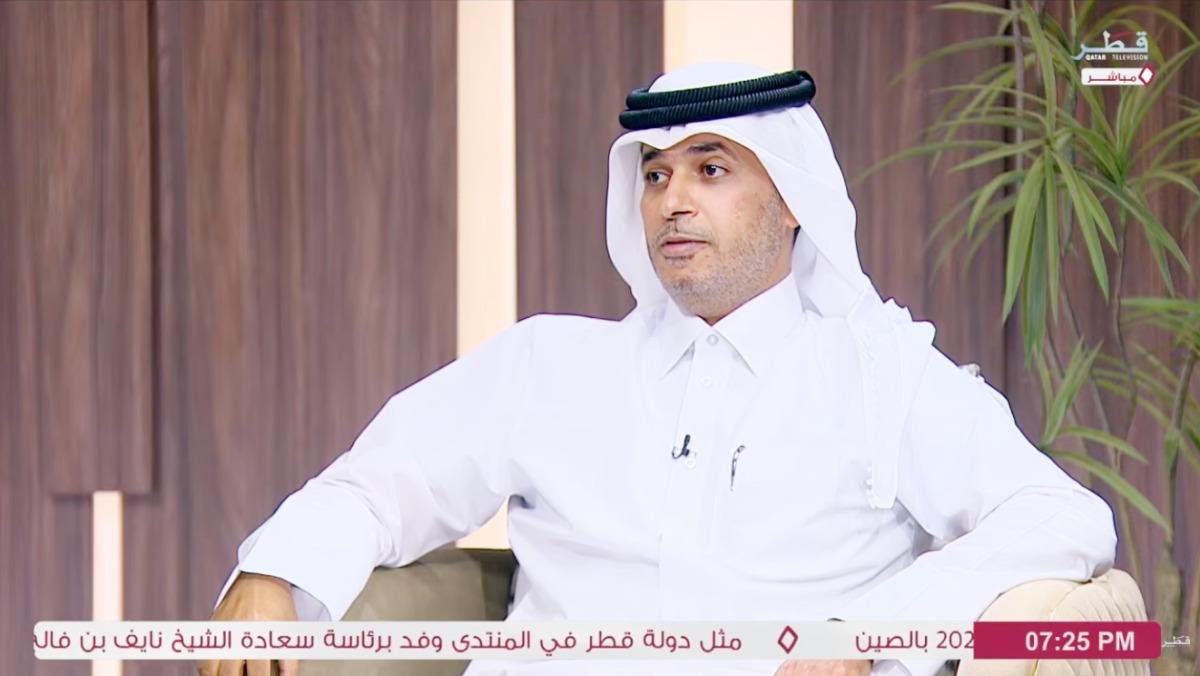
Editor-In-Chief Tells Qatar Television: AI Should Assist Journalists, Not Make Decisions For Them


Doha, Qatar: Editor-in-Chief of The Peninsula Prof. Khalid Mubarak Al-Shafi has said that artificial intelligence can assist journalists in gathering information and carrying out their work, but it cannot replace their professional responsibility to verify facts and make editorial decisions.
Speaking in an interview with Qatar Television, Prof. Al-Shafi said the rapid growth of artificial intelligence has made the technology part of everyday life and fuelled debate worldwide over whether it could eventually replace employees across different sectors.
“The media industry, however, differs from many other professions because journalism is governed by professional ethics and requires accuracy, verification and accountability,” he said.
“Artificial intelligence is an assistant, not the decision-maker. It helps me reach an outcome, but ultimately, the decision is mine when it comes to verifying the data and information that I have obtained from artificial intelligence.”
Prof. Al-Shafi said that AI systems rely on vast amounts of data gathered from different sources and cautioned that the information they produce may be accurate in some cases but contain errors in others.
He said there was no problem with journalists using AI to assist with part of their work, provided they understood the limits of that reliance and retained responsibility for the final product.“There is nothing wrong with relying on AI for part of the work, but the question is: what part are you relying on?” he said.
Prof. Al-Shafi stressed that responsibility ultimately rests with the journalist, whether information generated by AI is copied directly or examined and reformulated to reflect the context in which it is being used.
“In the end, the journalist is responsible because the information that appears to the public, the viewer or the follower is something for which the journalist bears direct responsibility,” he said.
“For journalists preparing reports or investigations, AI can be useful in gathering information from the enormous volume of material now available,” Prof. Al-Shafi said, adding,“However, connecting that information and determining whether it is accurate remain the journalist's responsibility.”
He cautioned that some information provided by AI may be incorrect, outdated, or based on data reflecting the viewpoint of the original source.“Verification of information protects the journalist from the risks associated with responsibility,” he said.
“This is an assisting tool, and this is a technological revolution that we have to deal with,” he added.
“But how it is used is up to me, whether I use it positively or negatively.”
Prof. Al-Shafi also addressed the implications of AI use for national and cultural identity in journalism.
He noted that information available through AI systems may have originated from sources anywhere in the world. A Qatari journalist, he said, has a responsibility to ensure that information used in his or her work is compatible, as far as possible, with the culture of Qatari society.
That, he said, further reinforces the importance of verifying information rather than treating AI-generated responses as finished journalistic material. On transparency, Prof. Al-Shafi said whether journalists should disclose their use of AI depends on the nature and extent of its role in producing the content.
“If you are talking about transparency, then there must be transparency. But transparency depends on how you have used artificial intelligence,” he said.
If AI is used only to assist with headlines or information while the journalist carries out the substantive work, he said, there may be no need to disclose its use.“However, if AI itself is relied upon for information, there is nothing wrong with stating that it was the source.”
He stressed that such disclosure does not remove the journalist's responsibility to verify the information.
Asked about rules governing the use of AI in journalism, Prof. Al-Shafi said the broader regulatory framework should be set by the State, with media organisations forming part of the wider national system.
He referred to a decision concerning the establishment of a national centre for artificial intelligence and said he believed legislation would follow, along with conditions and regulations governing the technology.
Media institutions, he added, would need to recognise the importance of these regulations and apply them appropriately to journalistic work.
Prof. Al-Shafi said the technological revolution is now a reality that journalists must engage with, while ensuring that the fundamental responsibilities of journalism, verification, professional judgement and accountability for published information, remain with the journalist.

Legal Disclaimer:
MENAFN provides the
information “as is” without warranty of any kind. We do not accept any
responsibility or liability for the accuracy, content, images, videos,
licenses, completeness, legality, or reliability of the information
contained in this article. If you have any complaints or copyright issues
related to this article, kindly contact the provider above.
Comments
No comment