

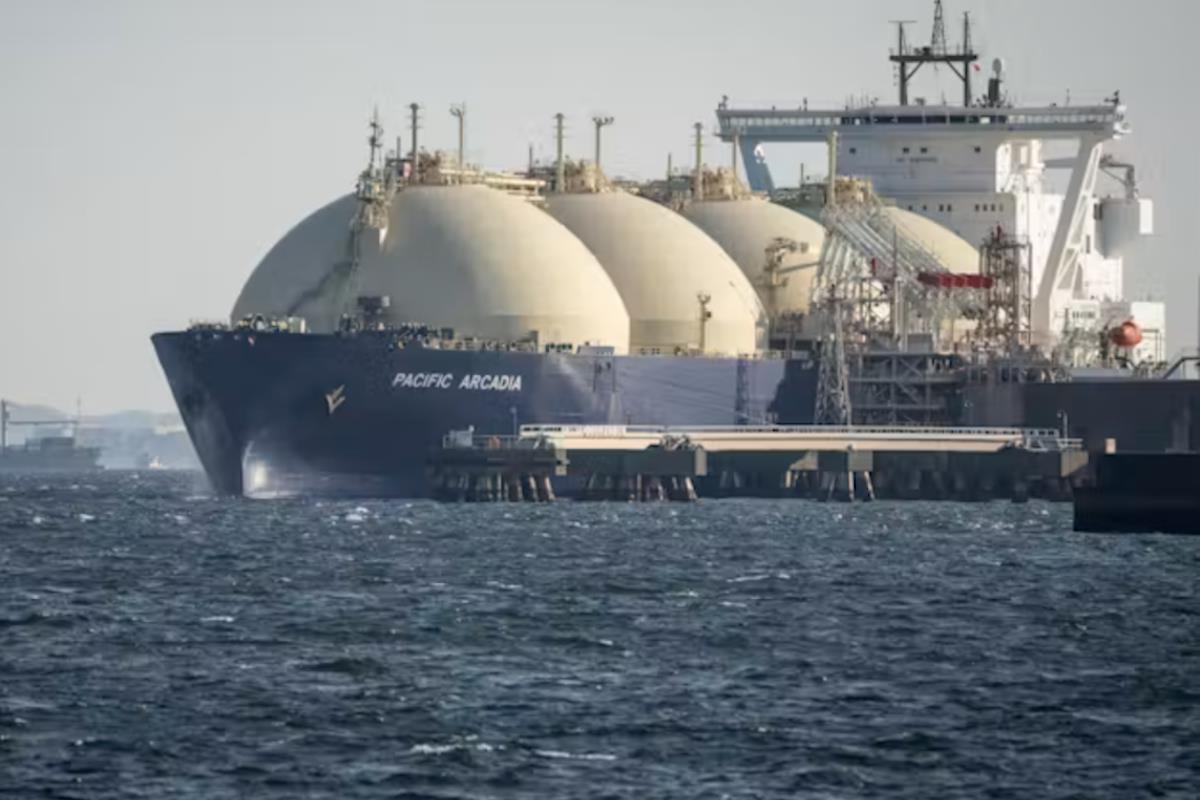
Hormuz Crisis Forcing Japan To Domesticate Its Energy Security


Tokyo's urgency over the crucial waterway is understandable. While the economic ripples over the Strait of Hormuz crisis has been felt across the world, Japan is one of the countries feeling the pain most acutely.
Prior to the US and Israeli strikes on Iran – and Tehran's retaliation and closure of the strait – Hormuz carried 93% of Japan's crude imports; the Middle East as a whole supplied 94% of the nation's oil.
Stockpiles and domestic refining capacity have cushioned the shock, but the crisis has exposed a deeper vulnerability: Japan has long depended on a maritime security environment it does not control.
But that may not always be the case. Japan has responded to the Strait of Hormuz crisis with an energy-security package that goes beyond securing alternative oil supplies. As a whole, the measures signal that Tokyo is looking to take greater responsibility for protecting the sea-lanes on which its energy security depends.
In the process, it could make Japan a more capable – yet more autonomous – security partner for Washington.
Powerr-ing upOver the summer, Prime Minister Sanae Takaichi's government unveiled POWERR GX, or the Policy Package for Wide Energy and Resources Resilience through Green Transformation.
The package seeks to diversify crude oil and supplies of naphtha – a key petrochemical feedstock – by strengthening reserves, supporting alternative transport routes, securing shipping insurance and expanding nuclear power.
POWERR GX reflects a broader shift in Japan's approach to both external energy security and domestic energy resilience. While Japan remains anchored to its U.S. alliance, it is also building greater national capacity to manage strategic risk.
Alongside greater energy independence, Tokyo is developing financial, logistical and diplomatic tools that give it more room to respond when Washington cannot guarantee the security conditions on which Japanese economic activity depends.
Building an insurance policyThe clearest evidence of this shift is insurance.

Legal Disclaimer:
MENAFN provides the
information “as is” without warranty of any kind. We do not accept any
responsibility or liability for the accuracy, content, images, videos,
licenses, completeness, legality, or reliability of the information
contained in this article. If you have any complaints or copyright issues
related to this article, kindly contact the provider above.
Comments
No comment