

403
Sorry!!
Error! We're sorry, but the page you were looking for doesn't exist.
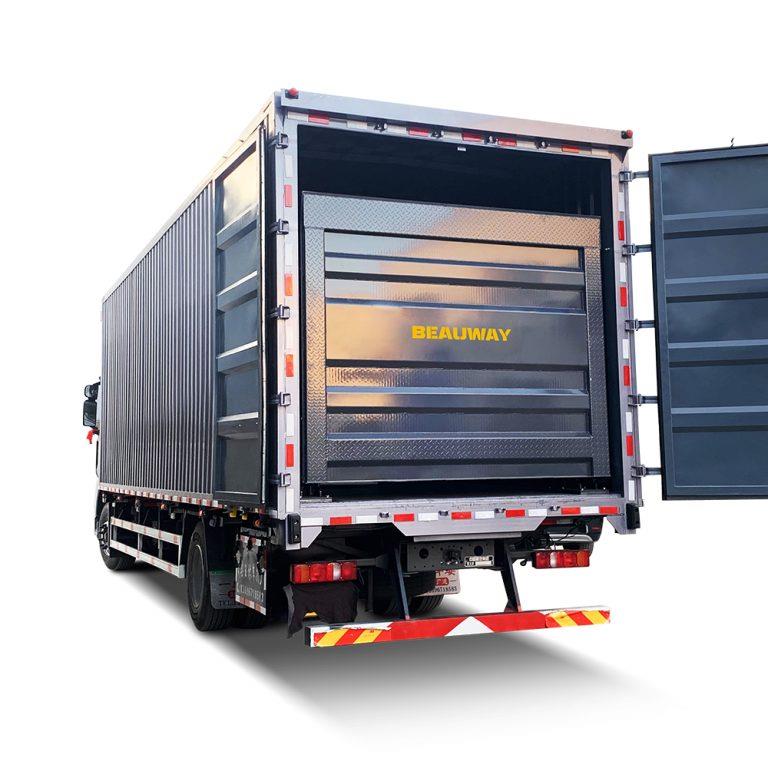
Why Coastal Fleets Lose Tail Lifts Faster Than Everyone Else


(MENAFN- Global Industrial Parts Inc.) If your routes run anywhere near the coast, you've probably noticed something the maintenance logs eventually confirm: the same tail lift model wears out faster on a coastal run than it does inland. It's not your imagination, and it's not bad luck. It's chemistry, and it's happening every single day your truck sits in salt-laden air.
Salt Air Doesn't Wait for Winter
Inland fleets think of corrosion as a seasonal problem — road salt in winter, then a slow recovery through spring and summer. Coastal fleets don't get that recovery window. Salt spray, humid sea air, and condensation on cold steel work on exposed metal around the clock, twelve months a year. The parts that take the worst of it are exactly the ones a tail lift depends on most: hinge pins, electrical connectors, control box terminals, and the seals around hydraulic cylinders.
None of this shows up as a dramatic failure at first. It shows up as small, easy-to-dismiss symptoms — a connector that needs wiggling before the platform responds, a hinge that squeaks a little louder each week, a cylinder that weeps a thin film of oil it didn't weep last month. Individually, none of these look urgent. Together, they're the early signature of accelerated wear that inland fleets simply don't deal with at the same rate.
How Small Corrosion Adds Up Over Time
The reason coastal wear is dangerous isn't that it's fast — it's that it's quiet. Corrosion doesn't announce itself the way a snapped cable does. It builds resistance in electrical contacts, pits the surface of moving parts, and lets moisture creep past seals that were never rated for constant salt exposure. By the time a driver reports a fault, the underlying tail lift problems have usually been developing for weeks.
This is also why brand doesn't fully protect you. Even well-regarded platforms show up in maintenance forums with recurring complaints once they've spent a season on coastal duty — dhollandia tail lift problems related to corroded control wiring are a common thread in exactly this kind of environment, and they're rarely a manufacturing defect. They're a mismatch between a standard maintenance interval and a non-standard operating environment.
What a Coastal Route Actually Costs You in Downtime
Every fleet manager already knows the math on a single tail lift breakdown: a driver stuck at a delivery point, a missed slot at the next stop, a call to a service contractor who may not be available same-day. What's easy to underestimate is how much more often that math repeats itself on a coastal route. Fleets running inland might budget for two or three unscheduled tail lift breakdowns a year per vehicle. Coastal fleets running the same equipment, on the same maintenance schedule, often see double that — not because the equipment is worse, but because the environment is actively working against it every day the truck isn't washed down.
Building a Maintenance Rhythm That Matches the Environment
The fix isn't more expensive equipment — it's a maintenance rhythm built around the environment the truck actually operates in, not the one the manual assumes. That usually means three adjustments:
Rinse cycles, not just wash cycles. A quick fresh-water rinse of the lift mechanism, hinges, and electrical housings after coastal routes removes salt before it has time to work into gaps and seals.
Shorter inspection intervals for exposed components. Electrical connectors, control box seals, and hydraulic fittings deserve a closer look on a coastal fleet than the standard schedule calls for.
Protective treatment on exposed metal. Dielectric grease on connectors and corrosion-inhibiting coatings on hinges and pivots cost very little compared to a single roadside failure.
Getting proactive tail lift maintenance right for a coastal environment isn't about doing more work everywhere — it's about doing the right work on the parts that are actually under attack.
What to Watch for Between Scheduled Services
You don't need a technician on-site to catch coastal wear early. A few habits, built into a driver's routine, go a long way:
Listen for new sounds. A hinge that's suddenly noisier than it was last week is often the first sign that lubricant has been washed out or displaced by moisture.
Check connectors before they fail. If a driver has to jiggle a plug or switch to get a response, that's not a quirk — it's early-stage corrosion in the contact surface, and it will get worse, not better, on its own.
Note any change in cycle speed. A platform that lowers or raises noticeably slower than usual can point to moisture working its way into a hydraulic circuit.
Report thin oil films around cylinders immediately. Seals exposed to constant salt air degrade faster than seals in a dry inland climate, and a small weep today is a bigger leak in a few weeks.
None of these observations require special tools, just attention — and a habit of reporting small changes instead of waiting for a full stoppage.
The Long-Term Payoff
Fleets that treat coastal exposure as a distinct operating condition — not just "the same equipment, a bit closer to the ocean" — consistently report fewer roadside incidents and lower total repair costs over the life of the vehicle. The upfront cost is mostly discipline: rinsing more often, inspecting the right components more frequently, and treating early warning signs as real signals rather than background noise.
Coastal duty will always be harder on a tail lift than an inland route. But fleets that adjust their maintenance rhythm to match the environment consistently get more service life out of the same equipment than fleets that keep running an inland schedule and hoping for the best.
Beauway has been specializing in the field of logistics loading and unloading equipment for many years, with a full product range covering tail lifts, dock levelers, and lifting platforms. For a customized solution tailored to your specific site conditions, you are welcome to schedule a technical consultation.
Salt Air Doesn't Wait for Winter
Inland fleets think of corrosion as a seasonal problem — road salt in winter, then a slow recovery through spring and summer. Coastal fleets don't get that recovery window. Salt spray, humid sea air, and condensation on cold steel work on exposed metal around the clock, twelve months a year. The parts that take the worst of it are exactly the ones a tail lift depends on most: hinge pins, electrical connectors, control box terminals, and the seals around hydraulic cylinders.
None of this shows up as a dramatic failure at first. It shows up as small, easy-to-dismiss symptoms — a connector that needs wiggling before the platform responds, a hinge that squeaks a little louder each week, a cylinder that weeps a thin film of oil it didn't weep last month. Individually, none of these look urgent. Together, they're the early signature of accelerated wear that inland fleets simply don't deal with at the same rate.
How Small Corrosion Adds Up Over Time
The reason coastal wear is dangerous isn't that it's fast — it's that it's quiet. Corrosion doesn't announce itself the way a snapped cable does. It builds resistance in electrical contacts, pits the surface of moving parts, and lets moisture creep past seals that were never rated for constant salt exposure. By the time a driver reports a fault, the underlying tail lift problems have usually been developing for weeks.
This is also why brand doesn't fully protect you. Even well-regarded platforms show up in maintenance forums with recurring complaints once they've spent a season on coastal duty — dhollandia tail lift problems related to corroded control wiring are a common thread in exactly this kind of environment, and they're rarely a manufacturing defect. They're a mismatch between a standard maintenance interval and a non-standard operating environment.
What a Coastal Route Actually Costs You in Downtime
Every fleet manager already knows the math on a single tail lift breakdown: a driver stuck at a delivery point, a missed slot at the next stop, a call to a service contractor who may not be available same-day. What's easy to underestimate is how much more often that math repeats itself on a coastal route. Fleets running inland might budget for two or three unscheduled tail lift breakdowns a year per vehicle. Coastal fleets running the same equipment, on the same maintenance schedule, often see double that — not because the equipment is worse, but because the environment is actively working against it every day the truck isn't washed down.
Building a Maintenance Rhythm That Matches the Environment
The fix isn't more expensive equipment — it's a maintenance rhythm built around the environment the truck actually operates in, not the one the manual assumes. That usually means three adjustments:
Rinse cycles, not just wash cycles. A quick fresh-water rinse of the lift mechanism, hinges, and electrical housings after coastal routes removes salt before it has time to work into gaps and seals.
Shorter inspection intervals for exposed components. Electrical connectors, control box seals, and hydraulic fittings deserve a closer look on a coastal fleet than the standard schedule calls for.
Protective treatment on exposed metal. Dielectric grease on connectors and corrosion-inhibiting coatings on hinges and pivots cost very little compared to a single roadside failure.
Getting proactive tail lift maintenance right for a coastal environment isn't about doing more work everywhere — it's about doing the right work on the parts that are actually under attack.
What to Watch for Between Scheduled Services
You don't need a technician on-site to catch coastal wear early. A few habits, built into a driver's routine, go a long way:
Listen for new sounds. A hinge that's suddenly noisier than it was last week is often the first sign that lubricant has been washed out or displaced by moisture.
Check connectors before they fail. If a driver has to jiggle a plug or switch to get a response, that's not a quirk — it's early-stage corrosion in the contact surface, and it will get worse, not better, on its own.
Note any change in cycle speed. A platform that lowers or raises noticeably slower than usual can point to moisture working its way into a hydraulic circuit.
Report thin oil films around cylinders immediately. Seals exposed to constant salt air degrade faster than seals in a dry inland climate, and a small weep today is a bigger leak in a few weeks.
None of these observations require special tools, just attention — and a habit of reporting small changes instead of waiting for a full stoppage.
The Long-Term Payoff
Fleets that treat coastal exposure as a distinct operating condition — not just "the same equipment, a bit closer to the ocean" — consistently report fewer roadside incidents and lower total repair costs over the life of the vehicle. The upfront cost is mostly discipline: rinsing more often, inspecting the right components more frequently, and treating early warning signs as real signals rather than background noise.
Coastal duty will always be harder on a tail lift than an inland route. But fleets that adjust their maintenance rhythm to match the environment consistently get more service life out of the same equipment than fleets that keep running an inland schedule and hoping for the best.
Beauway has been specializing in the field of logistics loading and unloading equipment for many years, with a full product range covering tail lifts, dock levelers, and lifting platforms. For a customized solution tailored to your specific site conditions, you are welcome to schedule a technical consultation.
Global Industrial Parts Inc.
Legal Disclaimer:
MENAFN provides the
information “as is” without warranty of any kind. We do not accept any
responsibility or liability for the accuracy, content, images, videos,
licenses, completeness, legality, or reliability of the information
contained in this article. If you have any complaints or copyright issues
related to this article, kindly contact the provider above.
Comments
No comment