

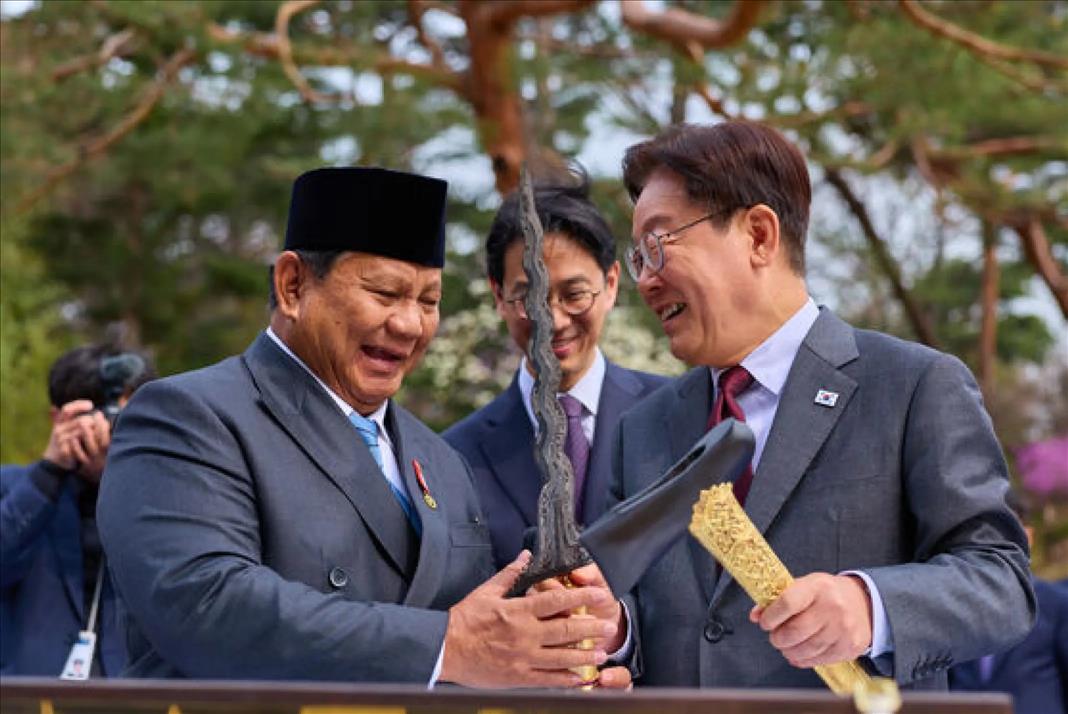
Indonesia And South Korea Upgrade Their Strategic Relationship


Both countries are vulnerable to the changing geopolitical currents of our times. From a security perspective their situations are different: Korea has long maintained a close treaty alliance with the US while managing deep economic relations with China, whereas Indonesia pursues an independent and active (bebas aktif), non-bloc foreign policy. Recent shifts in US policy, including sharper burden-sharing demands and a more transactional approach to alliances and partnerships, have nevertheless created uncertainty across the region about future expectations and policy continuity. This does not diminish the importance of the ROK-US alliance, but it strengthens the case for Seoul and Jakarta to broaden their strategic options and invest in additional reliable partnerships.
China presents a different combination of opportunities and constraints. It is an indispensable economic partner for both the ROK and Indonesia and a central actor in regional growth and supply chains. At the same time, the expansion of Chinese strategic influence, continuing maritime disputes, and the risks of excessive economic dependence create incentives for regional countries to diversify relationships and preserve policy space. For both Seoul and Jakarta, the challenge is therefore not to choose against China, but to maintain mutually beneficial relations with Beijing while safeguarding sovereign interests, strengthening resilience, and supporting international law and regional stability.
The 2026 US defense-policy debate also reflects a more transactional emphasis on burden-sharing, military capability, and measurable contributions from allies and partners. In an August 2026 speech in Manila, US Under Secretary of Defense for Policy Elbridge Colby cautioned against“middle power alliances designed to exclude America.” Yet he also stressed that the US seeks“partnerships, not dependencies,” encouraged stronger indigenous defense-industrial capacity, and described pragmatism in Southeast Asia positively.
The tension between these messages matters: countries such as the ROK and Indonesia may welcome stronger capabilities and cooperation with the US while still seeking sufficient strategic room to define their own priorities and partnerships.
The broader point is not that the United States has ceased to matter – far from it. Rather, policy volatility, tariff pressures, burden-sharing debates, and conflicts beyond Asia have reinforced the incentives for regional states to diversify their external relationships and strengthen sovereign capabilities. For Indonesia, this is consistent with its free and active foreign policy and its preference to maintain constructive relations with all major powers. For the ROK, it means complementing its alliance commitments with a wider network of dependable partnerships. In both cases, diversification should be understood as adding strategic options, not replacing one dependency with another.

Legal Disclaimer:
MENAFN provides the
information “as is” without warranty of any kind. We do not accept any
responsibility or liability for the accuracy, content, images, videos,
licenses, completeness, legality, or reliability of the information
contained in this article. If you have any complaints or copyright issues
related to this article, kindly contact the provider above.
Comments
No comment