

The Government Allowed“299” Children Of Militia Leaders To Sit For The Examinations.


The Sudanese Certificate: The State's Responsibility and the Rebels' Recklessness
The Dagalo family deceived the children of ordinary people... the manipulated examination...
The“Founding” approach: A contradiction between rhetoric and practice
Darfur Government: The militia is working to destroy the region's communities
Khartoum/(Sudanow)
Sudanese authorities allowed approximately 299 male and female students who are children of leaders of the rebel Rapid Support Forces (RSF) militia to sit for the Sudanese Certificate examinations through external examination centers. This step reveals that the state chose not to deprive these students of their right to take the examination, even though it had the ability to prevent them from doing so.
The Ministry of Education and National Guidance announced that the 299 students were distributed among several external centers: 213 in the United Arab Emirates, 68 in Uganda, 3 in Kenya, and 15 in the Libyan city of Benghazi. The ministry affirmed Sudan's commitment to international conventions and laws concerning the right to education, noting that the examinations were made available to the students without discrimination based on their parents' affiliations.
A Paradox
Perhaps the most striking paradox is that the leaders of the Rapid Support Forces militia sought to impose a parallel educational system and examination through what is known as the“Founding Government,” while at the same time ensuring that their children-who are scattered across different parts of the world-sat for the secondary-school certificate examinations organized by the Sudanese state, the“State of 1956,” which enjoys regional and international recognition.
This raises broad questions about the true nature of their declared positions toward state institutions and their educational certificates. Indeed, since the outbreak of the war, the Rapid Support Forces militia has prevented large numbers of students in areas under its control in Darfur and parts of Kordofan from sitting for the secondary-school certificate examinations that had been postponed because of the war. As a result, students have faced harsh conditions, forcing some of them to leave their areas and head to the northern states in order to preserve their educational futures.
The decision to allow the“299” children of leaders of the rebel Rapid Support Forces militia to sit for the secondary-school certificate examinations at external centers has revived debate over one of the most sensitive issues during wartime: children should not pay the price for their parents' positions.
Regardless of one's position toward the parents of these students, allowing them to take the examination carries a clear message: political or military responsibility must be separated from the student's fundamental right to education. The student did not choose his or her father, nor did the student choose his or her position within the geography of the war. It is unreasonable for a student's future to become hostage to the conflict.
The significance of this step is further reinforced by the fact that the Sudanese authorities practically had the ability to prevent these students from sitting for the examinations, but chose instead to keep the door to education open to them.
One Certificate... Two Examinations
The so-called“Founding Government” had organized secondary-school certificate examinations in Darfur, in a move that signaled its rejection of the examinations organized by the Sudanese government. This made the double standard clear: while the children of militia leaders sit for the official examination organized by the Sudanese government, children in areas controlled by the militia are being pushed toward a parallel educational and examination system.
This paradox places the political rhetoric before a practical test. If the Sudanese Certificate is not recognized, or if the government organizing it lacks legitimacy-as the militia claims-why are the children of its leaders eager to sit for its examinations?
It is clear that when the future of their children is at stake, the value of the official certificate becomes more important than the political rhetoric. At the same time, the creation of parallel educational systems during wartime threatens the future of thousands of students, particularly if the certificates issued through those systems are not recognized by universities and educational institutions inside or outside Sudan.
Forced Recruitment
In reality, what is more dangerous than disrupting education is turning children themselves into fuel for the war. The Rapid Support Forces militia has carried out extensive recruitment operations among school students, children, and minors in various parts of Darfur and Kordofan. This removes them from their classrooms and throws them into the flames of combat.
A child who was supposed to carry a schoolbag now finds himself carrying a weapon. A student who had been preparing to sit before an examination paper becomes part of a war machine. If depriving a child of education steals an academic year from him or her, recruitment threatens to steal years of the child's life, future, and perhaps life itself.
A Double-Standard Approach
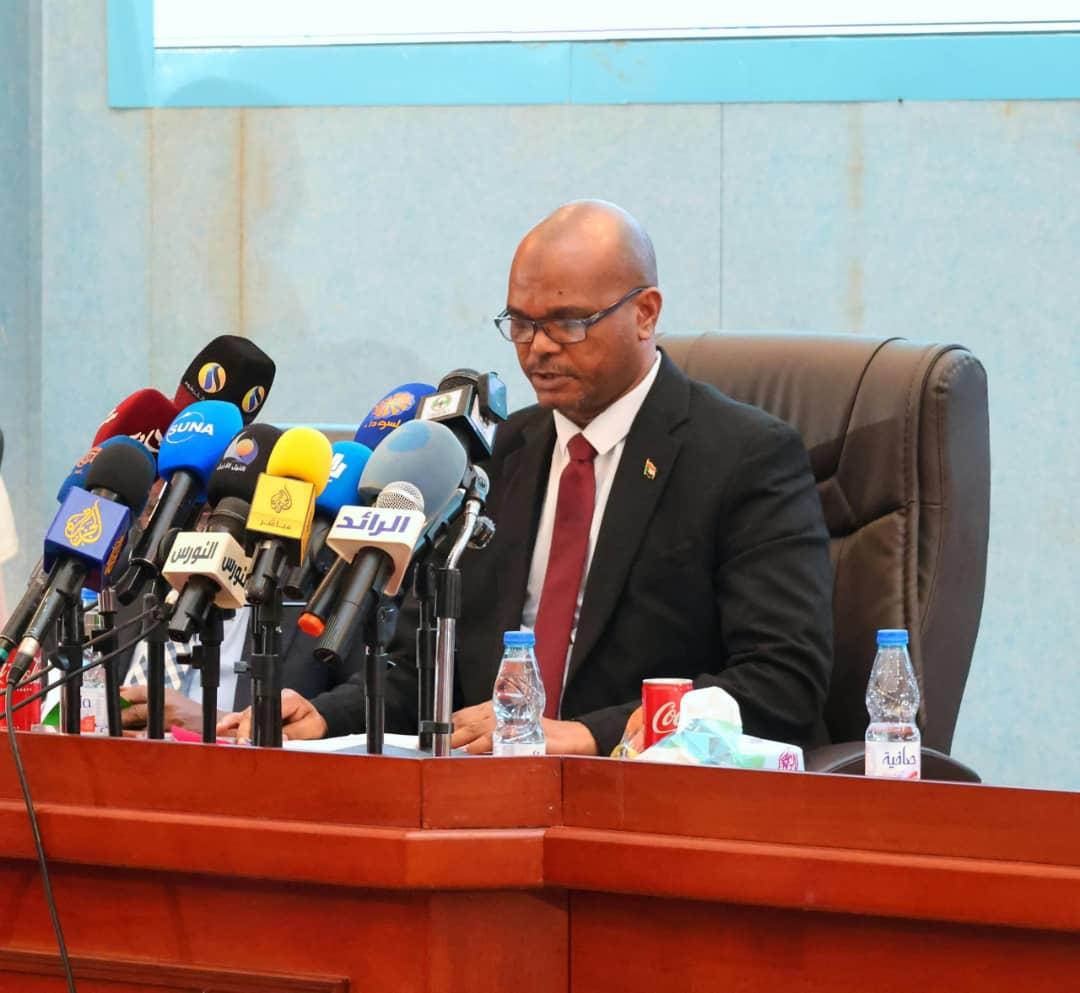
The Minister of Information and official spokesperson for the Government of the Darfur Region, Professor Ahmed Ishaq Shanab, affirmed that the participation of 299 male and female children of the rebel militia's leaders in this year's Sudanese secondary-school certificate examinations through external centers reflects the double-standard approach adopted by these leaders in destroying Darfur's communities.
He said that they send their own children to receive an education while sending the children of the region into war, destruction, and peril.
The minister stated that the militia leaders fully understand that the Sudanese Certificate organized by the Sudanese government is the foundation, and that they allow their own children to sit for its examinations, while dragging others into unsound educational pathways by organizing random examinations. This, he said, represents a deviation of society from proper and recognized educational routes.
Abu Shanab emphasized that the fact that this number of militia leaders' children were able to sit for the secondary-school certificate examinations, despite the Sudanese authorities' ability to prevent them from doing so, confirms the fairness of the government's positions and efforts to provide education for all Sudanese children without discrimination, regardless of their affiliations.
An Important Conclusion
Whatever the circumstances may be, the Sudanese state has fully assumed its responsibility. Its decision not to prevent the children of the leaders of the rebel Rapid Support Forces militia from taking the Sudanese secondary-school certificate examinations essentially reflects a position that distinguishes between the responsibility of parents and the rights of children.
A student should not be punished for his or her father's wrongdoing, nor should the war become a reason to deprive an entire generation of its right to education and to build its future.
At the same time, the determination of the rebel militia's leaders to have their children sit for the recognized Sudanese Certificate reveals that they understand the value of this educational path and its academic future. Meanwhile, the children of Darfur and parts of Kordofan are left facing extremely harsh choices: either displacement in search of a safe examination center, or enrollment in parallel examinations that lack recognition-potentially causing years of study to be lost.
This contradiction inevitably imposes the same question: If the children of militia leaders deserve the opportunity to sit for the examination, do the children of Darfur and Kordofan not deserve the same opportunity?

Legal Disclaimer:
MENAFN provides the
information “as is” without warranty of any kind. We do not accept any
responsibility or liability for the accuracy, content, images, videos,
licenses, completeness, legality, or reliability of the information
contained in this article. If you have any complaints or copyright issues
related to this article, kindly contact the provider above.
Comments
No comment